
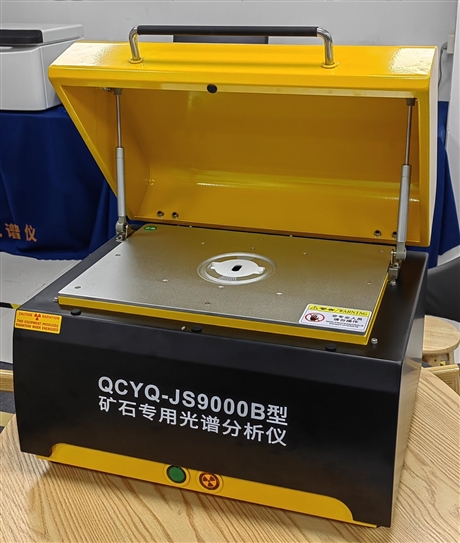

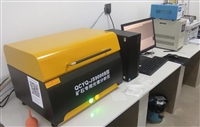
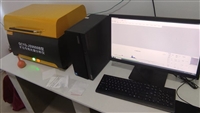
Iron powder X-ray fluorescence spectrometer, cement glass ceramic spectrometer, analysis and detection equipment
Category:
Instrumentation/Analytical instruments/X-ray analysis instrument
Model:
QCYQ-9000B
Brand:
Qiancheng Testing
Detector type:
New generation Fast SDD detector
Optical path system:
New vacuum optical path system
Analyze the range of elements:
Light, medium, heavy elements and common oxides
Typical analysis of oxides:
Na2O, MgO, Al2O3, SiO2, P2O5, K2O, CaO, etc
Application Fields:
Mining, cement, glass, ceramics, archaeology, etc
Technical Features:
High linear dynamic range, high resolution
Detection method:
Non destructive X-ray fluorescence analysis
Applicable Scenarios:
Process control, quality control, grade control
Retail Price
10,000,000.00USD
重量
kg
- Product Description
-
Detector type New generation Fast SDD detector
Optical path system New vacuum optical path system
Analyze the range of elements Light, medium, heavy elements and common oxides
Typical analysis of oxides Na2O, MgO, Al2O3, SiO2, P2O5, K2O, CaO, etc
Application Fields Mining, cement, glass, ceramics, archaeology, etc
Technical Features High linear dynamic range, high resolution
Detection method Non destructive X-ray fluorescence analysis
Applicable Scenarios Process control, quality control, grade control
Description :
X-ray fluorescence spectrometer is a non-destructive elemental analysis instrument based on the principle of X-ray fluorescence, mainly solving the problem of rapid qualitative and quantitative detection on site. It is widely used in exploration, mining, and grade control in mining operations, as well as serving industrial minerals, cement production, raw material screening for building materials, refractory materials, ceramics, and glass manufacturing. This device can meet the accuracy requirements of geochemical academic research and archaeological relic analysis. Through linear dynamic range technology, it can achieve precise process control and quality monitoring of various matrix materials under complex working conditions. It is an important tool for modern industrial testing and scientific research analysis.
The X-ray fluorescence spectrometer adopts a new vacuum optical path system, combined with high-resolution technology, significantly improving detection sensitivity and stability. The core component is equipped with a new generation Fast SDD detector, which has excellent energy resolution and counting rate processing capabilities, ensuring data reproducibility under long-term operation. The instrument supports comprehensive coverage of light, medium, and heavy elements, especially for common oxides such as Na2O、MgO、Al2O3、SiO2、P2O5、SO3、K2O、CaO、TiO2、Cr2O3、MnO、Fe2O3、ZnO Provide precise analysis results with SrO and other methods. The execution standards comply with the internationally recognized XRF testing standards and meet the dual environmental requirements of laboratory and field environments.
When selecting an X-ray fluorescence spectrometer, it is necessary to clarify whether the application scenario focuses on rapid screening in mining sites or high-precision retesting in laboratories. This model, with its wide linear dynamic range, is suitable for users who need to process high and low content samples simultaneously, especially for cement batching control, metal alloy grade identification, and glass composition analysis. Compared with traditional wet chemical analysis methods, X-ray fluorescence spectrometers do not require tedious preprocessing processes and greatly shorten the detection cycle. If the main focus is on the detection limit of light elements such as sodium and magnesium, the sealing performance of their vacuum optical system and the material of the detector window should be examined to ensure the transmittance of low-energy X-rays.
Analyze performance to enable easy testing of the following minerals:
Iron ore (magnetite, hematite, ilmenite, siderite, etc.)
Copper ore (chalcopyrite, chalcopyrite, malachite, etc.); Chromium ore (chromite spinel, chromite, chromite bismuth ore, etc.)
Molybdenum ore (molybdenite, copper molybdenum ore, tungsten molybdenum ore, etc.); Tungsten ore (scheelite, scheelite, tin tungsten, etc.)
Tantalum ore (tantalum iron ore, niobium iron ore, pyrochlore, etc.); Lead zinc ore (galena, sphalerite, white lead ore, etc.)
Nickel ore (laterite nickel ore, sulfide copper nickel ore, etc.); Bauxite; Other minerals
Product Features
1. Miniaturization, high performance, high speed, easy operation, high sensitivity, high precision analysis
2. Can analyze 40 elements simultaneously
3. Adopting multiple collimators, filters, and background suppression technology
4. The Peltier electrically cooled FAST SDD silicon drift detector provides excellent short-term repeatability and long-term reproducibility, as well as outstanding element peak resolution
5. Ultra high counting digital multi-channel circuit design, dual vacuum pumping mechanism, automatic vacuum degree stabilization system
6. Standard basic parameter method software, multitasking, multi window operation
7. Thin film filter technology effectively improves the detection limit of light elements
&Instrument parameters
Instrument dimensions: 565mm * 385mm * 415mm Ultra large sample cavity: 465mm * 330mm * 110mm Semi closed sample chamber (during vacuum pumping): Φ 150mm × 75mm in height Instrument weight: 48Kg Elemental analysis range: Na11-U92 sodium to uranium Analytical content range: 1ppm -99.99% Detector: AmpTek Ultra High Resolution Electric Refrigeration Fast SDD Silicon Drift Detector Detector resolution: 122 eV FWHM at 5.9 keV Processor type: Fully digital DP-5 analyzer Total number of spectral channels: 4096 channels X-ray tube: high-power 50 watt light tube (original imported tube core), cooling method: silicone grease cooling Light tube window material: beryllium window Collimator: up to 8 options, minimum 0.2mm Filter: Free selection and switching of 7 types of filters High voltage generator: Original American high voltage, voltage output: 0-50kV; output current: 0-1mA High voltage parameters: minimum 5kV controllable adjustment, built-in voltage overload protection, output accuracy: 0.01% Sample observation system: 5-megapixel high-definition CCD camera Voltage: 220ACV 50/60HZ Environmental temperature: -10 ° C to 35 ° C Instrument configuration
> Standard configuration ≫ Optional Configuration Pure Ag initialization standard sample Grinding machine Vacuum pump tablet press Mineral specific sample cup drying oven USB cable Fully automatic melting machine Power cord electronic scale Test film Mineral standard substance Instrument factory and calibration report AC purification stabilized power supply Warranty Card 150 mesh sieve Newly designed XTEST analysis software
The software kernel includes basic parameter method (FP) and empirical coefficient method (EC), which can easily analyze various types of samples.
Spectral processing parameters include those used to define background continuity, stacking peaks and peak sum, smoothness, and the number of measured peak background spectra
Complete correction of absorption and secondary fluorescence of thick and thin films, including all matrix effects, enhancement, and absorption.
Spectral display: peak characterization, KLM labeling, spectral overlap comparison, capable of displaying multiple spectra simultaneously
The peak intensity can be modeled as a Gaussian function by integrating the net area of the peak or using the measured reference peak response.
Pure basic parameter methods can be used, including basic parameters with dispersion ratios (for samples containing a large amount of low-Z materials), or quantitative analysis can be performed through simple least squares fitting.
Basic parameter analysis can be based on a single multi-element standard, multiple standards, or samples without standards.
When using an X-ray fluorescence spectrometer, attention should be paid to the flatness and cleanliness of the sample surface. It is recommended to compress powder samples into tablets or place them in specialized sample cups to ensure the consistency of test results. In daily maintenance, it is necessary to regularly check the oil level and pipeline sealing of the vacuum pump to prevent air leakage from affecting the accuracy of light element analysis. The detector window membrane is fragile, avoid contact with sharp objects, and regularly wipe the instrument housing and test window gently with anhydrous ethanol. Common faults include matrix effect interference, which can be corrected by establishing standard curves or using empirical coefficient methods. When not in use for a long time, regular preheating should be carried out to keep electronic components dry and stable, and to extend the service life of the instrument.
AfterSalesService :
Key words:
More Products