
Liaocheng Haorun Steel Co., Ltd
Category:
building materials/Pipe fittings/seamless steel tube
Model:
14-90
Brand:
Haorun
product name:
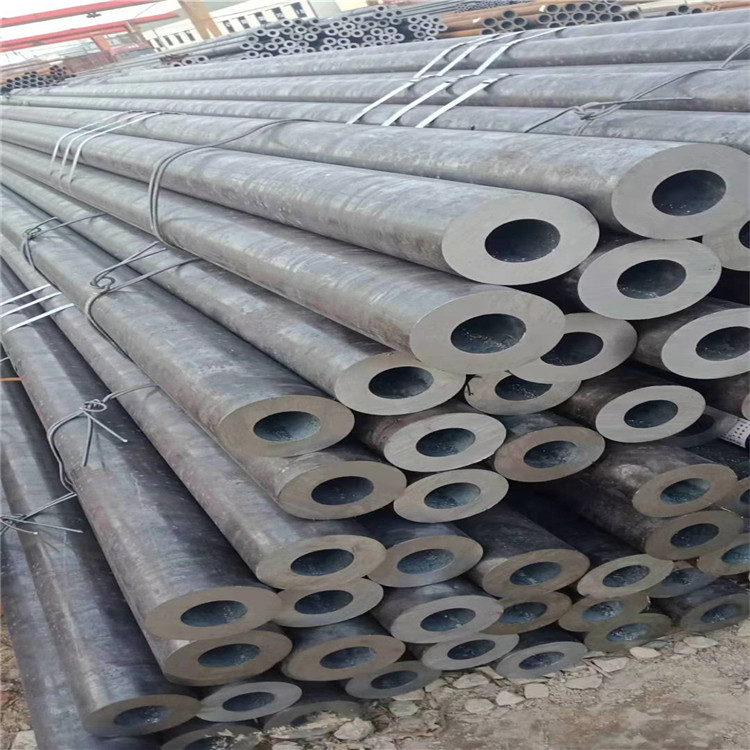
seamless steel pipe
material:
20# / 45# / Q345B
production process:
Hot rolling/cold drawing
execution standard:
GB/T8162 / GB/T8163
Scope of application:
Fluid transportation/structural support
surface state:
Black skin/shiny
length:
Fixed length/multiple length
Place of Origin:
Liaocheng, Shandong
Retail Price
10,000,000.00USD
重量
kg
- Product Description
-
product name seamless steel pipe
material 20# / 45# / Q345B
production process Hot rolling/cold drawing
execution standard GB/T8162 / GB/T8163
Scope of application Fluid transportation/structural support
surface state Black skin/shiny
length Fixed length/multiple length
Place of Origin Liaocheng, Shandong
Description :
Seamless steel pipe is a long strip of steel with a hollow cross-section and no seams around it, mainly used to solve the problems of sealing and strength in fluid transportation and structural support. In the product system of Liaocheng Haorun Steel, seamless steel pipes are widely used in typical working conditions such as petroleum, natural gas, chemical, power, and machinery manufacturing. This product is made through hot rolling or cold drawing processes and can effectively withstand high pressure, high temperature, and corrosive environments. It is an indispensable basic material in industrial pipeline systems. Its core advantage lies in its strong integrity, no welding weaknesses, and the ability to ensure the safety and stability of medium transportation, making it suitable for various engineering projects with high requirements for pressure bearing capacity.
In terms of specifications, seamless steel pipes cover a wide range from small diameters to large diameters and thick walls, with common outer diameters ranging from a few millimeters to several hundred millimeters, and wall thicknesses classified according to standard grades. The materials usually include 20 # and 45 # carbon structural steel, as well as low-alloy high-strength steels such as 16Mn and Q345B. Some special working conditions require the use of stainless steel or alloy steel. The production process strictly follows national standards such as GB/T8162 and GB/T8163 to ensure dimensional accuracy and mechanical performance meet the standards. Cold drawn steel pipes, as precision branches, have higher surface smoothness and stricter dimensional tolerances, making them suitable for machining precision components such as sleeves. Each batch of products undergoes strict testing such as hydrostatic testing and ultrasonic testing to ensure no defects such as cracks, folds, or delamination.
When selecting, it is necessary to clarify the pressure level, temperature range, and medium characteristics of the usage scenario. For general fluid transportation, ordinary hot-rolled seamless steel pipes can be used; If used for mechanical structural components or hydraulic systems, it is recommended to use cold drawn precision steel pipes to ensure dimensional accuracy and surface quality. Square pipes and special-shaped steel pipes are more commonly used in building steel structures, furniture manufacturing, and decoration projects, with a focus on the uniformity of cross-sectional shape and wall thickness. It should be noted that ordinary carbon steel seamless steel pipes are not resistant to strong acid and alkali corrosion. For such working conditions, stainless steel or inner lining anti-corrosion coating products should be selected. Similar categories such as welded steel pipes have lower costs but weaker pressure bearing capacity than seamless steel pipes. Mixing is strictly prohibited under high-pressure conditions, and the purchaser needs to strictly distinguish according to the design drawings.
During the installation process, attention should be paid to the flatness of the cutting end face, and groove treatment should be carried out before welding to ensure the connection strength. The typical service life depends on the corrosiveness of the medium and the working stress, and regular inspections can extend the service life. Daily maintenance suggestions include checking the corrosion of the outer wall of the pipeline, especially in buried or humid environments, and maintaining the anti-corrosion and insulation layer. Common faults include local corrosion perforation, weld cracking (if it is a matching pipe fitting), and vibration fatigue fracture. If any abnormalities are found, the machine should be stopped for testing in a timely manner. When storing, it should be classified and stacked to avoid electrochemical corrosion caused by mixing different materials. The bottom should be elevated to prevent moisture and kept ventilated and dry to ensure that all types of pipes provided by Liaocheng Haorun Steel maintain the best physical condition before delivery for use.
AfterSalesService :
Key words:
More Products