

Training Course on Qi Xianling Muscle Bone Balance Relaxation Therapy at the China Joint Medical Research Institute
Category:
Education and training/Medical training/Traditional Chinese Medicine Training
Model:
six hundred and sixty-six
Brand:
Qi Xianling's 106 Types of Muscle and Bone Balance
training institution:
China Joint Medical Research Institute
training course:
In July, Jinan held a training course on the 106 techniques of Qi Xianling's balanced release therapy for muscles and bones
training materials:
PPT
Training instructor:
Qi Xianling
Training characteristics:
Easy to inspect, safe and reliable, with a wide range of treatments, high efficiency and low cost, easy to learn, understand and operate, clinical doctors engaged in neck, shoulder, waist and leg pain can learn and use immediately, bringing new life and hope to patients with neck, shoulder, waist and leg pain.
Applicable subjects:
All groups of people
Training Type:
reinforcement
Training time:
full-time
Training method:
offline
Training venue:
phone consultation
Advantages Introduction:
Free teaching and meetings, free review
promotion:
10% off for members
brand:
China Joint Medical Research Institute
Retail Price
10,000,000.00USD
重量
kg
- Product Description
-
training institution China Joint Medical Research Institute
training course In July, Jinan held a training course on the 106 techniques of Qi Xianling's balanced release therapy for muscles and bones
training materials PPT
Training instructor Qi Xianling
Training characteristics Easy to inspect, safe and reliable, with a wide range of treatments, high efficiency and low cost, easy to learn, understand and operate, clinical doctors engaged in neck, shoulder, waist and leg pain can learn and use immediately, bringing new life and hope to patients with neck, shoulder, waist and leg pain.
Applicable subjects All groups of people
Training Type reinforcement
Training time full-time
Training method offline
Training venue phone consultation
Advantages Introduction Free teaching and meetings, free review
promotion 10% off for members
brand China Joint Medical Research Institute
Description :
Time and location:
Starting classes in Jinan from July 15th to July 19th, 2026 (4 days) (full day registration on the 15th)
1、 Introduction to therapy:
Muscle and bone balance release therapy is a treatment technique that regulates the mechanical balance imbalance caused by damage to muscles, fascia, and bones. Every movement in the human body is generated by the contraction of its corresponding muscle fascia, which drives the bones. If this movement cannot be completed naturally, it is inevitably due to a pathological change in the function of the muscle fascia involved in its movement. The treatment principle of muscle bone balance release surgery is to clarify the damaged muscle groups involved in its movements based on human anatomy, and use special "double needle" technology to release the subcutaneous damaged muscle fascia, relieve the tension or tension caused by muscle fascia contraction, quickly restore normal physiological function, relieve nerve pressure, promote blood circulation, and achieve the therapeutic effect of muscle bone balance and needle pain relief.
Through this course, more students will quickly master the treatment concepts and operational methods related to neck, shoulder, waist, and leg pain, so that they can immediately apply them to clinical practice. With the most scientific and practical theoretical knowledge and simple, convenient, and efficient techniques, patients can relieve their long-standing chronic diseases.
2、 Therapeutic characteristics:
Easy to inspect, safe and reliable, with a wide range of treatments, high efficiency and low cost, easy to learn, understand and operate, clinical doctors engaged in neck, shoulder, waist and leg pain can learn and use immediately, bringing new life and hope to patients with neck, shoulder, waist and leg pain.
3、 Indications: (including but not limited to)
Head and facial diseases
Headache (forehead pain, migraine, headache), dizziness, eye diseases (dry and dry eyes, eye fatigue, red eyes, blurred vision), neurogenic tinnitus, neurogenic deafness, neurogenic toothache, temporomandibular joint disorder
Neck and shoulder diseases
Cervical spondylosis (cervical type, vertebral artery type, nerve root type, sympathetic nerve type, pharyngeal type, esophageal type), various functional disorders of the neck (head down, head up, lateral flexion, rotation), scapular pain, shoulder periarthritis (anterior shoulder pain, posterior shoulder pain, functional movement disorders of the shoulder joint), quadrilateralis syndrome of the shoulder, acromion impingement syndrome, upper and lower rotation dysfunction of the shoulder joint, shoulder bounce, subacromial bursitis
Diseases of forearm and wrist
External epicondylitis of the humerus (tennis elbow), internal epicondylitis of the humerus (golf elbow), pronator teres syndrome, elbow joint flexion and extension difficulties, carpal tunnel syndrome, pain in various parts of the forearm, hand, and wrist
Chest and rib diseases
Thoracic outlet syndrome, pseudo heart disease (angina pectoris, palpitations, chest tightness, shortness of breath), costochondritis
Diseases of the waist and buttocks
Lumbar muscle strain, lumbar disc herniation, lumbar spinal stenosis, lumbar spondylolisthesis (true or false), lumbar fasciitis, lumbar tri transverse process syndrome, scoliosis, lumbosacral pain, hip bounce, various types of lumbar pain (back pain, bending pain, sitting and standing pain, walking pain), piriformis syndrome, sciatic nerve pain, spinal pain in the middle 39 Ankylosing spondylitis, inguinal pain, gluteal epithelial neuritis, and buttock seat pain
Pelvic and femoral diseases
Detailed explanation of twelve types of dislocation: lateral femoral cutaneous nerve compression syndrome, sacroiliac joint disorder syndrome, pain in various parts of the hip joint, femoral head necrosis, and pelvic dislocation
Diseases of the knee joint area
Knee osteoarthritis, knee osteoarthritis, various functional disorders of the knee joint, injuries to the medial and lateral ligaments of the knee joint, infrapatellar fat pad inflammation, patellar strangulation, meniscus injury, peripatellar fasciitis, goose foot bursitis, the role of bursae and synovium, and differential diagnosis of bursitis and synovitis
Diseases of the calf area
Pain in various parts of the calf (anterior, posterior, medial, lateral), cramping of the calf at night
Foot diseases
Heel pain, pain or sensory abnormalities in various parts of the foot, pseudogout, coldness in various parts of the body, and important bony landmarks throughout the body (name and precise positioning)
4、 Main topic:
Head and neck related diseases
1. Clinical symptoms and treatment methods caused by abnormalities in the atlantoaxial and occipital joints
2. Clinical symptoms and treatment methods caused by suboccipital muscle group injuries (posterior rectus muscle, posterior rectus muscle, superior oblique muscle, inferior oblique muscle)
3. Clinical symptoms and treatment methods caused by sternocleidomastoid muscle injury
4. Clinical symptoms and treatment methods caused by masseter and temporalis muscle injuries
5. Clinical symptoms and treatment methods caused by injuries to the external and internal wing muscles
6. Clinical symptoms and treatment methods caused by abdominal muscle injury
7. Clinical symptoms and treatment methods caused by injuries to the head and neck muscles
8. Clinical symptoms and treatment methods caused by hemispiny muscle injury of the head
9. Definition of upper line, lower line, and item plane
10. Clinical symptoms and treatment methods caused by ligament injuries
11. Clinical symptoms and treatment methods caused by trapezius muscle injury
12. Clinical symptoms and treatment methods caused by oblique muscle injury
13. Clinical symptoms and treatment methods caused by scapular levator muscle injury
14. Analysis of Causes and Treatment Methods for Pillow Falling
15. Series of symptoms and treatment methods caused by cervical spondylosis
Diseases and treatment methods related to the shoulder, back, and upper limbs
16. Clinical symptoms and treatment methods caused by supraspinatus muscle injury
17. Clinical symptoms and treatment methods caused by infraspinatus muscle injury
18. Clinical symptoms and treatment methods caused by injury to the teres major muscle
19. Clinical symptoms and treatment methods caused by subscapular muscle injury
20. Clinical symptoms and treatment methods caused by biceps injury
21. Clinical symptoms and treatment methods caused by triceps injury
22. Clinical symptoms and treatment methods caused by coracochial muscle injury
23. Clinical symptoms and treatment methods caused by humeral muscle injury
24. Clinical symptoms and treatment methods caused by deltoid muscle injury
25. Clinical symptoms and treatment methods caused by latissimus dorsi injury
26. Clinical symptoms and treatment methods caused by rhomboid muscle injury
27. Clinical symptoms and treatment methods caused by posterior serratus muscle injury
28. Clinical symptoms and treatment methods caused by posterior serratus muscle injury
29. Etiological analysis and treatment methods of subacromial bursitis
30. Analysis and treatment methods of quadriceps syndrome
31. Analysis and treatment methods of thoracic outlet syndrome
32. Essentials of Shoulder Periarthritis
33. Diagnosis and treatment methods for shoulder joint movement disorders
34. Analysis of shoulder joint pain arc
35. Causes and Treatment Methods of Shoulder Joint Bounce
36. Etiology and treatment of lateral epicondylitis of humerus (tennis elbow)
37. Causes and treatment methods of humeral epicondylitis (golf elbow)
38. Clinical symptoms and treatment methods caused by elbow muscle injury
39. Clinical symptoms and treatment methods caused by brachioradialis muscle injury
40. Clinical symptoms and treatment methods caused by anterior circular muscle injury
41. Clinical symptoms and treatment methods caused by rotator cuff injury
42. Etiological analysis and treatment methods for elbow joint flexion and extension disorders
43. Clinical symptoms and treatment methods caused by forearm extensor muscle group injury
44. Clinical symptoms and treatment methods caused by forearm flexor muscle group injury
45. Etiological analysis and treatment methods of carpal tunnel syndrome
46. Clinical symptoms and treatment methods caused by palmar longus muscle injury
47. Analysis of the causes and treatment methods of pain in various parts of the hands and wrists
Diseases and treatments related to the thoracolumbar region
48. Clinical symptoms and treatment methods caused by subclavian muscle injury
49. Clinical symptoms and treatment methods caused by pectoralis major muscle injury
50. Clinical symptoms and treatment methods caused by pectoralis minor muscle injury
51. Clinical symptoms and treatment methods caused by anterior serratus muscle injury
52. Clinical symptoms and treatment methods caused by diaphragm injury
53. Clinical symptoms and treatment methods caused by superficial spinal muscle injury
Diseases and treatment methods related to the waist and abdomen
54. Clinical symptoms and treatment methods caused by rectus abdominis injury
55. Clinical symptoms and treatment methods caused by external oblique muscle injury
56. Clinical symptoms and treatment methods caused by internal oblique muscle injury
57. Etiological analysis and treatment methods of lumbar transverse process syndrome
58. Clinical symptoms and treatment methods caused by injuries to the supraspinatus and interspinous ligaments
59. Clinical symptoms and treatment methods caused by iliopsoas muscle injury
60. Clinical Symptoms and Treatment Methods Caused by Lumbar Muscle Injury
61. Etiological analysis and treatment methods of lumbar spinal stenosis
62. Etiological analysis and treatment methods of lumbar spondylolisthesis
63. Clinical symptoms and treatment methods caused by iliopsoas ligament injury
Diseases and treatment methods related to the hip and thigh region
64. Clinical symptoms and treatment methods caused by compression of the gluteal epithelial nerve
65. Clinical symptoms and treatment methods caused by gluteus maximus injury
66. Clinical symptoms and treatment methods caused by gluteus medius injury
67. Clinical symptoms and treatment methods caused by gluteus maximus injury
Clinical symptoms and treatment methods caused by piriformis muscle injury
69. Clinical Symptoms and Treatment Methods Caused by Sacral Nodule Ligament Injury
70. Etiological analysis and treatment methods of lateral femoral cutaneous nerve compression syndrome
71. Etiological analysis and treatment methods of sacroiliac joint disorder syndrome
Diseases and treatment methods related to lower limbs
72. Clinical symptoms and treatment methods caused by rectus femoris injury
73. Clinical Symptoms and Treatment Methods Caused by Femoral Median Muscle Injury
74. Clinical symptoms and treatment methods caused by lateral thigh muscle injury
75. Clinical symptoms and treatment methods caused by medial thigh muscle injury
76. Clinical symptoms and treatment methods caused by pubic muscle injury
77. Clinical symptoms and treatment methods caused by injury of the gracilis muscle
78. Clinical symptoms and treatment methods caused by adductor muscle injury
79. Clinical symptoms and treatment methods caused by long and short adductor muscle injuries
80. Clinical symptoms and treatment methods caused by sartorius muscle injury
81. Clinical symptoms and treatment methods caused by tensor fascia lata injury
82. Clinical symptoms and treatment methods caused by semitendinosus semimembrane-bound injury
83. Clinical symptoms and treatment methods caused by biceps femoris injury
84. Clinical symptoms and treatment methods caused by hamstring injury
85. Clinical symptoms and treatment methods caused by toe muscle injury
86. Clinical symptoms and treatment methods caused by gastrocnemius muscle injury
87. Clinical symptoms and treatment methods caused by soleus muscle injury
88. Clinical symptoms and treatment methods caused by injuries to the medial and lateral ligaments of the knee joint
89. Etiological analysis and treatment methods of knee synovitis
90. Clinical symptoms and treatment methods caused by infrapatellar fat pad injury
91. Etiological analysis and treatment methods of goose foot bursitis
92. Analysis of the causes and treatment methods of poor knee joint flexion and extension
93. Clinical symptoms and treatment methods caused by fibular muscle injury (long fibular muscle, short fibular muscle, third fibular muscle)
94. Clinical symptoms and treatment methods caused by anterior tibial muscle injury
95. Clinical symptoms and treatment methods caused by posterior tibial muscle injury
96. Clinical symptoms and treatment methods caused by calf extensor muscle group injury
97. Clinical symptoms and treatment methods caused by calf flexor muscle group injury
98. Analysis of the causes and treatment methods of pain in various parts of the foot
99. Analysis of the causes and treatment methods of coldness in various parts of the body
100. Explanation of important bony landmarks throughout the body (name, location)
Special gift of 4 valuable technical skills!
(1). urinary leakage
(2). buffalo hump
(3). Male functional impairment
(4). Acute ankle sprain
5、 Expert introduction:
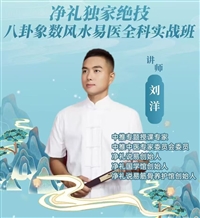
Qi Xianling: Expert in specialized lectures at Zhongtai, member of Zhongtai Traditional Chinese Medicine Expert Committee. With a bachelor's degree, Professor Qi is a renowned pain specialist and has studied under multiple pain specialists. After graduation, Professor Qi has studied under the renowned pain specialist Zhang Xiuqin for many years and has unique insights and rich clinical experience in the treatment of pain in various parts of the body. He has given lectures on "Pain Imaging Analysis," "Diagnosis and Treatment of Muscle and Bone Pain," "Theory and Operation Techniques of Muscle and Bone Balance Relaxation," and "Theory and Practice of Pain Double Needle Treatment" at multiple medical forums across the country. Teacher Qi is not only a researcher in pain theory, but also a practitioner in clinical pain treatment. He is skilled in muscle and bone reduction, muscle and bone balance treatment, and has unique insights and treatment experience in cervical spondylosis, lumbar disc herniation, degenerative knee joint disease, etc. He has received countless clinical visits and is deeply trusted and pursued by a large number of patients. Teacher Qi Xianling has generously imparted years of theoretical knowledge and clinical experience to tens of thousands of students across the country, enabling them to truly learn the simplest and most efficient techniques, and benefiting patients with the safest and cheapest results.
6、 Inviting participants:
1. Employees in hospitals, clinics, and individual medical institutions (Tuina, Trauma, Spinal Diseases, Physiotherapy, Orthopedics)
Department of Health, Rehabilitation, Traditional Chinese Medicine, etc
2. Medical institutions at all levels are engaged in spinal and massage diagnosis and treatment, as well as personnel related to massage health (physical therapists, therapists, masseurs), etc.
3. Personnel engaged in pain technology research, teaching, scientific research institutions, and other related fields.
4. Medical enthusiasts with a foundation in massage or traditional Chinese medicine, and personnel engaged in rehabilitation work such as massage therapists, rehabilitation therapists, and physical therapists.
(Limited spots, please make a reservation by phone in advance to stay, no parachuting allowed)
7、 Training methods and certificates:
1. Led by Professor Qi Xianling, the training class combines teaching with practical experience and provides hands-on clinical guidance.
2. Learning technology is simple and easy to learn, emphasizing easy replication and promotion, on-site learning, easy to master, and easy to understand and refine.
3. According to the decision of the Joint Medical Research Institute, all participants will be awarded a certificate of academic achievement from the institute, which can serve as a reference for employment.
4. During the same course taught by the same expert at the China Academy of Sciences, students can review for free with their China Academy of Sciences academic certificate; During the collaboration with the lecturer at our institution, there is no limit to the number of reviews. If the collaboration with the lecturer cannot continue, the review will be terminated unconditionally. (Note: If the teaching expert recommends teaching in China, you can review continuously for free)
5. Students can collect and organize clinical cases, and communicate with teaching experts on-site during the course.
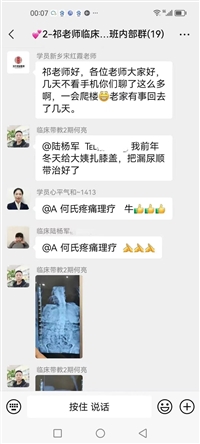
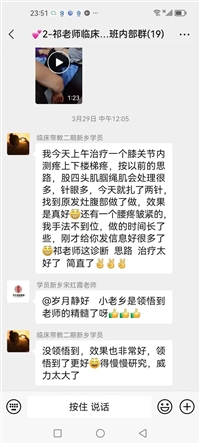
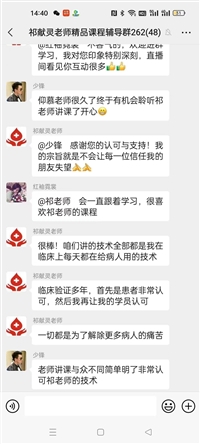
6. Free remote guidance: If you encounter any problems during clinical operations, feel free to contact the teacher or students in the WeChat group at any time to communicate and quickly solve them.
8、 Training fee and registration method:
1. The training fee is 4600 yuan per person (4 days) (including: material fee, certificate fee). Accommodation and meals will be arranged at your own expense.
2. Notify the specific class location and bus route 10 days after the start of the class.
3. Students participating in the study must register by fax, phone, SMS, email or other contact information.
Registration phone number: 15303060896 Teacher Wang (same as WeChat)
WeChat public platform: Ai Xue Medical Network course arrangement, course materials, videos, etc. are available for free viewing
AfterSalesService :
免费复习Key words:
More Products