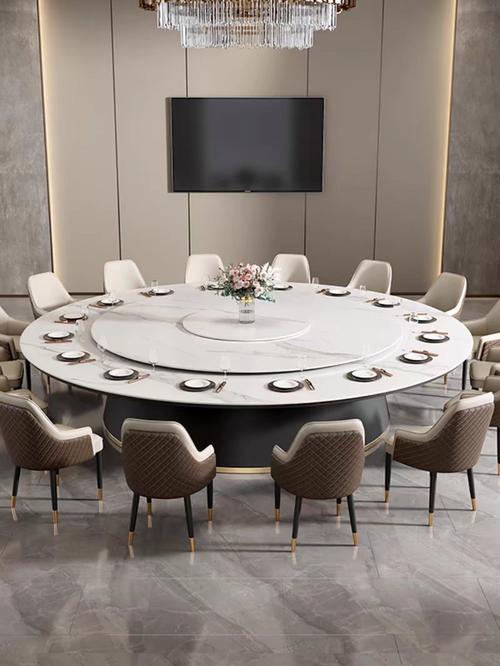

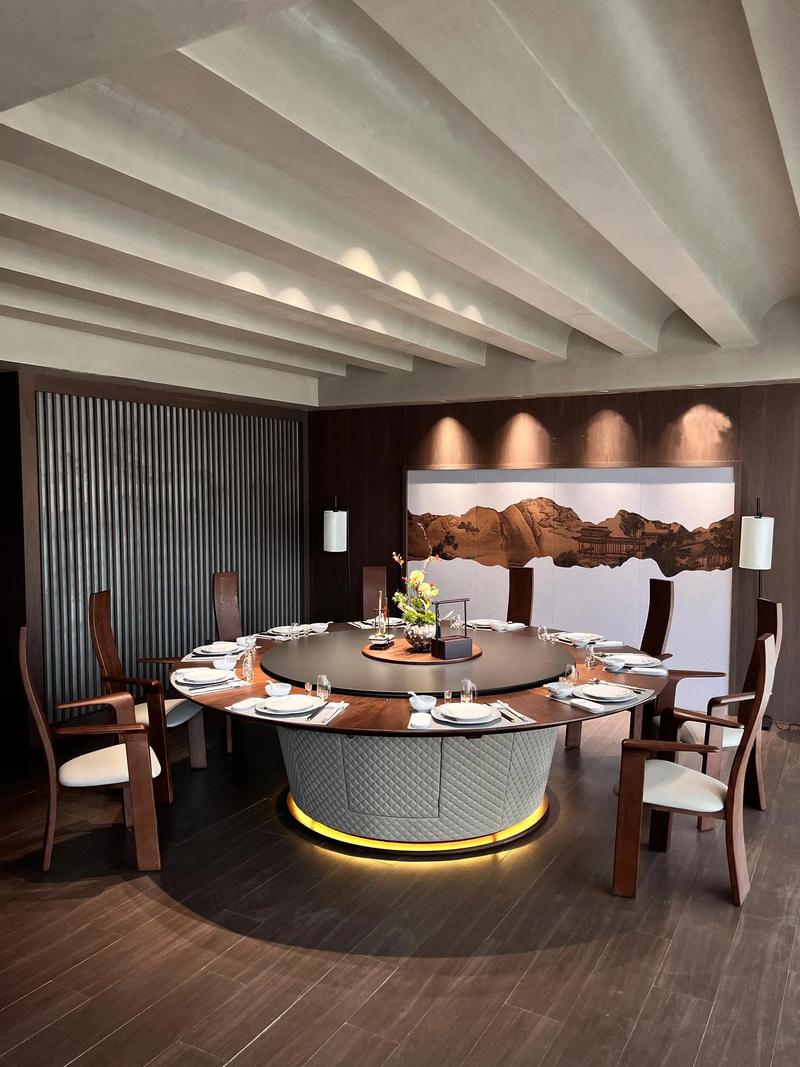
2026 Commercial Electric Rotary Hotpot Table Conveyor Belt Rotary Equipment Factory Direct Sales Free Shipping
Category:
mechanical equipment/Catering and cooking machinery and equipment/Rotating Hot Pot
Model:
customize
Brand:
Yue Lingfeng
material:
304 stainless steel/tempered glass
Motor Type:
Silent DC brushless motor
noise level:
≤50dB
waterproof rating:
IP54
Applicable voltage:
220V/50Hz
turntable diameter:
Customized (1.5m-5m)
load-bearing capacity:
≥50kg/m²
Installation method:
Embedded/Desktop
Retail Price
10,000,000.00USD
重量
kg
- Product Description
-
material 304 stainless steel/tempered glass
Motor Type Silent DC brushless motor
noise level ≤50dB
waterproof rating IP54
Applicable voltage 220V/50Hz
turntable diameter Customized (1.5m-5m)
load-bearing capacity ≥50kg/m²
Installation method Embedded/Desktop
Description :
Electric rotating hot pot dining table is a commercial kitchen equipment that integrates mechanical transmission and catering functions. It mainly solves the problems of low efficiency of manual dish delivery, poor dish display effect, and insufficient space utilization in traditional hot pot restaurants. This device drives a conveyor belt or a rotating table through a motor to achieve automatic circulation of dishes. Typical working conditions are suitable for chain hotpot restaurants, self-service restaurants, revolving sushi restaurants, and large canteens. The core parameters include table diameter, conveyor belt width, motor power, and load-bearing capacity, which can adapt to the needs of catering venues of different scales, effectively improve the turnover rate and customer dining experience, and are key hardware facilities in modern smart catering scenarios.
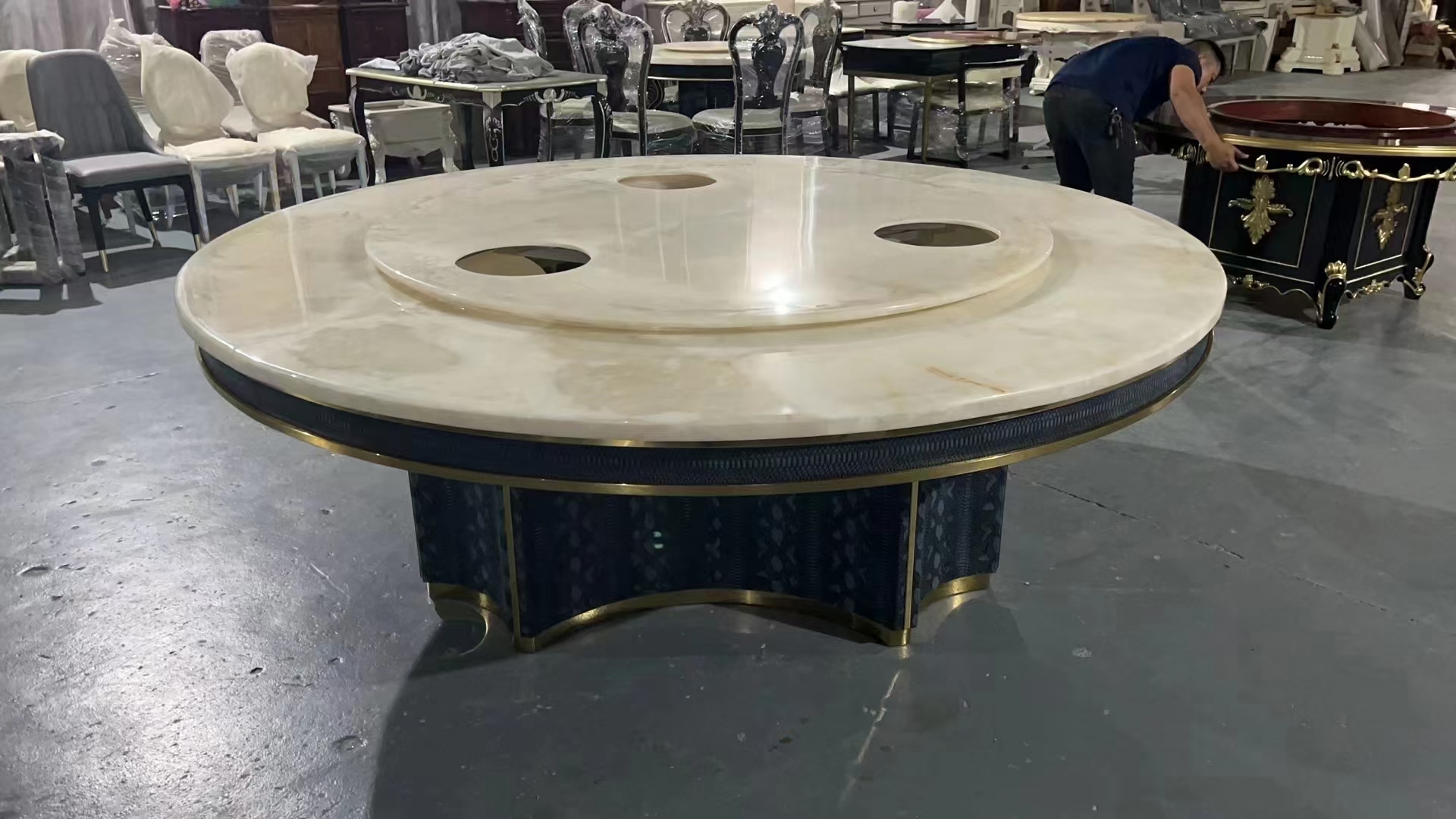
In terms of specifications, electric rotary hot pot dining tables usually use stainless steel 304 material to make the track and bracket, ensuring corrosion resistance and easy cleaning. The countertop can be decorated with tempered glass, marble, or solid wood veneer materials. The implementation standards must comply with GB 4706.1 household appliance safety standards and hygiene regulations for catering equipment. Silent DC brushless motors are commonly used for motors, with power generally between 50W-200W and noise controlled below 50 decibels. Common certifications include CE, RoHS, and ISO9001 quality management system certifications. The structural design is divided into single-layer, double-layer or multi-layer conveying modes, and the turning radius is precisely calculated to ensure a smooth transition of the dining plate without tipping over. The electrical system has overload protection and leakage protection functions to ensure long-term stability and safety during operation.
When selecting, it is necessary to clarify the store layout and number of seats, and determine whether to choose a center rotating or peripheral conveyor belt structure. The center rotating style is suitable for round table dining and emphasizes interactivity; The conveyor belt type is suitable for long tables or loose tables, emphasizing privacy and easy access. If the space is narrow, it is recommended to choose a combination of single or double track linear transmission and U-shaped turning; If the space is spacious, a large-diameter circular turntable can be chosen. Attention should be paid to distinguishing between ordinary turntables and intelligent pricing rotary tables, the latter of which needs to be used in conjunction with RFID chip technology. For hot pot environments with high temperature and humidity, it is necessary to confirm that the motor waterproof level reaches IP54 or above, and the track sealing is good to prevent soup leakage and corrosion of mechanical components, and avoid choosing low-end models with overly complex structures that are difficult to clean dead corners.
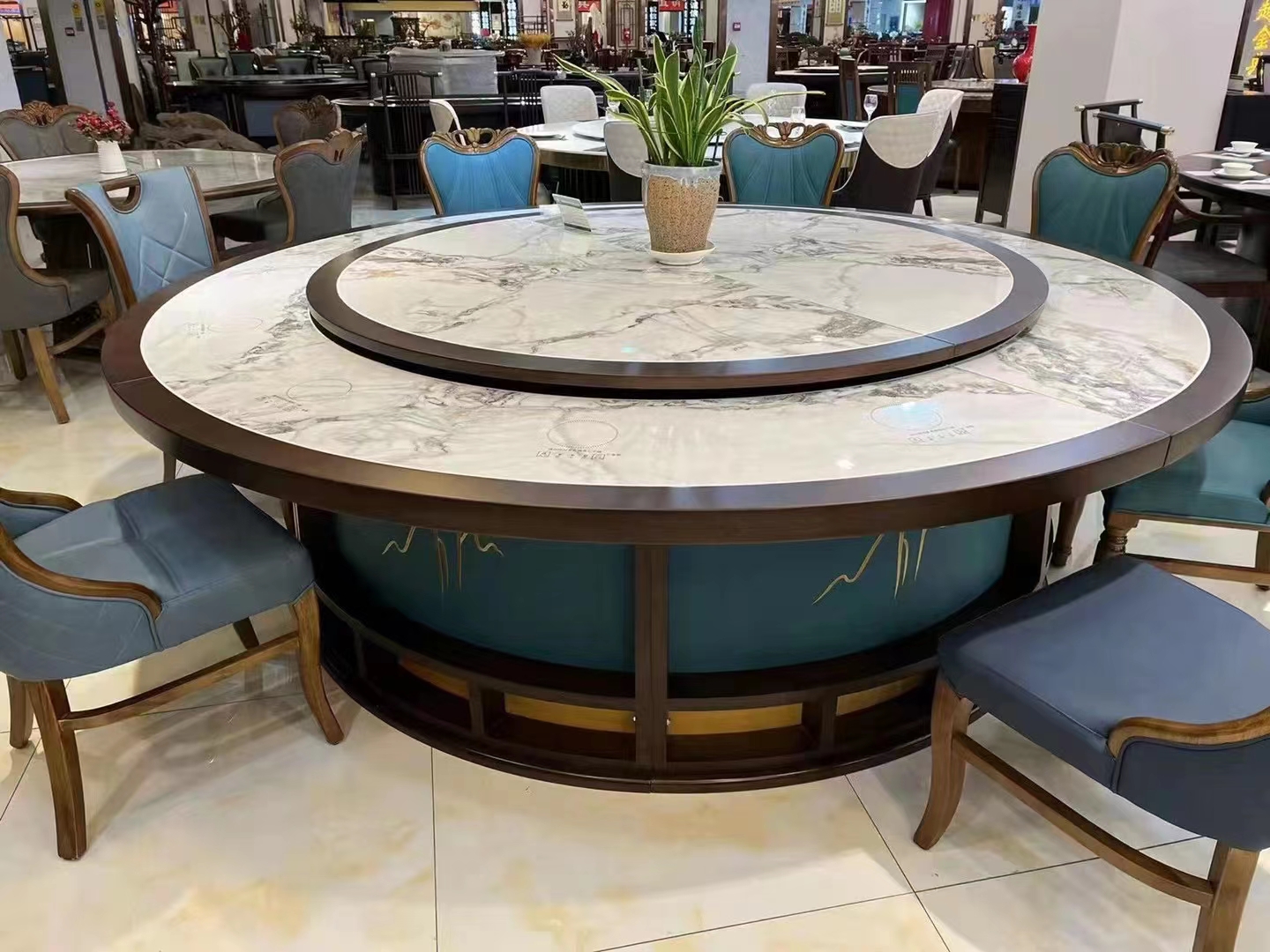
The key to installation lies in the flatness of the ground and the reserved position for power supply. It is necessary to plan the routing of strong and weak electricity in advance to ensure that the hidden wiring is beautiful and safe. Daily maintenance recommendations include cleaning food residues and oil stains in the track gaps every week, checking the tension of chains or belts monthly and performing lubrication maintenance, and checking the wear of motor carbon brushes every six months. Common faults include conveyor belt deviation, abnormal noise, or stoppage, which are often caused by foreign objects jamming or loose belts. It is necessary to stop the machine in a timely manner for cleaning and adjustment. The service life can usually reach 8-10 years, and regular replacement of vulnerable parts can extend the lifespan. Operators should avoid stacking tableware overweight and strictly prohibit cutting hard food directly on the conveyor belt to prevent scratching the surface or damaging the transmission mechanism. Keeping the equipment dry and ventilated can help extend the service life of electronic components.
AfterSalesService :
Key words: