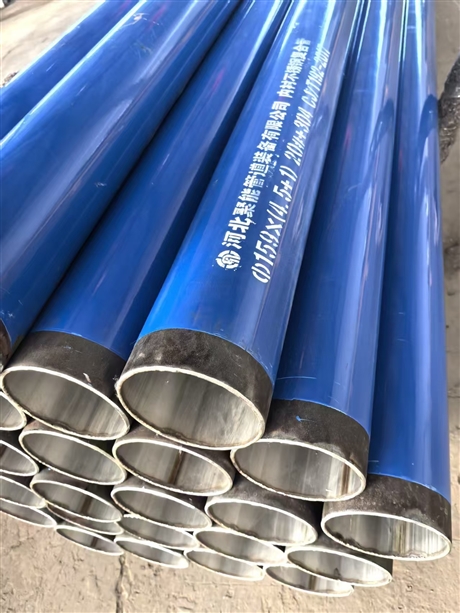

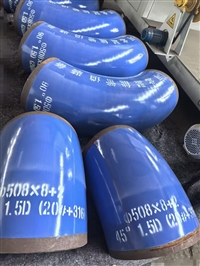
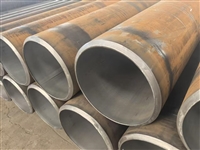
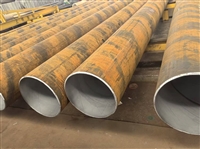
Stainless steel composite pipe with inner lining, corrosion-resistant, high-pressure transmission pipeline, specialized for chemical and power industries
Category:
building materials/Construction and building materials pipes/Composite tube
Model:
DN15- - - - DN1620
Brand:
Energy Convergence
Outer material:
Q235B/20 # carbon steel
Lining material:
304/316L stainless steel
binding strength:
≥0.2MPa
Execution Standard:
GB/T 18704/CJ/T 192
Nominal Diameter:
DN15-DN1000
Operating temperature:
-20℃~200℃
connection method:
Flanges/grooves/welding
anti-corrosion treatment:
Galvanized/coated/sprayed
Retail Price
10,000,000.00USD
重量
kg
- Product Description
-
Outer material Q235B/20 # carbon steel
Lining material 304/316L stainless steel
binding strength ≥0.2MPa
Execution Standard GB/T 18704/CJ/T 192
Nominal Diameter DN15-DN1000
Operating temperature -20℃~200℃
connection method Flanges/grooves/welding
anti-corrosion treatment Galvanized/coated/sprayed
Description :
The lined stainless steel composite pipe is a double-layer metal structure pipeline, with the outer layer made of carbon steel providing high-strength support and the inner layer made of stainless steel ensuring the corrosion resistance of the medium contact surface. This design effectively solves the problems of traditional carbon steel pipes being prone to corrosion and pure stainless steel pipes being expensive, making it particularly suitable for complex environments such as petroleum, chemical, power, and water supply. Through mechanical or explosive composite processes, the two layers of metal are tightly bonded, retaining the mechanical properties of carbon steel while possessing the hygiene and corrosion resistance characteristics of stainless steel, making it an ideal choice for fluid transportation systems.
This pipe usually complies with industry standards such as GB/T 18704 or CJ/T 192. The outer substrate is mostly Q235B or 20 # carbon steel, and the common materials for the inner lining are 304 and 316L stainless steel. The combined strength is generally required to be greater than 0.2 MPa to ensure no peeling or delamination under high pressure impact. The conventional outer diameter range is from DN15 to DN1000, and the wall thickness is customized according to the pressure rating. The inner lining thickness is usually between 0.5mm and 3mm. The surface of the product can be galvanized, coated with plastic or treated with anti-corrosion to further extend its outdoor service life and meet various rigorous chemical composition analysis and pressure testing requirements.
When selecting, it is important to consider the properties of the medium, working pressure, and temperature range. For weakly corrosive media such as tap water and heating water, a 304 lining can be used with a regular carbon steel outer layer; For environments with strong acids, strong alkalis, or high chloride ions, it is recommended to upgrade to 316L lining to enhance its resistance to pitting corrosion. Compared with pure stainless steel pipes, the cost of lined stainless steel composite pipes is reduced by about 30% -50%. Compared with lined plastic steel pipes, it has higher temperature resistance and is suitable for hot water and steam transportation. Please note that the bending radius should not be too small to avoid wrinkles or ruptures in the inner lining layer, which may affect fluid flow.
During the installation process, it is recommended to use flange connections or groove connections. During welding, special processes should be taken to prevent the inner lining from overheating and oxidation, or internal anti-corrosion repairs should be carried out at the weld junction. During daily maintenance, it is necessary to regularly check whether the anti-corrosion layer on the outer wall of the pipeline is damaged, in order to avoid exposing and rusting the carbon steel layer. It is recommended to conduct a hydrostatic test and flushing to remove any impurities that may have accumulated in the pipe before resuming use after a long period of disuse. If an abnormal decrease in flow is found, it is necessary to investigate whether the inner lining has deformed or fallen off due to water hammer effect, and promptly replace the damaged pipe section to ensure the safe operation of the system.
AfterSalesService :
Key words:
More Products