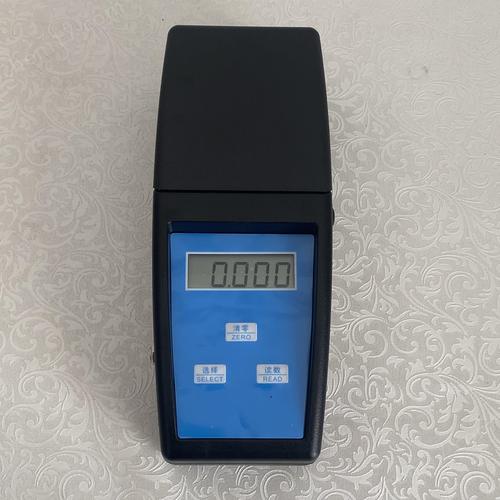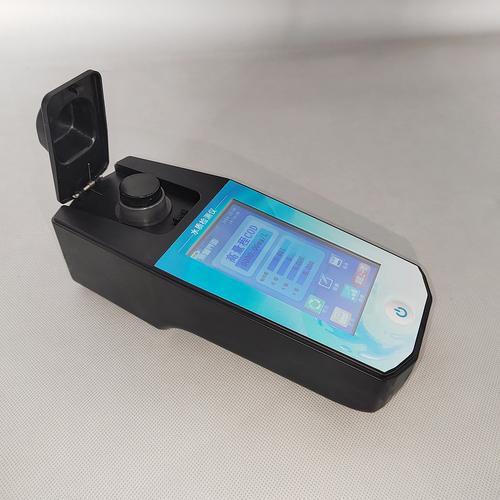

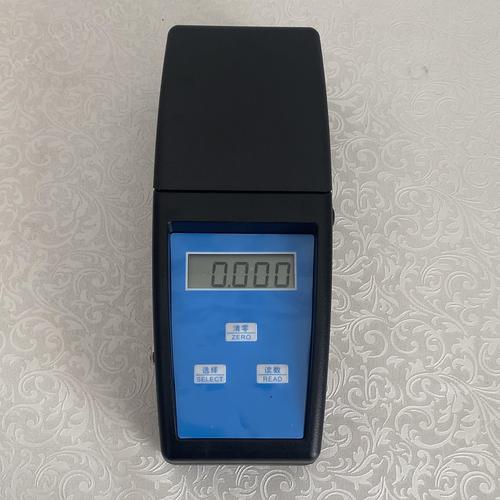
Hash DR300 residual chlorine detector, original factory genuine portable colorimeter, water quality analysis
Category:
Instrumentation/Analytical instruments/Residual chlorine analyzer
Model:
DR300
Brand:
HACH
Measuring principle:
DPD colorimetric method
detection parameters:
Free chlorine/total chlorine
Light source type:
LED cold light source
display mode:
LCD display
power supply method:
Alkaline battery
Shell material:
ABS Engineering Plastic
Protection rating:
IP67
Applicable Industries:
Drinking water/swimming pool/industrial wastewater
Retail Price
10,000,000.00USD
重量
kg
- Product Description
-
Measuring principle DPD colorimetric method
detection parameters Free chlorine/total chlorine
Light source type LED cold light source
display mode LCD display
power supply method Alkaline battery
Shell material ABS Engineering Plastic
Protection rating IP67
Applicable Industries Drinking water/swimming pool/industrial wastewater
Description :
The HashDR300 residual chlorine detector is a portable colorimeter designed specifically for rapid on-site water quality analysis. It mainly solves the problems of cumbersome operation, large subjective reading errors, and slow response of old equipment in traditional titration methods. This device is suitable for typical working conditions such as drinking water treatment, swimming pool water quality monitoring, industrial circulating cooling water, and wastewater treatment, and can accurately determine the free chlorine and total chlorine content in water samples. As a classic entry-level model under the Hash brand, the Hash DR300 residual chlorine detector is known for its easy operation and reliable results. It is an ideal choice to replace old visual colorimeters or malfunctioning electronic detection equipment, helping users significantly improve on-site detection efficiency and data consistency.
In terms of specifications and processes, the Hash DR300 residual chlorine detector adopts a sturdy and durable ABS engineering plastic shell, which has good dustproof and waterproof performance and is suitable for humid or outdoor working environments. Its core optical system has undergone precise calibration, combined with Hash's dedicated preset program and reagent powder pillow, to ensure that the measurement wavelength is stable at around 620nm and meets the requirements of standard colorimetric methods. The equipment is usually equipped with an LCD display screen, which intuitively displays concentration values (mg/L or ppm) and supports zero calibration function to eliminate background interference. Although the specific size and weight of the input are not provided, such portable devices are usually small in size and easy to hold and carry with one hand. The implementation standard refers to the internationally recognized DPD colorimetric principle to ensure that the test results have industry comparability and authority, meeting the basic requirements for accuracy in conventional water quality monitoring.
When selecting, it should be clear that the Hash DR300 residual chlorine detector focuses on rapid screening of a single or a few parameters (such as residual chlorine and total chlorine), and is suitable for daily inspections, emergency monitoring, and scenarios with low demand for multi parameter comprehensive analyzers. If multiple indicators such as turbidity, pH value, ammonia nitrogen need to be detected simultaneously, or if data storage and export functions are required, higher-level multi parameter spectrophotometers with hash should be considered (such as DR900 or DR6000 series). In addition, the device relies on specialized reagent kits, and the stability and cost of reagent supply should be confirmed when selecting. For laboratory high-precision trace analysis or online continuous automatic monitoring scenarios, the Hash DR300 residual chlorine detector is not the best choice. It is recommended to use desktop laboratory instruments or online sensor systems to avoid range and accuracy limitations caused by portable design.
In terms of installation and maintenance, the Hash DR300 residual chlorine detector does not require complex installation, and can be calibrated and tested after preheating. In daily use, the outer wall of the colorimetric bottle should be kept clean and free of scratches and fingerprints to avoid reading deviation caused by light path interference; After each test, thoroughly clean the colorimetric bottle with deionized water and air dry it. Regularly use standard solutions for zero and span calibration to verify instrument status. Common malfunctions include abnormal screen display or reading drift, often caused by insufficient battery power or contamination of colorimetric bottles. Replacing the battery or cleaning the optical surface can solve the problem. Avoid exposing the instrument to extreme temperatures or highly corrosive gases. When not in use for a long time, remove the battery to prevent leakage and corrosion of the circuit, ensuring that the Hash DR300 residual chlorine detector always maintains good working condition.
AfterSalesService :
Key words:
More Products