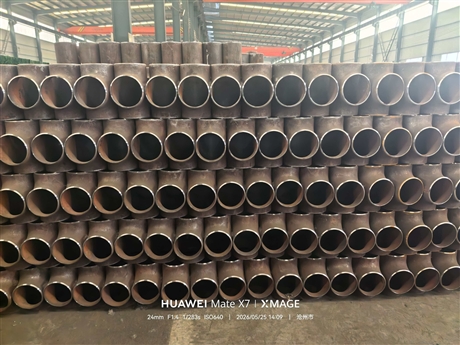

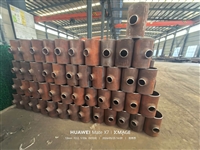
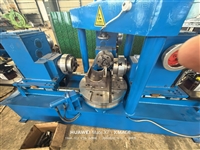
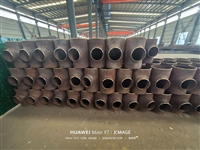
Integrated molding of three-way high-pressure wear-resistant pipeline connectors
Category:
hardware/Pipe fittings/Tee
Model:
DN100-DN300
Brand:
Hebei Haotian
manufacturing process:
Integrated molding/forging/casting
structural characteristics:
No weld seam
Applicable Medium:
Water/oil/gas/corrosive fluid
connection method:
Welding/Threading/Flanges
execution standard:
GB/T12459/ASME B16.9
Material Options:
Carbon steel/stainless steel/alloy steel
work pressure:
≤PN100
Operating Temperature:
-20℃~550℃
Retail Price
10,000,000.00USD
重量
kg
- Product Description
-
manufacturing process Integrated molding/forging/casting
structural characteristics No weld seam
Applicable Medium Water/oil/gas/corrosive fluid
connection method Welding/Threading/Flanges
execution standard GB/T12459/ASME B16.9
Material Options Carbon steel/stainless steel/alloy steel
work pressure ≤PN100
Operating Temperature -20℃~550℃
Description :
This one-piece molded tee adopts integral forging or casting technology, with no weld seam structure. Compared to welded tees, its internal flow channel is smooth, the medium resistance is low, and it is less prone to eddy currents and sedimentation. High overall strength, able to withstand high pipeline pressure and temperature fluctuations. Suitable for pipeline systems with high safety requirements such as petroleum, chemical, and power industries. No on-site welding is required during installation, reducing construction time and potential leakage points, and improving the overall reliability of the pipeline network.
In terms of material, carbon steel, stainless steel, or alloy steel can be selected according to the working conditions. Carbon steel structure has low cost and is suitable for general water and gas transportation; Stainless steel material is corrosion-resistant and suitable for food, medicine, and corrosive media environments. Alloy steel is designed for high temperature and high pressure scenarios, such as power plant main steam pipelines. The surface has undergone sandblasting or anti-corrosion treatment to extend its service life. Users can choose the appropriate material grade based on the specific characteristics of the medium and design pressure to ensure long-term stable operation.
The specifications cover multiple calibers, ranging from DN15 to DN1000. The connection methods include butt welding, socket welding, threaded and flange connection. Welding tees are suitable for large-diameter high-pressure pipelines with good sealing performance; Thread three is usually used for small-diameter instrument pipes or low-pressure branch lines. The size complies with domestic and international standards such as GB, ASME, DIN, etc., and has strong interchangeability. When purchasing, it is necessary to clarify the outer diameter, wall thickness, and execution standards in order to accurately match the existing pipeline system and avoid installation difficulties or sealing failures caused by dimensional deviations.
Widely applicable scenarios include urban heating pipelines, industrial fluid transportation, ship pipeline systems, and building water supply and drainage. At nodes where it is necessary to change the flow direction or divert the medium, one-piece molding of tees is an ideal choice. Its structure is compact, occupies small space, and is easy to layout design. Low maintenance cost, daily inspections only need to check the appearance and connections, no special maintenance is required. Bulk procurement can provide customized services to meet special angle or non-standard size requirements, helping to efficiently promote engineering projects.
AfterSalesService :
Key words: