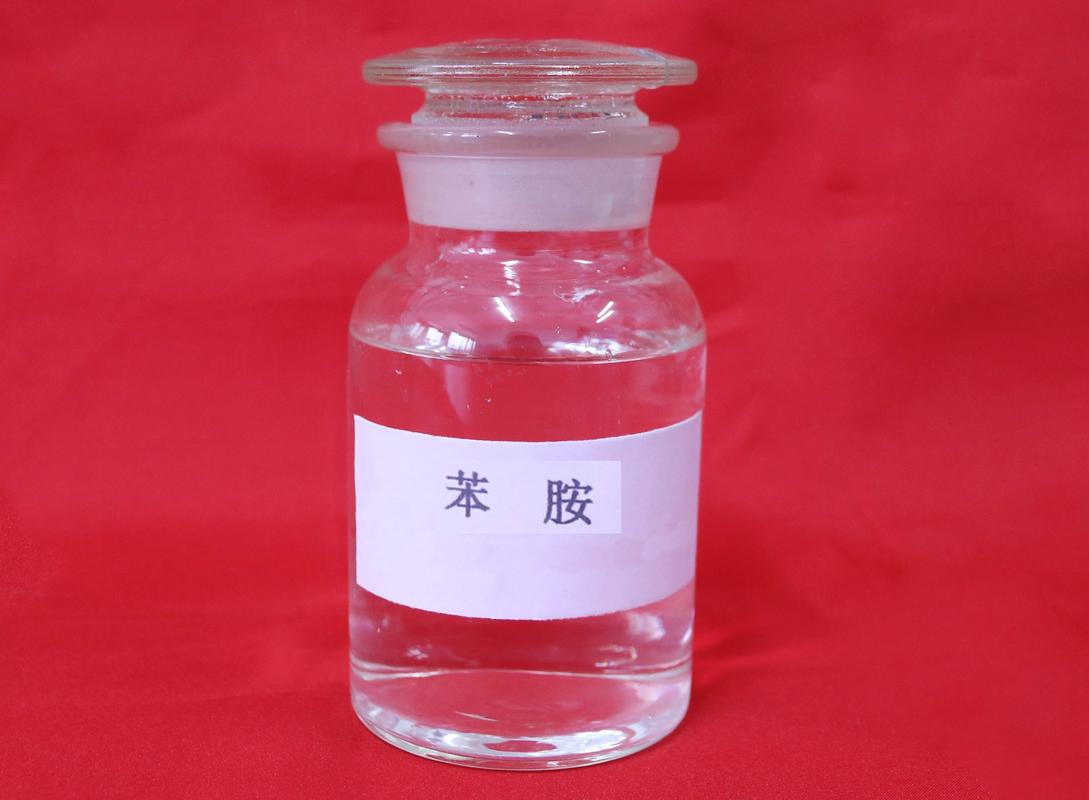

aniline
Category:
chemical industry/amine /Other amines
Model:
GB/T691-2012
Brand:
Yue Baili
molecular weight:
ninety-three point one three
Appearance and characteristics:
Colorless to pale yellow transparent oily liquid
boiling point:
184.4℃
melting point:
-6.2℃
density:
Slightly larger than water
solubility:
Slightly soluble in water, soluble in ethanol, ether, benzene, acetone
acidity and alkalinity:
weakly alkaline
danger:
Combustible, vapor forms explosive mixture with air
Retail Price
10,000,000.00USD
重量
kg
- Product Description
-
molecular weight ninety-three point one three
Appearance and characteristics Colorless to pale yellow transparent oily liquid
boiling point 184.4℃
melting point -6.2℃
density Slightly larger than water
solubility Slightly soluble in water, soluble in ethanol, ether, benzene, acetone
acidity and alkalinity weakly alkaline
danger Combustible, vapor forms explosive mixture with air
Description :
Aniline, also known as aminobenzene, is the simplest aromatic primary amine and a core organic intermediate in the chemical industry. It mainly solves the problem of raw material supply in industries such as polyurethane, dyes, rubber, pharmaceuticals, and pesticides, and is suitable for various synthetic reaction conditions that require the introduction of amino functional groups. As a basic chemical raw material, aniline appears as an oily liquid at room temperature, with active chemical properties and the ability to participate in various organic synthesis pathways. In actual industrial production, aniline is widely used as a key starting material in the manufacture of polyurethane precursors such as diphenylmethane diisocyanate (MDI), as well as various azo dyes and rubber additives. Understanding the basic definition and core uses of aniline helps procurement personnel accurately match production needs, ensure the stability and efficiency of downstream product synthesis, and is an indispensable part of the chemical supply chain.
The specification parameters of aniline have clear physical and chemical indicators, and pure products are usually colorless to light yellow transparent oily liquids with a molecular weight of 93.13. Its boiling point is as high as 184.4 ℃, melting point is -6.2 ℃, and its density is slightly higher than that of water. These physical constants determine its operating conditions during distillation, storage, and transportation. Aniline is slightly soluble in water, but can be completely miscible with most organic solvents such as ethanol, ether, benzene, acetone, etc. This solubility characteristic makes it widely applicable in liquid-phase reactions. In addition, aniline is weakly alkaline and can react with acids to form corresponding salts. It should be noted that aniline will gradually oxidize when exposed to air or light, and its color will change from light to dark, eventually turning from reddish brown to dark brown. Therefore, there are strict requirements for the sealing and light avoidance of storage containers, which must comply with hazardous chemical storage standards.
In terms of model selection and application scenarios, aniline is mainly applicable to the production of polyurethane foam, synthetic dyes, rubber antioxidant, pharmaceutical intermediates and pesticide preparations. When purchasing, it is necessary to distinguish between industrial grade and reagent grade aniline. Industrial grade focuses more on cost-effectiveness and batch supply stability, while high-purity reagent grade is used for precision laboratory analysis. Aniline vapor can form explosive mixtures with air and is flammable, therefore it is not suitable for ordinary storage environments without explosion-proof measures. Compared with similar aromatic amine compounds, aniline has higher reactivity and a mature synthetic pathway, but its toxicity is also relatively significant. When selecting, safety measures for subsequent processes must be fully considered. For chemical enterprises that require large-scale continuous production, choosing aniline products with stable supply and controllable impurity content is the key to ensuring the continuous operation of the production line.
The installation, use, and maintenance of aniline focus on safety protection and storage management. Due to the special irritant odor of aniline and its ability to be absorbed through the skin, operators must wear gas masks, chemical protective gloves, and goggles to ensure good ventilation in the workplace. When storing, it should be placed in a cool and ventilated dedicated warehouse, away from fire and heat sources, and avoid direct sunlight to prevent oxidation and discoloration. Regularly check the sealing of the storage tank during daily maintenance to prevent leakage from causing environmental pollution or safety accidents. Common malfunctions include color darkening or increased impurities caused by improper storage, which can affect the color and purity of downstream products. If necessary, re distillation treatment is required. Mastering the correct handling, storage, and usage norms can not only extend the effective use cycle of aniline, but also effectively reduce occupational health risks and ensure the safety and compliance of chemical production.
AfterSalesService :
Key words:
More Products