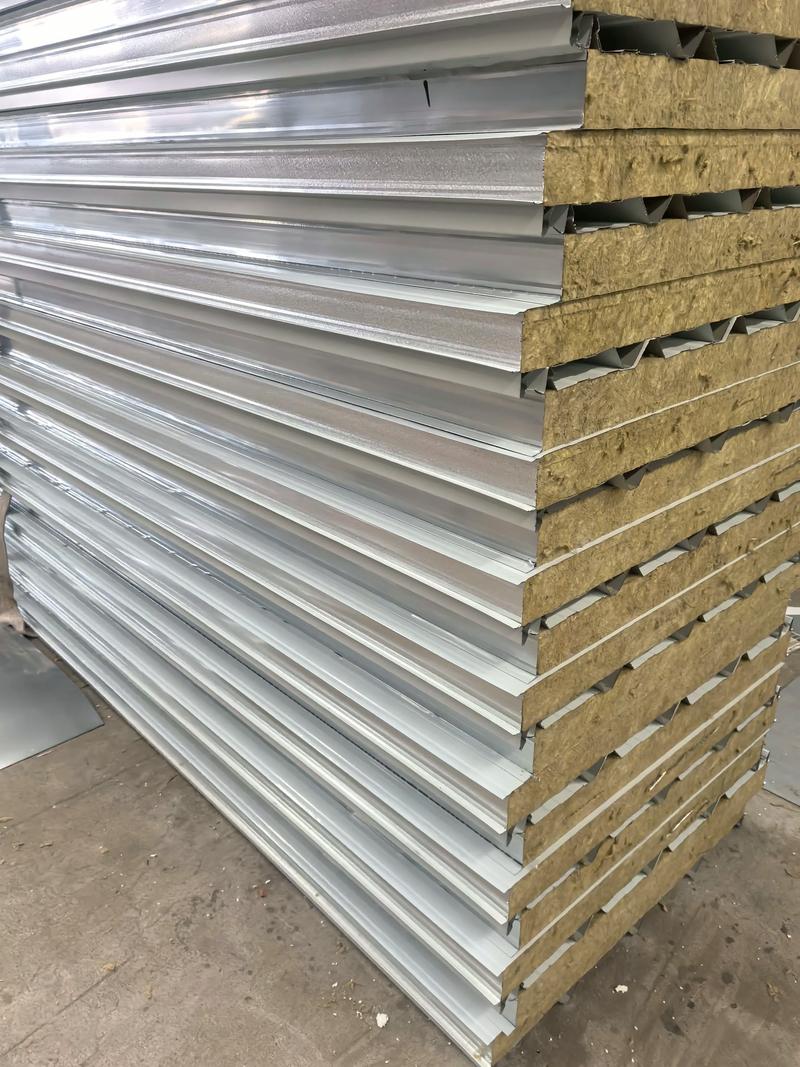

Polyurethane edge sealing rock wool sandwich panel fire insulation and sound insulation A-level flame retardant steel structure factory wall and roof
Category:
building materials/Thermal insulation and sound absorption materials/Rock wool products
Model:
Outer five, inner four, 10cm, 100kg rock wool
Brand:
Ruikui
Core material:
stone wool
Edge banding material:
Polyurethane (PU)/Polyisocyanurate (PIR)
combustion performance:
A-class non combustible
Common thickness:
50mm/75mm/100mm/150mm
Panel material:
Color coated steel plate/galvanized steel plate
Rock wool bulk density:
≥100kg/m³
effective width:
/1000mm
thermal conductivity:
≤0.045W/(m·K)
Core material selection:
Rock wool/glass wool
Retail Price
10,000,000.00USD
重量
kg
- Product Description
-
Core material stone wool
Edge banding material Polyurethane (PU)/Polyisocyanurate (PIR)
combustion performance A-class non combustible
Common thickness 50mm/75mm/100mm/150mm
Panel material Color coated steel plate/galvanized steel plate
Rock wool bulk density ≥100kg/m³
effective width /1000mm
thermal conductivity ≤0.045W/(m·K)
Core material selection Rock wool/glass wool
Description :
Polyurethane edge sealed rock wool sandwich panel is a high-performance building enclosure material designed to solve the problems of moisture absorption, low strength, and cold bridge effect of traditional rock wool panels. It is sealed and edged by injecting polyurethane (PU) or polyisocyanurate (PIR) on both sides, and filled with high-density rock wool core material in the middle, which combines A-level fire resistance and excellent insulation effect. This structure not only retains the non combustible properties of rock wool, but also utilizes the closed cell structure of polyurethane to enhance the overall strength and waterproof and moisture-proof ability of the board. It is widely used in industrial plants, logistics warehouses, and public buildings with strict fire rating requirements for exterior walls and roof systems, effectively reducing building energy consumption and improving safety.
The core specifications of this product usually include a total thickness ranging from 50mm to 200mm, which can be customized according to insulation needs. The commonly used thicknesses are 75mm, 100mm, and 150mm. The panel is mostly made of 0.4mm-0.8mm thick color coated steel plate or galvanized steel plate, and the surface coating can be polyester (PE), silicon modified polyester (SMP), or fluorocarbon (PVDF) to adapt to different corrosive environments. The bulk density of rock wool is generally controlled between 100-140kg/m ³ to ensure good sound insulation and fire resistance performance; The polyurethane edge sealing density is about 35-45kg/m ³, providing sufficient bonding strength and structural rigidity. The implementation standards usually refer to GB/T 23932-2009 "Metal faced Insulated Sandwich Panels for Building" and GB 8624-2012 "Classification of Combustion Performance of Building Materials and Products" to ensure that the products meet the requirements of national standards.
When selecting, it is important to distinguish between ordinary rock wool sandwich panels and polyurethane edge sealed rock wool sandwich panels. The edges of ordinary rock wool board are exposed, which can easily absorb water and cause a decrease in insulation performance. After installation, the appearance joints are prone to cold bridges; The polyurethane edge sealed version uses a tongue and groove connection and PU sealing to completely block the path of water vapor infiltration, eliminate cold and hot bridges, and is more suitable for high humidity or scenarios that require airtightness. If the project budget is limited and the fire protection requirements are only Class B, pure polyurethane sandwich panels can be considered; But if A-level fire protection is mandatory (such as high-rise civil buildings, large chemical plants), products with rock wool as the core material must be selected. Pay attention to checking the weight of the steel plate coating and the direction of the rock wool fibers. Fiber arrangement perpendicular to the plate surface can provide stronger compressive strength.
During the installation process, it is necessary to ensure that the overlapping parts are tightly sealed and fixed with specialized waterproof rivets or self tapping screws to avoid leakage caused by loose fasteners. In daily maintenance, it is necessary to regularly check whether the surface coating of the board has scratches or rust, especially in industrial areas with strong acidic and alkaline corrosiveness. If any damage is found, it should be repaired in a timely manner to prevent substrate corrosion. For the roof system, it is necessary to clean the debris in the gutters and drainage outlets to prevent water from flowing back. In long-term use, if local deformation or joint cracking of the board is found, it should be reinforced or replaced in a timely manner to maintain the overall insulation efficiency and structural stability, and extend the service life of the building enclosure system.
AfterSalesService :
免费拆图 安装指导Key words:
More Products