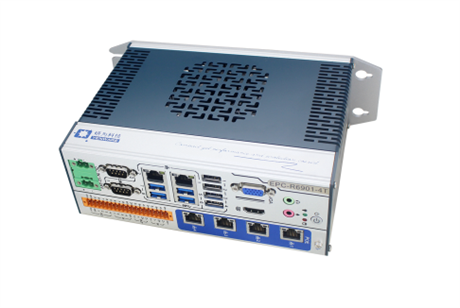

EPC-R6901-4T industrial computer supports multi generation Core processors and 4-channel POE light source control
Category:
Instrumentation/Control instruments/Industrial computer
Model:
EPC-R6901-4T
Brand:
Research for
Processor support:
Intel 6th/7th/8th/9th Gen Core i3/i5/i7
Number of POE interfaces:
4 routes
POE single port power:
Maximum 15W
Number of DIDO interfaces:
Route 8
FPGA functionality:
Support custom configuration
Light source control output:
4 routes
Light source triggering method:
Soft trigger/external trigger input
Application Fields:
Machine Vision/Industrial Automation
Retail Price
10,000,000.00USD
重量
kg
- Product Description
-
Processor support Intel 6th/7th/8th/9th Gen Core i3/i5/i7
Number of POE interfaces 4 routes
POE single port power Maximum 15W
Number of DIDO interfaces Route 8
FPGA functionality Support custom configuration
Light source control output 4 routes
Light source triggering method Soft trigger/external trigger input
Application Fields Machine Vision/Industrial Automation
Description :
EPC-R6901-4T is a high-performance embedded industrial computer designed specifically for machine vision and industrial automation. The device is equipped with Intel 6th to 9th generation Core i3/i5/i7 processors, which have powerful data computing capabilities and fast response speed, and can stably process high concurrency image data. The original intention of its design is to solve the stability problems of data acquisition, real-time control, and visual algorithm operation under complex working conditions. It is typically applied in scenarios such as automated production line detection, intelligent warehouse sorting, and precision instrument control, ensuring smooth system flow during long-term high load operation.
EPC-R6901-4T is highly targeted in terms of interface configuration, providing 4 POE ports and supporting a maximum power of 15W per port. It can directly power and transmit data to network cameras, simplifying the wiring structure. The device is equipped with 8 built-in DIDO digital input and output interfaces, supporting custom configuration based on FPGA. Users can flexibly set logic according to on-site needs to achieve precise data acquisition triggering and control signal output. In addition, the industrial computer is equipped with 4 light source control outputs, 4 light source soft triggers, and external trigger input interfaces. At the hardware level, it is deeply adapted to various strobe controllers and sensors, meeting the synchronization requirements of high standard machine vision systems.
When selecting applications, EPC-R6901-4T is particularly suitable for visual inspection projects that require synchronized triggering of multiple cameras and precise control of light sources. Compared with ordinary industrial control computers, its advantage lies in the integration of POE power supply and dedicated visual triggering interface, without the need to purchase additional acquisition cards or triggering modules, reducing system integration complexity and failure rate. If the application scenario only involves simple logic control without visual requirements, a basic industrial computer can be selected; But for situations that require FPGA bottom layer customization to achieve microsecond level triggering accuracy, EPC-R6901-4T is a more suitable choice, which can effectively avoid detection errors caused by signal delay.
When installing EPC-R6901-4T, attention should be paid to the smoothness of the cooling air duct. It is recommended to install it in a well ventilated electrical control cabinet or install a cooling fan. During daily maintenance, it is necessary to regularly check the contact status of POE ports to ensure that the shielding layer of the network cable is well grounded, in order to prevent electromagnetic interference from affecting the quality of image transmission. For the custom configuration of FPGA, it is recommended to save the configuration file during the debugging phase so that parameters can be quickly restored after system reinstallation or hardware replacement. Common faults such as camera disconnection are usually caused by loose network cables or insufficient POE power supply. When troubleshooting, priority should be given to checking the physical connection and power load status.
AfterSalesService :
Key words: