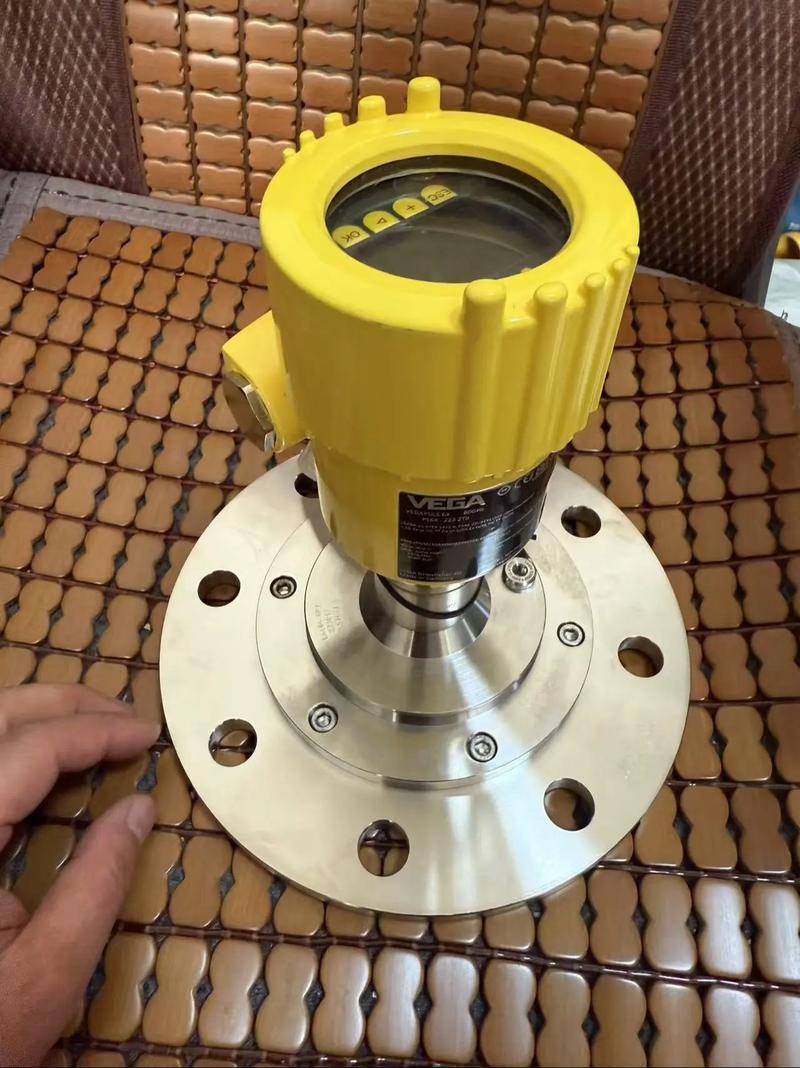

Industrial grade radar level gauge non-contact measurement, high-precision corrosion-resistant tank level monitoring
Category:
Instrumentation/Level instrument/Radar level gauge
Model:
SHLD-PMV14
Brand:
Hebei Shihuan Instrument
measurement range:
0-30m
measurement accuracy:
±1mm-±5mm
operating frequency:
6GHz/26GHz/80GHz
output signal:
4-20mA/HART/Modbus
Protection rating:
IP67/IP68
process connection:
Flanges/Threads
power supply:
24V DC/220V AC
medium temperature:
-40℃-250℃
Process pressure:
-0.1MPa-4.0MPa
Explosion-proof rating:
Ex ia IIC T6 Ga
Retail Price
10,000,000.00USD
重量
kg
- Product Description
-
measurement range 0-30m
measurement accuracy ±1mm-±5mm
operating frequency 6GHz/26GHz/80GHz
output signal 4-20mA/HART/Modbus
Protection rating IP67/IP68
process connection Flanges/Threads
power supply 24V DC/220V AC
medium temperature -40℃-250℃
Process pressure -0.1MPa-4.0MPa
Explosion-proof rating Ex ia IIC T6 Ga
Description :
Radar level gauge is a non-contact level measuring instrument based on microwave pulse principle, mainly used to solve the continuous level monitoring problem of liquids, slurries, and solid particles in storage tanks. It emits high-frequency microwave signals through an antenna, which are reflected back to the surface of the medium and captured by the receiver. The system accurately determines the material distance by calculating the time difference between transmission and reception. The typical working conditions of the equipment cover the chemical, petroleum, water treatment and power industries. It is especially suitable for high temperature, high pressure, high viscosity or complex container environments with mixing devices. It can effectively overcome the interference of steam, foam and dust on measurement, and ensure stable and reliable data.
In terms of specifications, radar level gauges usually use stainless steel or PTFE antenna materials, with a protection level of IP67 or IP68, suitable for harsh industrial sites. Common operating frequencies include 6GHz, 26GHz, and 80GHz, with high-frequency models having smaller beam angles and stronger anti-interference capabilities. The measurement range is generally between 0-30 meters, depending on the range model, and the measurement accuracy can reach ± 1mm or ± 5mm. The equipment supports two-wire or four wire power supply, outputs standard 4-20mA analog signals and digital communication protocols such as HART and Modbus, and complies with CE and Ex explosion-proof certification standards to ensure safe operation in flammable and explosive areas. The installation interface is mostly flange or threaded connection, which is convenient for on-site construction.
When selecting, it is necessary to clarify the characteristics of the medium, such as dielectric constant, temperature, pressure, and the presence of volatile gases. For media with low dielectric constant (such as liquefied gas), it is recommended to choose a high-frequency radar level gauge to enhance the echo signal; For highly corrosive media, PTFE wrapped antenna materials should be selected. If there is a mixer or heating coil inside the tank, it should be installed away from obstacles or a guided wave radar type should be selected. Compared with ultrasonic level gauges, radar level gauges are not affected by vacuum, pressure changes, and temperature gradients, making them more suitable for scenarios with large fluctuations in operating conditions; However, compared with contact capacitive level gauges, their initial investment cost is slightly higher, and budget and maintenance convenience need to be comprehensively considered.
During installation, it is important to ensure that the antenna axis is perpendicular to the liquid surface and avoid installing it directly above the feed inlet or near the tank wall to prevent false echo interference. Daily maintenance mainly includes regular inspection of the antenna surface for condensation, scaling, or attached materials, and cleaning if necessary to maintain signal transmission efficiency. It is recommended to verify the zero point and full range once every quarter to ensure long-term measurement accuracy. Common faults such as signal loss are often caused by antenna blockage or improper parameter settings. They can be diagnosed by checking the echo curve through debugging software. Proper installation and regular maintenance can significantly extend the service life of radar level gauges and ensure the stability of automation control in the production process.
AfterSalesService :
Key words:
More Products