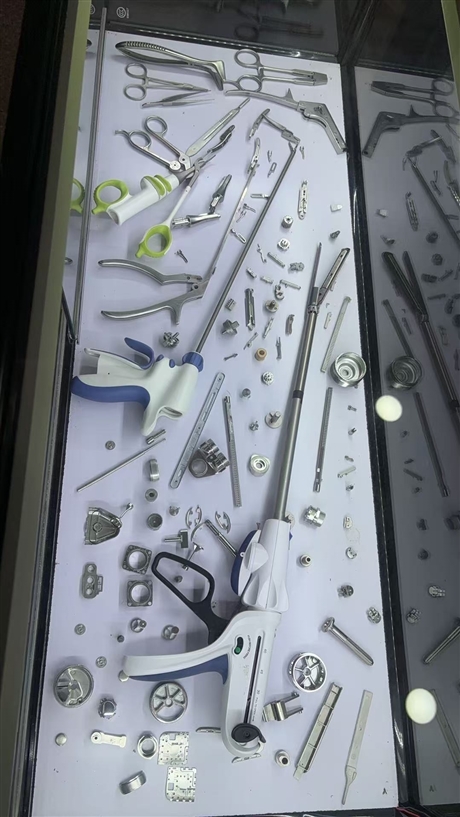

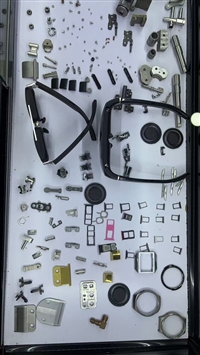
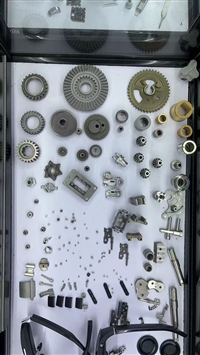
Customized processing of powder metallurgy structural components
Category:
machining/Mechanical processing/powder metallurgy
Model:
Customization
Brand:
Feibote
Material Material:
Iron based/stainless steel
density range:
6.0-7.8 g/cm³
Dimensional Accuracy:
IT7-IT9 levels
tensile strength:
200-800 MPa
Hardness range:
HB100-HRC40
surface roughness:
Ra 3.2-6.3 μm
porosity:
5%-20%
Execution Standard:
GB/T 5678
Retail Price
10,000,000.00USD
重量
kg
- Product Description
-
Material Material Iron based/stainless steel
density range 6.0-7.8 g/cm³
Dimensional Accuracy IT7-IT9 levels
tensile strength 200-800 MPa
Hardness range HB100-HRC40
surface roughness Ra 3.2-6.3 μm
porosity 5%-20%
Execution Standard GB/T 5678
Description :
Powder metallurgy products are near net formed components made through metal powder pressing and sintering processes, mainly solving the problems of low utilization of traditional cutting materials and difficult formation of complex structures. This category is widely used in fields such as automobiles, home appliances, power tools, and office equipment. Typical operating conditions include transmission systems that withstand moderate loads, oil bearing support structures, and precision gear meshing scenarios. The powder metallurgy products provided by Kunshan Feibote Electronic Technology Co., Ltd. cover various material systems such as iron-based and copper based, which can meet the differentiated needs of different industries for part strength, conductivity, and wear resistance. It is an ideal choice for achieving efficient mass production.
In terms of specifications and processes, powder metallurgy products usually follow relevant international standards such as GB/T or ISO, and the dimensional accuracy can generally be controlled at IT7-IT9 levels. The surface roughness Ra value can reach 3.2-6.3 μ m. The common material density range is 6.0-7.8g/cm ³, depending on the compression pressure and sintering temperature curve. The process flow includes powder mixing, molding, sintering, shaping, and subsequent heat treatment or steam treatment. Some high demand parts also require oil immersion or electroplating treatment to enhance anti-corrosion performance. During the production process, strict monitoring of powder particle size distribution and loose packing density is required to ensure stable mechanical properties of the final product. For example, the tensile strength is usually between 200-800MPa, and the hardness range covers HB100-HRC40, meeting the physical index requirements of most industrial application scenarios.
When selecting, it is necessary to clearly distinguish the applicable boundaries between powder metallurgy parts, castings, and machined parts. Powder metallurgy is suitable for scenarios with large quantities, complex shapes, and sensitivity to material utilization, such as oil containing bearings, camshafts, gears, etc; For working conditions with small batch or extremely high strength requirements (such as aviation critical stress components), it is not recommended to choose. If the purchaser is faced with similar category selection, attention should be paid to the presence of microporous structures inside the powder metallurgy parts. Although it is beneficial for oil storage and lubrication, additional sealing treatment is required in high-pressure sealed environments. In addition, iron-based parts have low cost and high strength, while copper based parts have good electrical and thermal conductivity and corrosion resistance. When selecting, it should be matched according to the specific load type, speed, and medium conditions in the working environment to avoid blindly pursuing high density and increasing unnecessary costs.
During the installation and maintenance phase, powder metallurgy products, especially oil containing bearings, are strictly prohibited from cleaning off the lubricating oil that has soaked inside before installation to avoid damaging their self-lubricating performance. The typical service life depends on the working load and lubrication condition. It is generally recommended to check the wear condition during regular maintenance. If excessive clearance or surface pitting is found, it should be replaced in a timely manner. In daily use, overloading and dry friction should be avoided. For iron-based parts exposed to humid or corrosive environments, it is recommended to apply rust proof oil or use surface treatment processes such as nickel plating. Common faults such as abnormal noise or high temperature rise are often caused by assembly coaxiality deviation or lubrication failure. It is necessary to focus on checking the installation fit tolerance and whether the oil supply system is normal to extend the service life of powder metallurgy products.
AfterSalesService :
Key words:
More Products