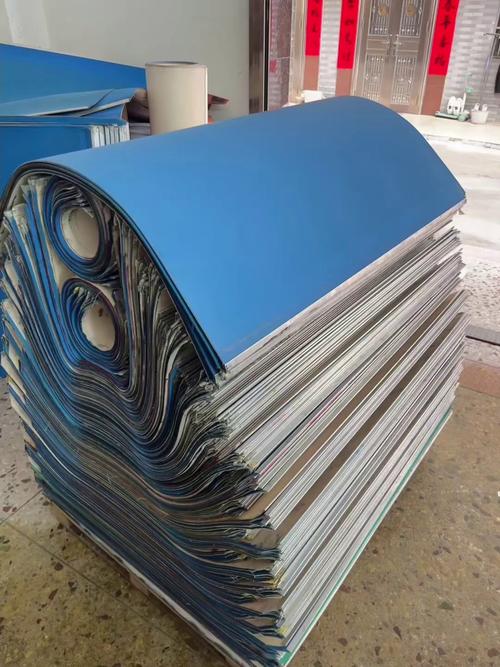

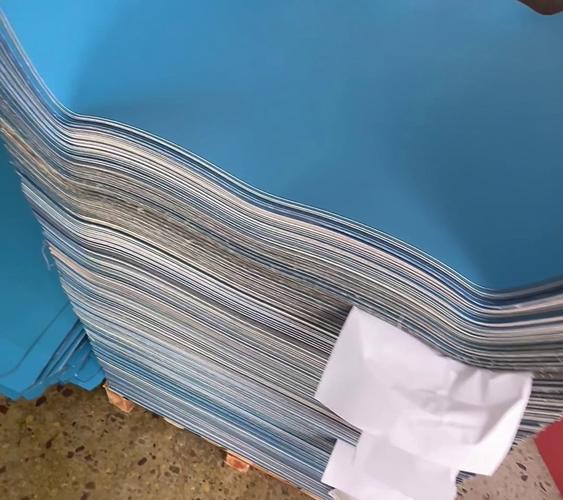
Air cushion rubber cloth for offset printing machine, high elasticity, ink transfer resistance, clear and suitable for multi-color printing
Category:
printing/Rubber blanket/Rubber blanket
Model:
1060MM
Brand:
Ultron
thickness:
1.65mm-1.95mm
hardness:
Xiao's A70-80 degrees
tensile strength:
≥200N/5cm
structural type:
Air cushion/ordinary type
surface state:
Matte/glossy finish
Solvent resistance:
Resistant to gasoline/alcohol cleaning
Applicable Models:
Single sheet offset printing machine/rotary offset printing machine
Bottom fabric layers:
3-4 layers of fabric
Retail Price
10,000,000.00USD
重量
kg
- Product Description
-
thickness 1.65mm-1.95mm
hardness Xiao's A70-80 degrees
tensile strength ≥200N/5cm
structural type Air cushion/ordinary type
surface state Matte/glossy finish
Solvent resistance Resistant to gasoline/alcohol cleaning
Applicable Models Single sheet offset printing machine/rotary offset printing machine
Bottom fabric layers 3-4 layers of fabric
Description :
Rubber blanket is the core transfer medium in offset printing technology, mainly solving the problem of efficient and clear transfer of printing plate graphics and text to the substrate. Under typical operating conditions, it is installed on the cylinder of an offset printing press and indirectly transfers ink from the printing plate to the surface of paper or other substrates through precise pressure control. This product has excellent elastic recovery ability and surface flatness, which can effectively compensate for printing pressure fluctuations, ensure accurate dot restoration, reduce printing ghosting and ghosting phenomena, and is suitable for various printing scenarios such as books, packaging, commercial posters, etc. It is a key consumable to ensure printing quality.
In terms of specifications, the thickness of conventional rubber blankets is usually between 1.65mm and 1.95mm, and the specific value needs to be selected according to the requirements of the printing press cylinder lining. The material structure is mostly composed of multiple layers of fabric base fabric and special synthetic rubber layers, and the surface is finely sanded or polished to adapt to different ink types. Implement industry standard reference ISO or GB/T related printing material specifications, have good solvent resistance, and can resist the erosion of common printing cleaning agents such as gasoline and alcohol. The tensile strength is usually greater than 200N/5cm, and the hardness is controlled within the range of Shore A70-80 degrees, ensuring dimensional stability and resistance to deformation during high-speed operation.
When selecting, it is necessary to clarify the printing machine model and drum diameter, and distinguish between air cushion and ordinary rubber blankets. The air cushion rubber blanket contains a layer of microbubbles inside, with small compression deformation, suitable for high-precision color printing; The regular style is suitable for general text or line printing. If printed materials require extremely high clarity of dots, models with delicate surfaces and slightly higher hardness should be selected; If the surface of the substrate is rough, it is necessary to choose a product with better elasticity and stronger inclusiveness. Be careful not to use offset printing blanket for gravure or flexographic printing units, as their working principles and material requirements are completely different. Mixing them can cause printing failures and equipment damage.
During installation, a specialized wrench should be used to evenly tighten the clamping strip to avoid local stress concentration that may cause breakage or wrinkling. In daily maintenance, residual ink on the surface should be cleaned in a timely manner after each shutdown to prevent ink drying and peeling from affecting the quality of the next printing. It is recommended to regularly check the surface of the rubber blanket for scratches, dents, or aging cracks, and replace it immediately if any abnormalities are found. The typical usage cycle depends on the printing volume and maintenance condition, and generally high-quality rubber cloth can withstand hundreds of thousands of prints. Common faults such as inaccurate printing are often caused by insufficient pressure or rubber blanket aging and loss of elasticity, and require timely adjustment of pressure or replacement of new parts.
AfterSalesService :
Key words: