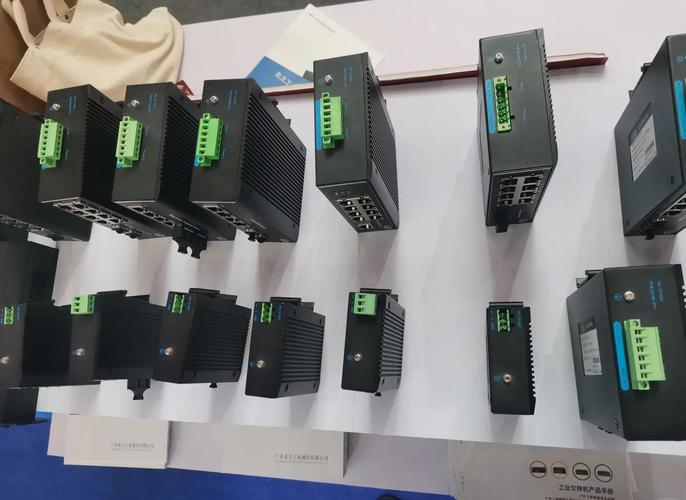

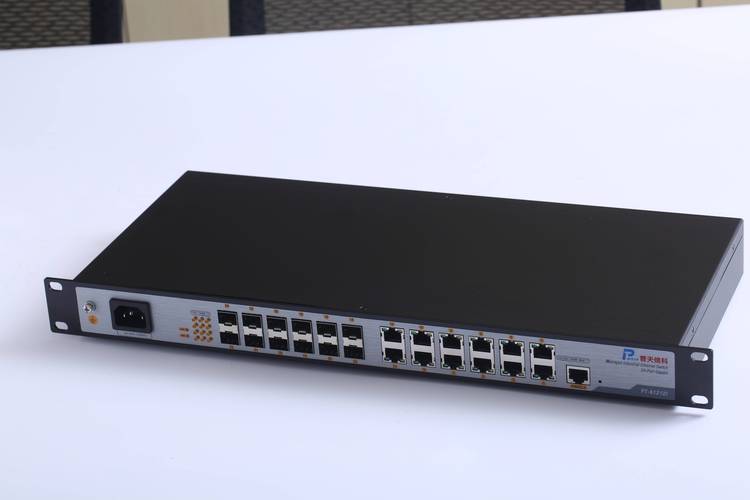
Industrial grade Ethernet switch with wide temperature and lightning protection design for stable transmission
Category:
communication/Transmission switching equipment/Switch
Model:
HF-4000
Brand:
Huafei Era
Operating temperature:
-40℃~75℃
Protection rating:
IP40
input voltage:
12-48V DC/220V AC voltage optional
transmission rate:
10/100/1000Mbps
Installation Method:
Rail mounted/Wall mounted/Rack mounted
cooling method:
Fanless cooling
Electromagnetic Interference Resistance:
Compliant with EN61000-4 standard
Mean time between failures:
≥ 50000 hours
Retail Price
10,000,000.00USD
重量
kg
- Product Description
-
Operating temperature -40℃~75℃
Protection rating IP40
input voltage 12-48V DC/220V AC voltage optional
transmission rate 10/100/1000Mbps
Installation Method Rail mounted/Wall mounted/Rack mounted
cooling method Fanless cooling
Electromagnetic Interference Resistance Compliant with EN61000-4 standard
Mean time between failures ≥ 50000 hours
Description :
Industrial switches are network communication equipment designed specifically for harsh industrial environments, mainly to solve the problem of traditional commercial switches being prone to failure under high temperature, high humidity, strong electromagnetic interference and other working conditions. It can operate stably within a wide temperature range of -40 ℃ to 75 ℃, providing highly reliable data transmission services. It is typically used in scenarios such as power, transportation, and manufacturing that require extremely high network stability. As the core component of industrial automation systems, industrial switches ensure real-time communication between on-site equipment and control centers, effectively supporting the continuous operation of SCADA systems, video surveillance, and data acquisition businesses.
This industrial switch usually adopts a fanless heat dissipation design, and the shell is mostly made of aluminum alloy or stainless steel with a protection level of IP40 or above, which has excellent dust and moisture resistance performance. The internal circuit has undergone special reinforcement treatment, supporting wide voltage inputs (such as 12-48V DC), and is equipped with multiple lightning protection mechanisms to withstand surges of 4kV or higher. Compliant with strict standards in the power industry such as IEC61850-3 and IEEE1613, some models have passed FCC and CE certifications. The port configuration is flexible, commonly consisting of a combination of 100M/1G electrical and optical ports, supporting redundant ring network protocols to ensure network recovery in milliseconds in the event of a single point of failure, ensuring high availability of data links.
When selecting, special attention should be paid to the number of ports, transmission speed, and power supply method. If the on-site distance exceeds 100 meters or there is strong electromagnetic interference, industrial switches with fiber optic interfaces should be prioritized; If the devices are scattered and have difficulty accessing power, a model that supports PoE power supply can be selected. Compared with ordinary commercial switches, industrial switches have significant advantages in vibration resistance, shock resistance, and long-term mean time between failures (MTBF), and are not suitable for ordinary office environments due to high costs. For complex topology structures that require the construction of redundant ring networks, it is important to confirm whether the equipment supports specific ring network protocols such as RSTP and MRP to avoid storm problems caused by network loops.
When installing industrial switches, it is recommended to use rail or wall mounted fixing to ensure good ventilation and stay away from heat sources. Shielded twisted pair or armored optical fiber should be used for wiring, and grounding treatment should be done to suppress electromagnetic interference. During daily maintenance, it is necessary to regularly check the status of the indicator lights, confirm that the link connection is normal, and clean the dust at the air inlet to prevent overheating. Common faults are often caused by damaged power modules or poor port connections. When troubleshooting, you can first measure whether the input voltage is within the rated range, and then replace the network cable to test the port connectivity. Reasonable planning of cabling and regular firmware upgrades can significantly extend the service life of industrial switches and reduce maintenance costs.
AfterSalesService :
Key words:
More Products