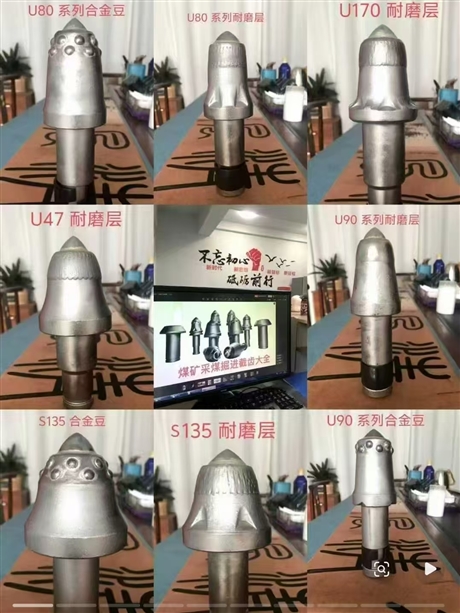

135-25 straight column wear-resistant layer cutting tooth alloy bean reinforcement coal mining machine tunneling machine accessories
Category:
mechanical equipment/Mining machinery and equipment/Mining machinery accessories
Model:
135-25
Brand:
Gnawing on rocks, Little
model:
135-25
Type:
Straight column tooth cutter
Alloy head type:
Alloy beans
Tooth material:
alloy structural steel
Surface Treatment:
Wear resistant layer treatment
Applicable Devices:
Coal mining machine/tunneling machine
connection method:
Interference fit/snap spring fixation
Application Fields:
Coal mining/tunnel excavation
Retail Price
10,000,000.00USD
重量
kg
- Product Description
-
model 135-25
Type Straight column tooth cutter
Alloy head type Alloy beans
Tooth material alloy structural steel
Surface Treatment Wear resistant layer treatment
Applicable Devices Coal mining machine/tunneling machine
connection method Interference fit/snap spring fixation
Application Fields Coal mining/tunnel excavation
Description :
The cutting tooth 135-25 straight column is a key cutting tool for heavy mining machinery such as coal mining machines and tunneling machines, mainly used for crushing coal seams, rock formations, and semi coal rock formations. This model adopts a straight column design, with a stable structure that can effectively transmit torque and impact force, solving the problem of traditional tooth breakage and detachment in hard rock working conditions. The 135-25 specification represents its specific geometric dimensions and installation interface standards, suitable for most mainstream brands of mining equipment tool holders. As a consumable spare part, its performance directly determines mining efficiency and cost. Typical working conditions include high hardness rock cutting, tunnel excavation, and road milling operations, requiring extremely high compressive strength and impact toughness.
The core process of the 135-25 straight column of the cutting tooth is to embed high-strength hard alloy beans into the tooth head, and optimize the thickness and wrapping angle of the alloy layer to ensure sharpness and resistance to wear during high-speed rotary cutting. The tooth body is usually made of high-quality alloy structural steel (such as 42CrMo), which is subjected to overall heat treatment and quenching to achieve a hardness of HRC45-50 or above, ensuring that the tooth body has sufficient toughness to absorb impact loads. The implementation standard refers to relevant coal industry standards such as MT/T239, with strict control of dimensional tolerances to ensure appropriate clearance with the gear sleeve, preventing loosening and easy replacement. The surface is treated with rust prevention or sandblasting technology to improve the appearance quality and corrosion resistance, and adapt to the humid environment underground.
When selecting, special attention should be paid to the matching degree between the rock hardness coefficient (f value) of the working conditions and the material of the cutting teeth. 135-25 straight column cutters are suitable for medium to hard rock formations. If the working condition is extremely hard rock or contains a large amount of quartz sandstone, it is recommended to use reinforced cutters with larger alloy heads or special coatings; If it is soft coal or soil layer, the ordinary wear-resistant layer version can be used to reduce costs. Compared with ordinary conical cutters, straight column cutters have more uniform force distribution and are less prone to eccentric wear, but it is necessary to ensure that the tooth seat hole is not deformed. When purchasing, key dimensions such as total length, diameter, and protrusion height of the alloy head should be checked to avoid installation difficulties or abnormal cutting angles caused by dimensional deviations, which may affect the overall work efficiency of the machine.
Before installing the cutting tooth 135-25 straight column, it is necessary to clean the coal powder, rust, and debris in the tooth seat hole, and apply an appropriate amount of lubricating grease for disassembly. During use, the wear of the cutting teeth should be regularly checked. When the alloy head wears to the base or tooth body and obvious cracks appear, it must be replaced immediately to avoid damaging the tooth seat or causing larger faults. In daily maintenance, pay attention to the missing rate of the cutting teeth on the drum. Missing teeth can cause excessive load on adjacent cutting teeth and accelerate damage. Common faults include alloy head detachment, tooth bending or fracture, often caused by impact overload or material defects. It is recommended to establish a regular inspection system, record replacement cycles, optimize spare parts inventory management, and ensure continuous production.
AfterSalesService :
Key words:
More Products