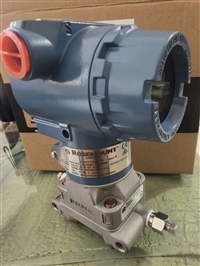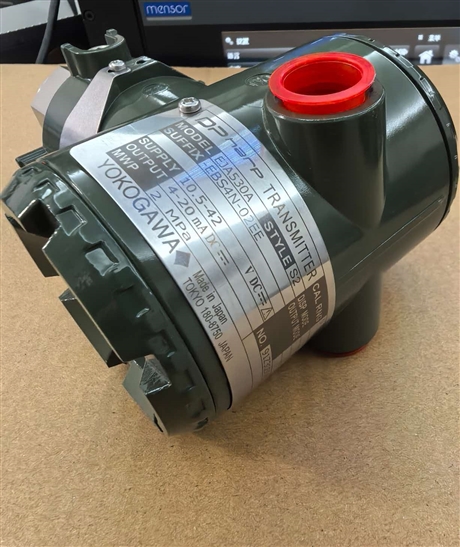

Yokogawa YOKOGAWA EJA530A differential pressure transmitter 4-20mA output for industrial process control
Category:
Instrumentation/transmitter /Pressure transmitter
Model:
EJA530A
Brand:
YOKOGAWA
Model:
EJA530A
output signal:
4-20 mA DC
power supply voltage:
10.5-42 V DC
Maximum work pressure:
2 MPa
Protection Rating:
IP67
process connection:
1/2
electrical interface:
M20 × 1.5 thread
accuracy class:
±0.075% FS
response time:
<100 ms
Place of Origin:
Tokyo, Japan
Retail Price
450.00USD
重量
kg
- Product Description
-
Model EJA530A
output signal 4-20 mA DC
power supply voltage 10.5-42 V DC
Maximum work pressure 2 MPa
Protection Rating IP67
process connection 1/2
electrical interface M20 × 1.5 thread
accuracy class ±0.075% FS
response time <100 ms
Place of Origin Tokyo, Japan
Description :
The EJA530A differential pressure transmitter is an intelligent pressure measuring instrument developed by Yokogawa Electric. It is used to convert differential pressure signals in pipelines or containers into standard 4-20mA DC current output, solving the real-time acquisition problem of key parameters such as pressure monitoring, flow calculation, and liquid level control in industrial automation systems. This equipment is suitable for medium and high pressure working conditions in industries such as petroleum, chemical, power, and water treatment. The typical working pressure range covers 0-2MPa, supports bidirectional differential pressure measurement, has high stability and anti-interference ability, and can be adapted to control systems such as DCS and PLC to meet the long-term reliable operation requirements in continuous production environments.
The housing of EJA530A differential pressure transmitter adopts aluminum alloy die-casting and epoxy coating protection, with a protection level of IP67, suitable for humid, dusty and mildly corrosive environments; The electrical interface is M20 × 1.5 thread, and the process connection is standard 1/2 "NPT internal thread (marked with a red sealing ring). The installation size complies with IEC 60534-6-1 specification; Power supply voltage of 10.5~42V DC, power consumption ≤ 0.7W; output signal accuracy of ± 0.075% FS, response time<100ms; built-in HART protocol communication module, supporting remote configuration and diagnosis of handheld devices; The nameplate is labeled "Made in Japan", and the serial number is unique and traceable, in compliance with CE and RoHS certification requirements.
When selecting, it is necessary to clarify the type of medium (gas/liquid), maximum static pressure, ambient temperature range, and whether explosion-proof certification is required (this model is not intrinsically safe and is not suitable for Zone 0 area); If used for steam or high-temperature media, condenser bends or heat sinks need to be installed; Compared with the EJA510A monocrystalline silicon absolute pressure transmitter, EJA530A specializes in differential pressure scenarios, such as pressure difference before and after orifice flow meters, filter blockage alarms, etc; If only gauge pressure measurement is required, the EJA530E series should be selected; Pay attention to distinguishing suffix codes - BS4N-02EE represents the standard membrane box material 316L stainless steel. If it comes into contact with strong corrosive media, customized Hastelloy or Tantalum membrane versions are required.
Ensure that there is no leakage or airbag in the pressure pipe during installation. When installed horizontally, the exhaust valve should face upwards. When installed vertically, the pressure point should be higher than the transmitter body to prevent liquid accumulation; Before the first operation, it is necessary to calibrate the zero point and range with a standard pressure source. Daily maintenance only requires checking the fastening status of the wiring terminals and the sealing of the casing; Common faults include output drift (mostly due to temperature shock or aging of the membrane box), no signal (check power supply or fuse), and large fluctuations (check for pulse dampers or blocked pressure pipes); It is recommended to conduct a full-scale calibration every two years and use original accessories when replacing O-rings to avoid sealing failure caused by the use of silicone grease.
AfterSalesService :
Key words:
More Products