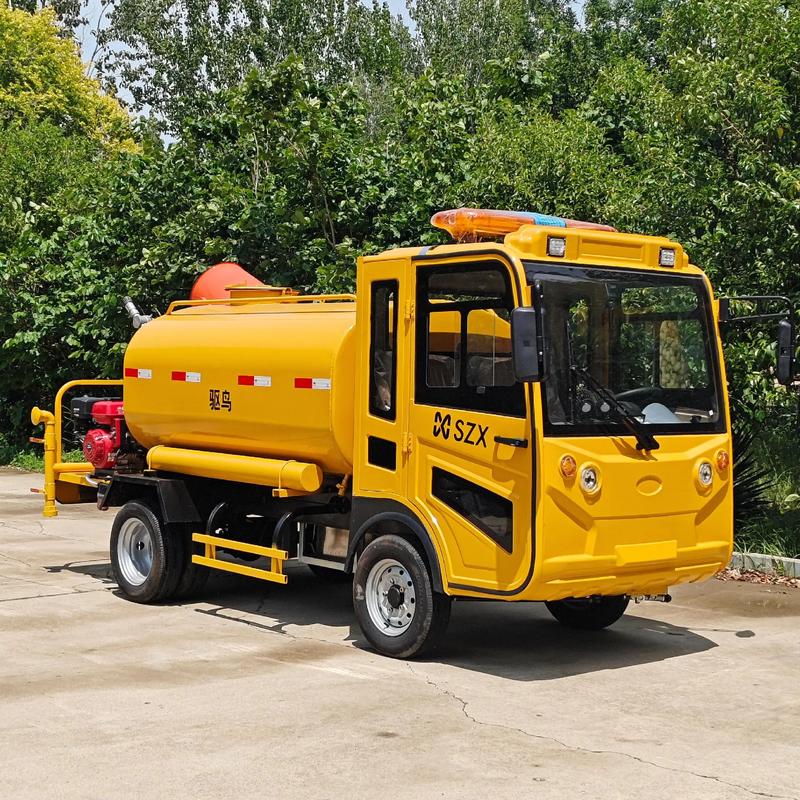

New energy pure electric sprinkler truck for urban greening and sanitation operations with zero emissions and low noise
Category:
Special Purpose Vehicles/Special vehicles for environmental sanitation vehicles/Watering and road washing vehicle
Model:
EQ
Brand:
east wind
Drive Type:
pure electric
Energy type:
Lithium iron phosphate battery
emission standard:
zero emission
main purpose:
Road flushing/greening irrigation/dust reduction
Water tank material:
Carbon steel/stainless steel
noise level:
Low noise operation
Charging method:
DC fast charging/AC slow charging
Applicable Scenarios:
Urban municipal/park/scenic area
Retail Price
10,000,000.00USD
重量
kg
- Product Description
-
Drive Type pure electric
Energy type Lithium iron phosphate battery
emission standard zero emission
main purpose Road flushing/greening irrigation/dust reduction
Water tank material Carbon steel/stainless steel
noise level Low noise operation
Charging method DC fast charging/AC slow charging
Applicable Scenarios Urban municipal/park/scenic area
Description :
The new energy pure electric sprinkler truck is a specialized sanitation vehicle designed for urban landscaping, road washing, and dust reduction operations. The vehicle adopts a pure electric drive system, completely eliminating dependence on traditional fuel and achieving zero exhaust emissions and low-noise operation during operation, perfectly meeting the high standards of current green municipal and environmental inspections. Typical working conditions include watering and cooling of urban main roads, irrigation and maintenance of parks and green spaces, and dust suppression around construction sites. As an important component of modern smart sanitation, pure electric sprinkler trucks not only solve the noise disturbance problem caused by traditional fuel vehicles operating in densely populated areas, but also significantly reduce carbon emission indicators, making them an ideal choice for improving urban image and environmental sanitation quality.
The core specifications of this model revolve around a large capacity water tank and an efficient electric drive system. The body of the car is usually made of high-strength carbon steel or stainless steel material to manufacture the water tank, which has undergone anti-corrosion and anti rust treatment to ensure that it is not prone to aging and leakage when exposed to water for a long time. The chassis structure has been reinforced with design to adapt to driving stability under full load and water weight. In terms of power, it is equipped with a high-power permanent magnet synchronous motor and a high-capacity lithium iron phosphate battery pack, supporting fast charging mode to meet the needs of continuous operation around the clock. In terms of implementing standards, the vehicle complies with the national standard GB 7258 "Technical Conditions for Motor Vehicle Operation Safety" and relevant industry standards for special vehicles, and has complete lighting signals, braking systems, and safety protection devices. Some high-end configurations also include intelligent electronic water cannons, front flushing and rear spraying multifunctional nozzles, and real-time water level monitoring systems to ensure operational accuracy and efficiency.
In the selection stage, the purchaser needs to focus on three major indicators: range, water tank capacity, and chassis load-bearing capacity. Suitable for residential areas, commercial centers, schools and hospitals that are sensitive to noise, as well as internal roads in industrial parks with strict emission restrictions. For areas that require long-distance transitions or remote areas without charging facilities, it is necessary to evaluate their range limitations, and in such cases, extended range or traditional fuel vehicles may need to be used as supplements. Compared with fuel water trucks of the same tonnage, pure electric water trucks have slightly higher initial purchase costs, but with extremely low energy consumption and maintenance costs (no need for engine oil or filter replacement), they have better economy throughout their entire lifecycle. When selecting, attention should also be paid to battery quality assurance policies and the distribution of local charging stations to ensure operational continuity.
In terms of installation and use, it is recommended to conduct a comprehensive inspection of tire pressure, braking system, and water and electricity pipelines before driving. The focus of daily maintenance is on the maintenance of the power battery pack, avoiding excessive discharge or long-term full charge static, and regularly cleaning the dust at the battery cooling port. After use, the water tank should be drained of excess water and cleaned of sediment to prevent nozzle blockage or internal corrosion. During winter work, it is necessary to pay attention to anti freezing measures, drain the accumulated water in the water pump and pipeline, and prevent freezing and cracking of components. Common malfunctions such as insufficient water pump pressure are often caused by clogged inlet filters or worn seals, and require regular disassembly, cleaning, and inspection. Electrical system failures are usually related to poor circuit connections or overheating of controllers. Keeping the cab dry and ventilated can help extend the life of electronic components and ensure long-term stable operation of the vehicle.
AfterSalesService :
Key words:
More Products