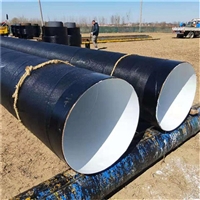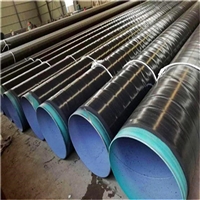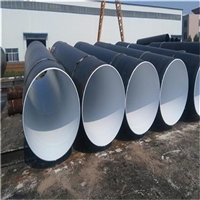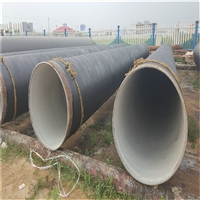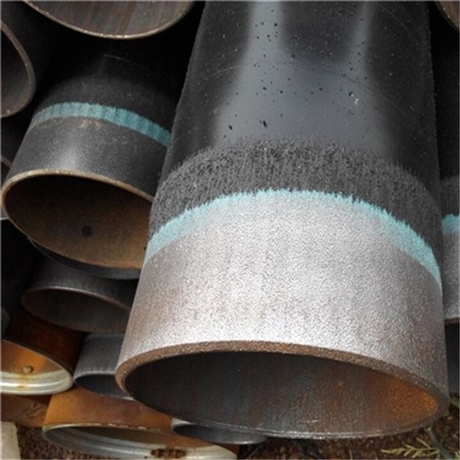

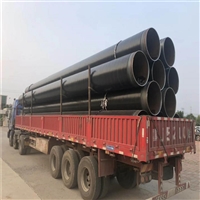


Reinforced 3PE anti-corrosion steel pipe, gas transmission pipeline steel pipe manufacturer Guanghui Pipe Industry
Category:
metallurgy/tubing/Spiral tube
Model:
Brand:
Guanghui
Retail Price
3,670.00USD
重量
kg
- Product Description
-
Description :
There are many well-known anti-corrosion steel pipe brands, but they are very particular about the selection of product types. Some brands and national standard steel pipes need to meet different production processes according to market demand. Enterprises produce and process steel pipes according to their own purposes and consumer needs. Today, we conducted a detailed analysis of the production process and quality of three commonly used anti-corrosion steel pipes for your reference. 1. Production Process 1.1 Raw Material Selection Raw materials are the basic conditions for producing anti-corrosion steel pipes, and their quality generally depends not only on their appearance, but also on the strength, toughness, wear resistance, and corrosion resistance of the steel pipes. Steel pipes are commonly used to manufacture pollution-free steel for construction, chemical plants, transportation pipelines, and pipeline engineering.
3PE anti-corrosion steel pipes have superior characteristics such as light bulk density, high strength, thermal insulation, sound insulation, flame retardancy, cold resistance, anti-corrosion, non water absorption, and fast construction. They have become indispensable materials for insulation, anti-corrosion, waterproofing, sealing, etc. in industries such as construction, transportation, kerosene, chemical, power, refrigeration, etc. 3PE anti-corrosion steel pipe is used for anti-corrosion and cold insulation engineering of various indoor and outdoor pipelines, heating pipelines, local air conditioning pipelines, chemical and other industrial pipelines. Overview: Since the emergence of 3PE decomposition materials in the 1930s, 3PE foam anti-corrosion pipes have been rapidly developed as a superior insulation and anti-corrosion material. Their application scope has become increasingly common, and they are widely used in various pipelines such as heating, cooling, oil transportation, and steam transportation due to their complex construction and clear energy-saving and anti-corrosion effects. Used in large quantities for various pipelines such as heating, cooling, oil transportation, and steam transportation.


The 3PE anti-corrosion steel pipe (three-layer polyethylene) process is an advanced anti-corrosion technology introduced from abroad in the late 1990s. Its full name is fusion bonded epoxy/extruded polyethylene structural protective layer. 3PE anti-corrosion technology combines the excellent performance of epoxy coating and extruded polyethylene anti-corrosion layer, and combines the interface characteristics and chemical resistance of epoxy coating with the mechanical protection characteristics of extruded polyethylene anti-corrosion layer, thereby significantly improving their respective performance. Its characteristics include high mechanical strength, wear resistance, corrosion resistance, heat resistance, cold resistance, and can be applied to media at 150 degrees Celsius, making it suitable for use in cold regions. Therefore, 3PE anti-corrosion coating is an ideal external protective layer for buried pipelines. According to authoritative testing, buried pipelines using 3PE anti-corrosion technology can have a lifespan of up to 50 years.
(1) Welding connection: Directly welding steel pipes by electric welding, simple and easy to implement, suitable for shorter connection distances.
(2) Flange type connection: Simple and easy to replace, the flange must be selected according to the design requirements and engineering technical requirements for pressure. 1. The diameter and length of the flange connecting bolts should meet the required specifications. The outer thread of the flange fastened bolts should generally be 2-3 threads, and should not exceed 1/2 of the bolt outer diameter. 2. The flange connection gasket should use a 3mm thick rubber gasket, and the pipelines for heating, steam, and domestic water should use a 3mm thick asbestos gasket. The gasket should be concentric with the pipe wall and not offset. (3) Wire connection: 1. When threading, ensure that the thread length, tooth shape, tooth height and other parameters meet the process requirements of relevant standards. When connecting steel pipe threads, appropriate fillers should be added to the outer threads of the connection or the inner threads of the pipe fittings to seal and maintain the pipe mouth, and to facilitate disassembly during maintenance. After wrapping the filler, it is advisable to manually tighten 2-3 threads, and then use pipe pliers to tighten 3-4 threads of the pipe fittings, leaving 2-3 threads. The remaining external threads should be treated with anti-corrosion. (4) The groove type connection is easy to operate and should comply with the CECS151:2003 Chinese Engineering Construction Standardization Association standard "Technical Specification for Groove Type Connection Pipeline Engineering".

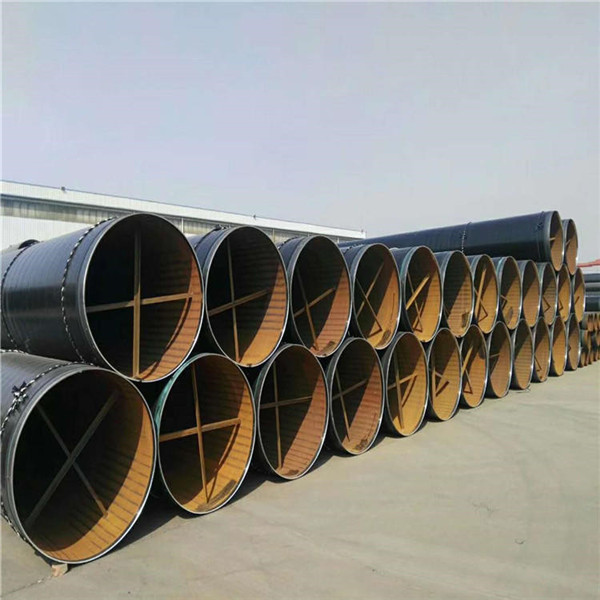


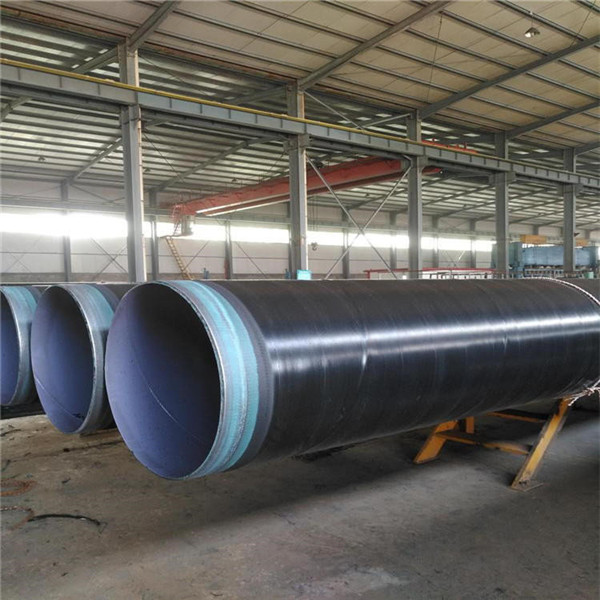
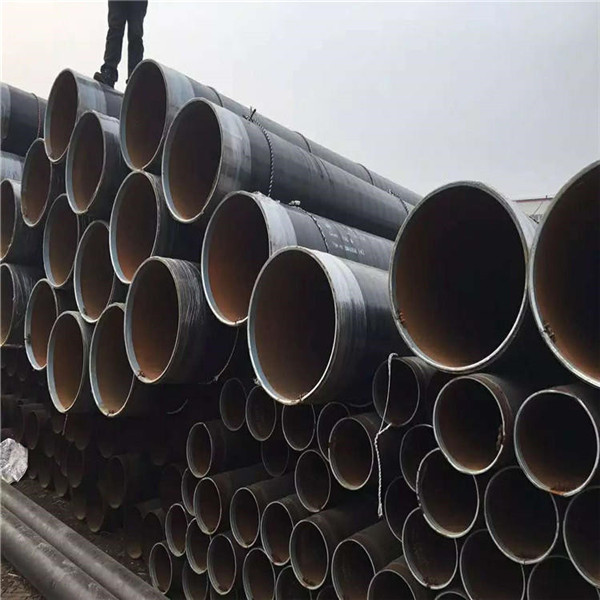
3PE anti-corrosion steel pipe is a type of pipeline used in different working environments. In order to slow down or prevent the pipeline from being eroded and deteriorated by the chemical or electrochemical action of the external medium or the metabolic activity of microorganisms, 2 or 3 layers of polyethylene (3PE) are coated on its outer wall to achieve pipeline anti-corrosion. The service life of 3PE anti-corrosion pipe is extended by 3-5 times. The bottom layer is fusion bonded epoxy (≥ 80 μ m); The middle layer is adhesive (170-250 μ m); The surface layer is extruded polyethylene (about 2mm). The total thickness of the protective layer is about 1.8-3.7mm. In the three-layer structure, the main function of the fusion bonded epoxy powder coating is to form a continuous coating film, which is directly bonded to the surface of the steel pipe and has good chemical corrosion resistance and cathodic stripping resistance; Reacts with the active groups of the intermediate layer adhesive to form a chemical bond, ensuring that the overall anti-corrosion layer has good adhesion at higher temperatures. The intermediate layer is usually a copolymer adhesive, which is mainly composed of polyolefin. Currently, ethylene based copolymer adhesives are widely used. The polar functional groups of the copolymer adhesive can react with the epoxy groups of the fusion bonded epoxy powder coating to form hydrogen bonds or chemical bonds, forming a good bond between the intermediate layer and the bottom layer; The non-polar ethylene portion has a good affinity with the surface layer polyethylene, so the intermediate layer also has good bonding performance with the surface layer. The main function of polyethylene surface layer is to provide mechanical protection and anti-corrosion, which is the same as the traditional two-layer structure polyethylene anti-corrosion layer.
AfterSalesService :
Key words:- Reinforced 3pe anti-corrosion steel pipe
More Products