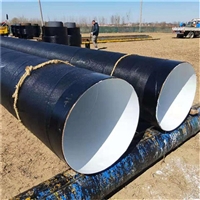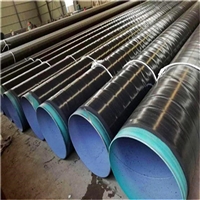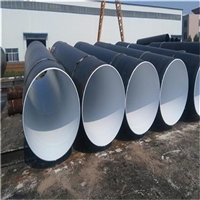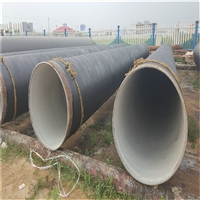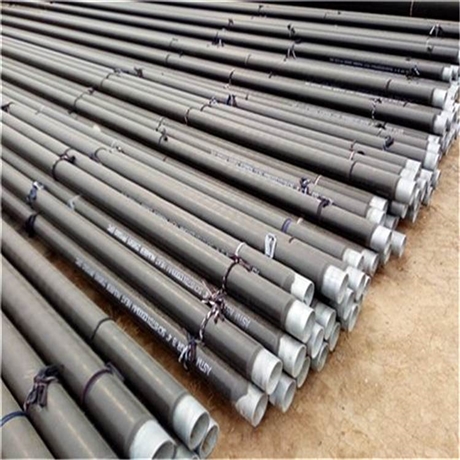



Three layer PE anti-corrosion steel pipe natural gas pipeline 3PE anti-corrosion seamless steel pipe manufacturer
Category:
building materials/Pipe fittings/seamless steel tube
Model:
dn50-1200
Brand:
Guanghui
Retail Price
5,210.00USD
重量
kg
- Product Description
-
Description :
The 3PE anti-corrosion steel pipe is a three-layer coating system that combines the excellent performance of single-layer epoxy resin and polyethylene coatings, improving the strength of the coating system's resistance to cathodic peeling and adhesion, and meeting the requirements of * * operating temperature (90 ℃). The three-layer polyethylene anti-corrosion coating has outstanding mechanical protection and bonding properties. It can withstand the stress caused by soil movement due to vibration and temperature changes, and resist the impact stress generated by sharp stones acting on the surface of the pipeline. _The resistance of the three-layer polyethylene anti-corrosion coating is relatively high, which will greatly reduce the installation and maintenance costs of the cathodic protection system. The current density of cathodic protection for three-layer polyethylene anti-corrosion coating pipelines is less than. The advantages of the three-layer structure polyethylene anti-corrosion coating are sufficient to make it widely used in various countries around the world. In practical operation, three materials are mixed and integrated, and processed to firmly bond with steel pipes to form an excellent anti-corrosion layer. This is just a general statement. How can we distinguish between good and bad? Epoxy resin powder has high adhesion, good cathodic stripping properties, chemical barrier properties, and oxygen resistance. The polymer coating has excellent chemical adhesion with the epoxy resin substrate, which can resist shear forces caused by soil movement and temperature changes. High density polyethylene surface coating has a good barrier effect on moisture, which can protect the epoxy resin bottom layer and polymer coating. It has strong resistance to mechanical damage, reduces peeling, and has low cathodic protection current, suitable for a wide temperature range (-50~80 ℃). The combination characteristics of the three-layer structure polyethylene anti-corrosion coating are the combination and enhancement that can be achieved between the three coatings. The three-layer coatings have strong chemical bonding between them, and the performance and characteristics of each layer complement each other. This three-layer anti-corrosion coating is composed of three in one form, and achieves a high level of chemical and mechanical properties. It combines the good adhesion and chemical resistance of epoxy resin with the mechanical strength and protective effect of polyethylene coating, and is widely used in anti-corrosion engineering of metal pipelines such as oil, gas, and water. ⑴ Before applying epoxy powder coating, the steel pipes treated with fine dust should be preheated using a KGPS-750uw constant power medium frequency machine. The preheating temperature must meet the requirements of the epoxy powder coating, but not exceed 275 ℃.

During the coating process of 3PE anti-corrosion steel pipes, the same quality problems often occur, such as coating biting, bubbling in some areas, and even loss of adhesion of the underlying paint film. The reason for this phenomenon is that (1) the matching performance of the coating is poor, and the primer and topcoat are not compatible. Apply a coating containing a strong solvent on top of a coating made from a weak solvent. If applying nitro paint on top of alkyd paint or grease paint; Apply paint to the resin containing rosin after film formation; Apply alkyd coating on oil-based paint; Apply oxidized rubber coating, polyurethane coating, etc. on alkyd or oil-based paint. The penetration and swelling of strong solvents on the paint film cause the underlying coating to bite off. (2) Apply the next coat of paint before the coating is completely dry. If the vinyl chloride enamel or varnish is not completely dry, apply two coats of paint. (3) When applying topcoat or topcoat, use too strong a diluent to swell the underlying coating. We can take the following measures to prevent and control the causes of the anti-corrosion steel pipes mentioned above. (1) The paint must be completely dry and executed according to the optimal coating interval, with a short coating interval required. During winter construction, the coating interval can be appropriately extended to ensure the quality of the underlying coating. For special types of coatings, the "wet touch wet" coating process can be used, where a layer is applied immediately before it dries, which can improve the adhesion of the coating. (2) The diluent used for coating should not exceed 5% of the total coating amount, and the variety should be fixed during the coating process. Weak diluents should not be used on the bottom layer, and strong solvents such as acetone, esters, and high boiling aromatic solvents should be used on the upper layer of the coating. (3) To prevent biting, the first coat should be applied thinly, and then the second coat should be applied after it has completely dried. The first coat should not be too thick, which will prevent the internal solvent from evaporating and prolong the drying time.

(4) Coatings that suffer from the problem of "biting the bottom" can no longer provide protection and decoration. The coating on the biting area should be removed. Apply and improve the matching. For situations where the primer is not completely dry, wait for the primer to dry before applying the topcoat. (5) Strictly follow the coating instructions for painting. Generally, similar coatings can be matched with each other. The principle of bottom hardness and top softness is adopted for different types of coatings; If the primer uses strong solvent coatings (such as epoxy, polyurethane, etc.), and the topcoat uses coatings with weak solubility (such as chlorinated rubber, alkyd, phenolic, etc.). It is not appropriate to apply topcoat on rosin resin paint film. To apply topcoat, it must be polished, brushed with a filter layer, dried, and then cleaned with a clean cloth to remove surface roughness particles. After sanding with sandpaper, topcoat can be applied. 3PE anti-corrosion steel pipe 3PE anti-corrosion steel pipe high-density polyethylene jacket anti-corrosion high-density polyethylene jacket anti-corrosion structure: The outer surface of the steel pipe is wrapped with high-density polyethylene material, which has extremely high mechanical strength and excellent corrosion resistance, and can protect the steel pipe from damage caused by external factors during transportation, installation, and use. Antioxidants, UV stabilizers, and carbon black should be added to the manufacturing of outer sleeves. Polyethylene jacket pipes are prone to aging, and should be covered with tarpaulins or other materials when stored outdoors. The stacking area should be away from high heat and fire sources. After making anti-corrosion steel pipes, exposure to sunlight or sudden cooling is prohibited, otherwise the polyethylene jacket pipes are prone to cracking, affecting product performance and service life. Epoxy powder impregnation process for anti-corrosion epoxy powder has always been applied using electrostatic spraying technology. Due to adhesion issues, the impregnation process of epoxy powder has not been widely promoted. The inner oxygen outer polyethylene anti-corrosion steel pipe combines the anti-corrosion performance of the coating and the deformation resistance of the steel pipe. The outer coating adopts a three-layer structure of polyethylene, with uniform coating thickness and tight bonding with the steel pipe, which improves the cathodic protection efficiency; The internal coating adopts thermosetting epoxy, which is hygienic and safe, and has no impact on water quality. It can be used in urban water supply and drainage pipelines, as well as pipelines for long-distance transportation of various water quality such as tap water, sewage, reclaimed water, and seawater. It can also be used as pipelines for transporting oil, gas, and oil gas mixtures. Moreover, the internal epoxy and external polyethylene anti-corrosion steel pipe has a low comprehensive cost and is an excellent product that conforms to green, environmentally friendly, low-carbon, and energy-saving principles.
AfterSalesService :
Key words:- 3PE anti-corrosion seamless steel pipe
More Products