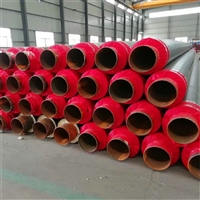
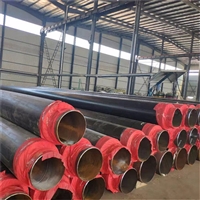


Physical manufacturers produce steel sleeves, steel insulation pipes, small-diameter polyurethane insulation pipes
Category:
metallurgy/tubing/Spiral tube
Model:
Brand:
Guanghui
Retail Price
4,130.00USD
重量
kg
- Product Description
-
Description :
Directly buried steam insulation pipes have become a relatively mature advanced energy-saving technology in some developed countries abroad, bringing huge economic and social benefits to users with their excellent performance, convenient construction, and long service life. This energy-saving technology is being increasingly widely applied in China Polyurethane composite materials have the characteristics of fine pores, good flow, sufficient toughness, and high strength. They have a great tolerance for physical properties and can meet various production process requirements of customers. They are suitable for use on pipes of different sizes and specifications, with uniform density distribution. At the same time, they can adapt to low-temperature environments for construction, and special varieties can withstand low temperatures of minus 200 ℃ for a long time.
The polyurethane foam plastic prefabricated directly buried insulation pipe mainly refers to the insulation pipe with polyurethane as the insulation layer and polyethylene as the jacket, which is mainly used in the central heating industry in the north to transport 50-140 degrees of hot water; In some areas of the south, it can be used for centralized cooling industry, divided into two types: hot water and cold water as power sources; In industry, there are many media inside pipelines that require insulation, and any temperature below 140 degrees Celsius can be used.


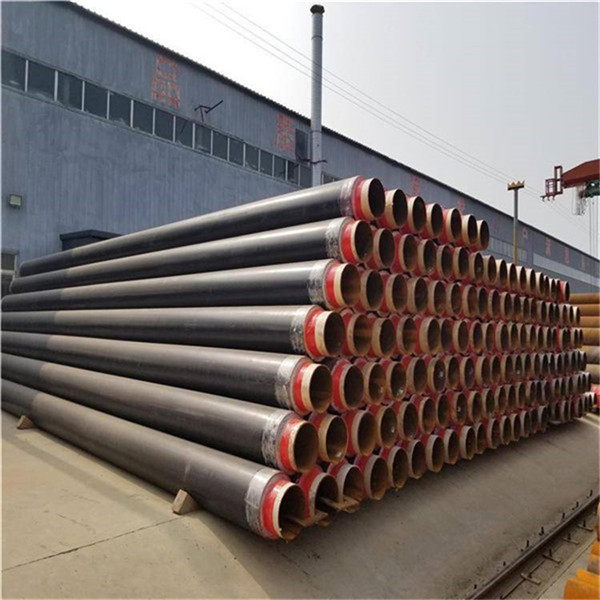
Prefabricated polyurethane foam plastic directly buried insulation pipe, referred to as "pipe in pipe" or "jacket pipe", is a composite pipe that uses the excellent adhesion of polyurethane foam to skillfully combine the polymer shell or glass fiber reinforced plastic shell, rigid polyurethane foam plastic and steel pipe into an integral structure when foaming. Directly buried insulation pipe fittings, such as elbows, tees, fixed joints, variable diameter pipes, water transmission joints, etc., are all prefabricated in the factory. Not only can it reduce on-site construction time and achieve convenient and fast construction, but it can also ensure the quality of anti-corrosion, waterproofing, insulation, and mechanical strength of all pipe fittings. All the outer protective pipes of the pipe fittings adopt the same anti-corrosion and insulation methods as the straight pipe sections, and the manufacturing process of the pipe fittings strictly follows the relevant enterprise standards. The elbow is prefabricated in the factory and treated with anti-corrosion measures. During on-site construction, it is necessary to fill a certain thickness of soft material around the outer protective pipe, and then fill it with sand and compact it to eliminate stress concentration at the bend. For right angle elbows, in order to compensate for the axial and lateral displacement at the elbow and the expansion and contraction of the working steel pipe in the limited space of the outer protective pipe during operation, the pipe diameter of the outer protective pipe is increased locally according to the calculated thermal displacement. For elbows less than 90, the outer protective pipe does not need to be thickened. The outer protective pipe, also known as the "pipe in pipe", is composed of a high-density outer protective layer, polyurethane rigid foam plastic pipe and steel pipe. The insulation layer is made of rigid polyurethane foam with a density of 60kg/m3 to 80kg/m3, which can fully fill the gap between the steel pipe and the casing, and has a certain bonding strength, so that the steel pipe, the casing and the insulation layer form a solid whole. The polyurethane directly buried insulation pipe foam has good mechanical properties and thermal insulation properties. Generally, it can withstand the temperature of 120 and can withstand the temperature of 180 through modification or combination with other insulation materials. According to the design and customer requirements, the standard polyurethane insulation pipe can generally be: seamless pipe (GB8163-87) is selected for pipes below DN200, spiral welded pipe (GB9711-88; SY/T5038-92) and straight seam welded pipe (GB3092-93) are selected for pipes above DN200. After advanced shot blasting and rust removal process, the rust removal grade of the steel pipe can reach Sa2 level in GB8923-1988 standard, and the surface roughness can reach R=12.5 microns in GB6060.5-88 standard. Due to strict production requirements for standard polyurethane insulation pipes, there is no need for customized production. The factory will have inventory of various models. The steel pipe selection type, thickness requirements, polyurethane insulation layer density, and outer protective pipe requirements for non-standard polyurethane insulated pipelines are completely produced according to the customer's order standards.


Internal sliding type: The insulation structure consists of a working steel pipe, aluminum silicate, drag reduction layer, microporous calcium silicate, insulation layer, stainless steel fastening steel strip, aluminum foil reflective layer, polyurethane insulation layer, outer steel pipe, and external anti-corrosion layer. External sliding type: The insulation structure consists of a working steel pipe, a glass wool insulation layer, an aluminum foil reflective layer, a stainless steel fastening strap, a sliding guide bracket, an air insulation layer, an external protective steel pipe, and an external anti-corrosion layer. Polyurethane products have excellent characteristics such as light capacity, high strength, thermal insulation, sound insulation, flame retardancy, cold resistance, corrosion resistance, non water absorption, and easy and fast construction. They have become indispensable materials for thermal insulation, waterproofing, sealing, and other industrial doors in construction, transportation, petroleum, chemical, power, refrigeration, and other industries. The common causes of leakage in steel insulated pipes are perforation due to corrosion, hole cracks due to manufacturing defects, and cracking at welds
Directly buried steam insulation pipe is composed of a steel pipe for conveying medium, a high-density polyethylene outer sleeve, and a polyurethane rigid foam insulation layer filled between the steel pipe and the outer sleeve. Simply put the steel pipe after rust removal and corrosion prevention into the polyethylene casing, and inject polyurethane foam in the middle to fully fill the gap between the steel pipe and the polyethylene casing, so that the steel pipe, casing and insulation layer can finally form a solid whole to achieve the effect of corrosion prevention and insulation; This anti-corrosion and insulation method can be elevated or buried underground, and the entire construction process can be carried out on site.
AfterSalesService :
Key words:- Polyurethane insulation pipe
More Products