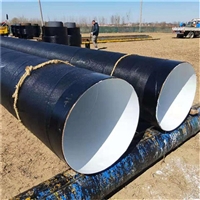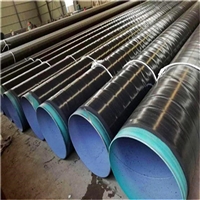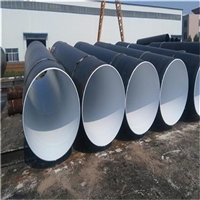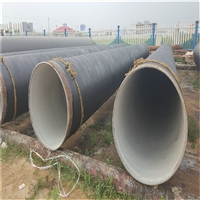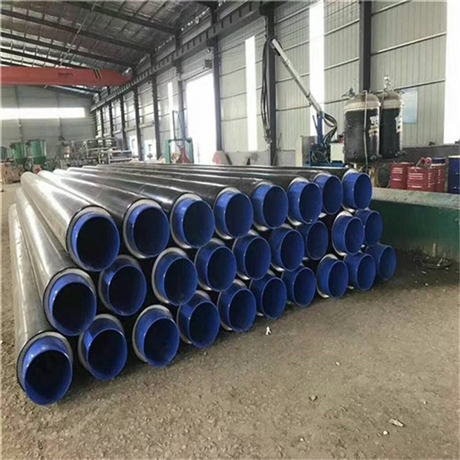



Price of prefabricated buried insulation pipes made of black jacket polyurethane insulation steel pipes by physical manufacturers
Category:
metallurgy/tubing/Spiral tube
Model:
Brand:
Guanghui
Retail Price
3,680.00USD
重量
kg
- Product Description
-
Description :
Polyurethane insulated steel pipe technology supports direct buried polyurethane insulated steel pipes, which have been widely used in the market due to their innovative functions. Today, let's take a closer look at how the effectiveness and practicality of this product have been improved? Next, let's take a closer look at this product. Polyurethane direct buried insulation steel pipes have many excellent usage functions, so they have been recognized and praised by many people. The polyurethane direct buried insulation steel pipe laying scheme uses a short laying method for branch courtyard pipe networks. However, some designers currently favor compensation laying, which can reduce the occurrence of pipeline leakage. Mainly used for insulation and heat preservation of heat medium materials in pipelines and containers. Polyurethane insulation pipes are highly popular due to their excellent performance, convenient construction, and long service life. Its structure consists of three parts: outer protective layer, insulation layer, and anti leakage layer. The excellent characteristics of polyurethane insulation pipes are widely recognized by customers and have become a substitute for traditional insulation forms, with significant energy-saving effects. The use of direct buried heating pipeline technology for black jacket insulation pipes marks a new starting point in the development of heating pipeline technology in China. With the decreasing energy and increasing demand, energy conservation, emission reduction, and environmental protection have become global development trends, and local governments are also vigorously promoting the development, application, and industrialization of energy-saving, emission reduction, and environmental protection products. Introduction from Cangzhou Youtong: 3. Polyurethane rigid foam has an ideal impermeability due to its continuous and dense skin and nearly high-strength interconnected walls with closed pores. High temperature prefabricated buried insulation pipe 5 is safe. From the perspectives of energy conservation, cost reduction, shortened construction period, and environmental protection, polyurethane insulated buried pipes not only have technical and practical performance that traditional trench and overhead pipeline laying methods cannot match, but also have significant social and economic benefits.

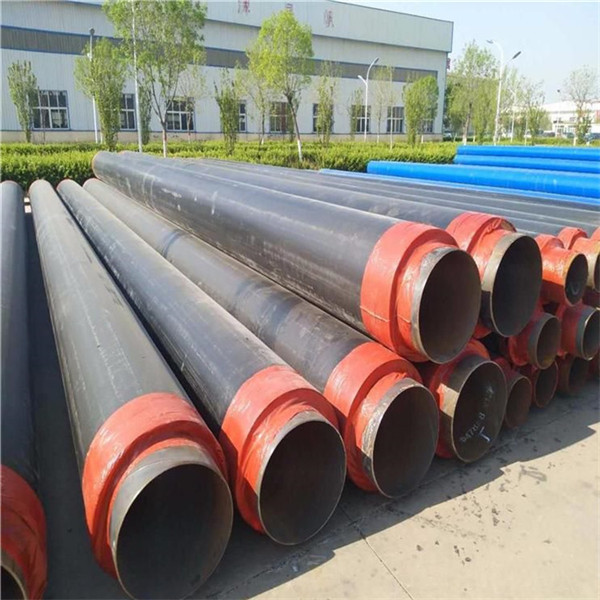

With the further improvement and development of this advanced technology, the direct burial of heating pipelines replacing trenches and overhead structures is an inevitable trend in technological progress and the creation of a conservation oriented society. Air release valves should be installed at high points and valves should be installed at low points for the laying of directly buried heating pipelines. Pipelines should use natural compensation for corners, but 10-60 bends should not be used for natural compensation. When directly leading out branch pipes from the main pipe, fixed piers or axial compensators or bend compensators should be installed on the branch pipes, and the following regulations should be met: the distance from the branch point to the fixed pier on the branch line should not be greater than 5m, the distance from the branch point to the axial compensator or bend should not be greater than 20m, and when there is axial displacement of the main line at the branch point, the axial displacement should not be greater than 50mm. The topcoat is black. It has excellent resistance to chemical media corrosion and good physical and mechanical properties, good adhesion, tough coating, as well as excellent electrical insulation and anti permeability, anti stray current and anti microbial erosion. After film formation, it can reduce the number of construction passes. The main implementation standards are SY/T0447-96 "Technical Standard for Epoxy Coal Tar Anti corrosion Coating of Buried Steel Pipelines" and SY/T0457-2000 "Technical Standard for Liquid Epoxy Coating Internal Anti corrosion Coating of Steel Pipelines". It is mainly used for anti-corrosion of the outer walls of buried or underwater steel oil, gas, water, and heating pipelines. It is also suitable for anti-corrosion of various steel structures, docks, ships, water gates, gas storage tanks, equipment in refineries and chemical plants, as well as waterproofing and leakage prevention of concrete pipes, sewage tanks, roof waterproof layers, bathrooms, basements, and other concrete structures. To prevent cold bridges, the outer ring of the internal fixed bracket of the steel sleeve steam insulated steel pipe is insulated with asbestos rubber pads.
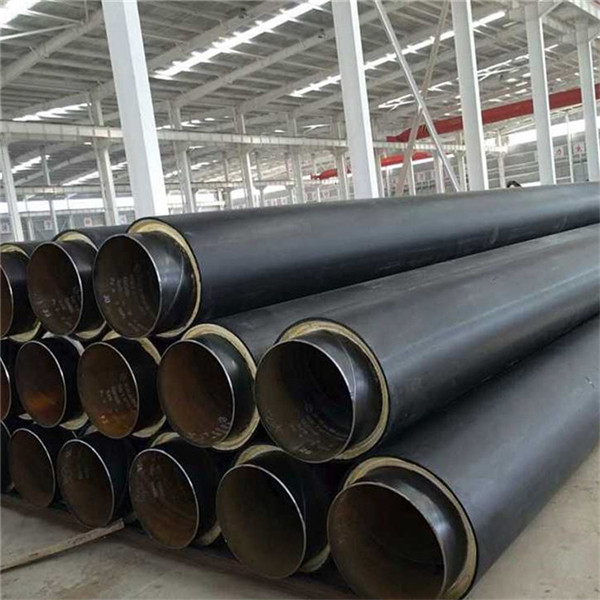
Prefabricated polyurethane foam plastic directly buried insulation pipe, referred to as "pipe in pipe" or "jacket pipe", is a composite pipe that uses the excellent adhesion of polyurethane foam to skillfully combine the polymer shell or glass fiber reinforced plastic shell, rigid polyurethane foam plastic and steel pipe into an integral structure when foaming. Directly buried insulation pipe fittings, such as elbows, tees, fixed joints, variable diameter pipes, water transmission joints, etc., are all prefabricated in the factory. Not only can it reduce on-site construction time and achieve convenient and fast construction, but it can also ensure the quality of anti-corrosion, waterproofing, insulation, and mechanical strength of all pipe fittings. All the outer protective pipes of the pipe fittings adopt the same anti-corrosion and insulation methods as the straight pipe sections, and the manufacturing process of the pipe fittings strictly follows the relevant enterprise standards. The elbow is prefabricated in the factory and treated with anti-corrosion measures. During on-site construction, it is necessary to fill a certain thickness of soft material around the outer protective pipe, and then fill it with sand and compact it to eliminate stress concentration at the bend. For right angle elbows, in order to compensate for the axial and lateral displacement at the elbow and the expansion and contraction of the working steel pipe in the limited space of the outer protective pipe during operation, the pipe diameter of the outer protective pipe is increased locally according to the calculated thermal displacement. For elbows less than 90, the outer protective pipe does not need to be thickened. The outer protective pipe, also known as the "pipe in pipe", is composed of a high-density outer protective layer, polyurethane rigid foam plastic pipe and steel pipe. The insulation layer is made of rigid polyurethane foam with a density of 60kg/m3 to 80kg/m3, which can fully fill the gap between the steel pipe and the casing, and has a certain bonding strength, so that the steel pipe, the casing and the insulation layer form a solid whole. The polyurethane directly buried insulation pipe foam has good mechanical properties and thermal insulation properties. Generally, it can withstand the temperature of 120 and can withstand the temperature of 180 through modification or combination with other insulation materials. According to the design and customer requirements, the standard polyurethane insulation pipe can generally be: seamless pipe (GB8163-87) is selected for pipes below DN200, spiral welded pipe (GB9711-88; SY/T5038-92) and straight seam welded pipe (GB3092-93) are selected for pipes above DN200. After advanced shot blasting and rust removal process, the rust removal grade of the steel pipe can reach Sa2 level in GB8923-1988 standard, and the surface roughness can reach R=12.5 microns in GB6060.5-88 standard. Due to strict production requirements for standard polyurethane insulation pipes, there is no need for customized production. The factory will have inventory of various models. The steel pipe selection type, thickness requirements, polyurethane insulation layer density, and outer protective pipe requirements for non-standard polyurethane insulated pipelines are completely produced according to the customer's order standards.


The polyurethane directly buried insulation pipe uses composite insulation materials as the insulation layer of the insulation pipe. The main structural layer of the steam transmission insulation pipe in the power plant is the insulation layer close to the steel pipe and between the polyethylene outer sleeve, thus forming a polyurethane foam insulation layer composite layer with good thermal insulation performance. Moreover, these two types of directly buried insulation pipes are easy to construct, energy-saving and material saving, and have strong resistance to wear and corrosion. In addition, this type of directly buried insulation pipe has a wide range of applications and a small excavation area on the ground. From the above points, it can be seen that direct buried insulation pipes and prefabricated direct buried insulation pipes are currently a type of underground pipeline. The emergence of these two types of products has also opened up a new market for the development of insulation systems. The price including tax for steam transmission insulation pipelines in power plants is mostly based on collective heating in most cities in China, which requires a large number of transportation pipelines to transport thermal energy. However, various energy wastes may occur during transportation, such as leakage or poor insulation of the transportation pipelines used, which will directly affect energy transportation efficiency. So at this time, direct buried insulation pipes emerged. There are many advantages to direct buried insulation pipes, not only because of their good insulation effect, but also because of a series of advantages, such as convenient construction, small excavation area, and low leakage during the laying process of direct buried insulation pipes.
AfterSalesService :
Key words:- Black jacket insulated steel pipe
More Products