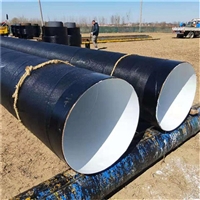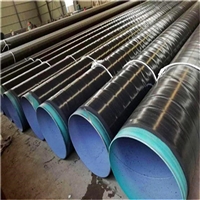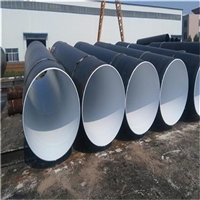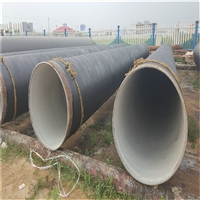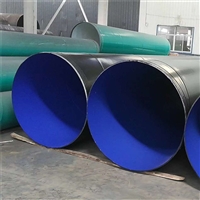


TPEP anti-corrosion steel pipe for spot supply of tap water pipeline, TPEP anti-corrosion spiral steel pipe manufacturer for drinking water
Category:
metallurgy/tubing/Spiral tube
Model:
Brand:
Guanghui
Retail Price
4,680.00USD
重量
kg
- Product Description
-
Description :
The TPEP anti-corrosion steel pipe production plant for drinking water uses epoxy coal tar anti-corrosion, adhesive cold wrapped tape anti-corrosion, or TPEP anti-corrosion. Each type of anti-corrosion is different but has its own advantages. Although petroleum asphalt anti-corrosion and epoxy coal tar anti-corrosion are about to be phased out in engineering use, they cannot be completely eliminated in the short term. In the future, the development will mainly focus on PE anti-corrosion. Due to the characteristics and features of anti-corrosion steel pipes, they have great advantages in construction and practical needs. The bottom layer of TPTP anti-corrosion steel pipes for water supply is a three-layer structure consisting of epoxy resin, intermediate layer adhesive, and outer layer polyethylene. The inner wall is coated with thermal spray epoxy powder for anti-corrosion, and the powder is melted and coated on the surface of the pipe body by high temperature heating, forming a steel plastic alloy layer.

Fusion bonded epoxy powder steel pipes are divided into two types (single-layer and double-layer). Compared with them, double-layer epoxy powder is the ideal anti-corrosion layer. The construction principle refers to using single-layer fusion bonded epoxy powder as the base coating and modified fusion bonded epoxy powder as the outer protective layer. For example, when testing a merchant's so-called "304" product with "304 type" testing solution or "Ni8" testing solution, if the test results are the same as the real 304 product, we must not conclude that it is 304, but can only say that it is "possibly" 304. Because whether it is an electrified or non electrified type, the test results are only a necessary rather than sufficient condition for us to determine whether the tested steel is a certain steel grade (such as 304). If we want to truly understand the exact name of steel, we must use methods such as chemical analysis or spectral analysis to comprehensively determine its chemical composition, and then compare it with relevant standards for identification. Of course, these methods are compared to using 3pe anti-corrosion steel pipe measuring solution. Focus on the modification of FBE materials. 3PE anti-corrosion pipelines are divided into ordinary 3PE anti-corrosion pipelines and reinforced 3PE anti-corrosion pipelines, with the main difference being the thickness of the anti-corrosion coating. Strengthening anti-corrosion measures will definitely result in superior anti-corrosion strength and performance.
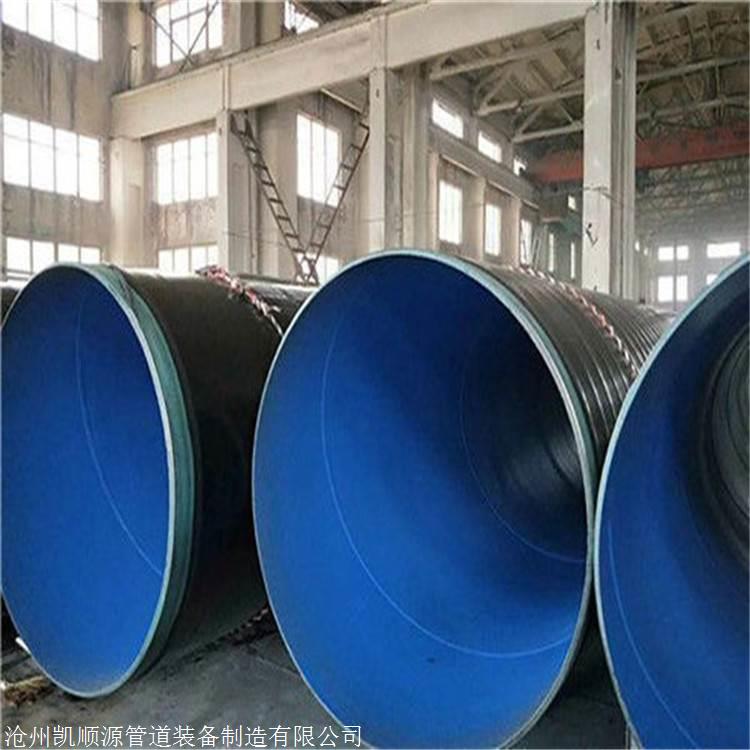
The production plant of TPEP anti-corrosion steel pipes for non-toxic drinking water has effectively improved the bonding strength between the two interfaces. TPEP anti-corrosion steel pipe - external 3PE internal fusion bonded epoxy anti-corrosion steel pipe is an upgraded product based on the external single-layer polyethylene internal epoxy composite steel pipe, and is currently the anti-corrosion form of steel pipes for buried long-distance pipelines. Only then did the pipeline protection skills take a leap forward. Relevant data shows that epoxy fusion powder coating is incomparable to other TPEP anti-corrosion spiral welded pipe production processes from both a technical and economic perspective. The inner wall of the product adopts thermal spraying epoxy powder anti-corrosion method, and the powder is uniformly wrapped and coated on the surface of the pipe body after being heated and fused at medium frequency high temperature, forming an inner wall anti-corrosion layer that meets food grade anti-corrosion requirements.

The outer wall of the product is treated with 3PE anti-corrosion treatment, with a layer of epoxy powder; A layer of adhesive; A three-layer anti-corrosion structure with one layer of polyethylene. Fold in half along the axial direction at the seam of the heat shrinkable tape, then lift up one side of the fixing piece and heat the inner layer of the fixing piece with fire to make the milky white adhesive layer shiny and soft. Therefore, 3PE anti-corrosion coating is an ideal external protective layer for buried pipelines. 3PE anti-corrosion pipeline refers to the use of pipelines in different working environments. In order to slow down or prevent the corrosion and deterioration of pipelines under the chemical and electrochemical action of external media or the metabolic activity of microorganisms, 3 layers of polyethylene (3PE) are coated on the outer wall of pipelines/steel pipes to achieve pipeline anti-corrosion measures. 3PE anti-corrosion steel pipes have been used in many places in recent years. Guanghui pipeline is crucial for the service life of buried pipelines because the anti-corrosion layer is essential. For pipelines of the same material, some are buried underground for decades without corrosion, while others leak within a few years. It's because they use different external anti-corrosion coatings. Since 3pe anti-corrosion steel pipe is so important, which company is good for 3pe anti-corrosion steel pipe, and how should we handle its details well? The most common feedback from customers is the problem of joint repair for 3pe anti-corrosion steel pipe. So, how can we solve the problem of 3pe anti-corrosion steel pipe Let's talk about the issue of joint patching for anti-corrosion steel pipes: because if both joints have anti-corrosion, it is impossible to weld, so we basically leave the welding area on the joint, which involves the problem of joint patching. What should we do if the welding area does not have anti-corrosion? Now we are using high-quality heat shrink to complete its joint patching problem. It is better not to use cold wrapping. If the difference is not much, there is no need to save a few yuan, and we give up the pipeline's service life for a few more years. After that, our factory uses excellent specialized polyethylene materials and adhesives, and has advanced equipment and production processes for production. We strictly control and inspect the product quality. After testing by the Petroleum Construction Technology Research Institute, the product technical indicators have reached the standard. Standard.
AfterSalesService :
Key words:- TPEP anti-corrosion steel pipe


More Products