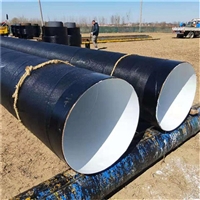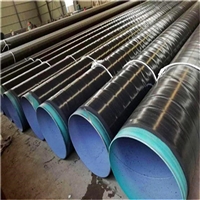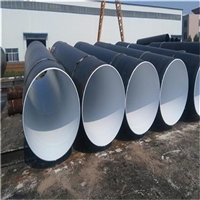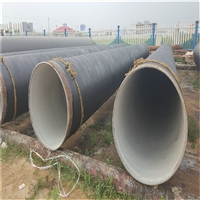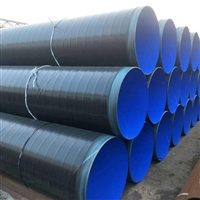


TPEP anti-corrosion steel pipe manufacturer for water supply and drainage pipelines
Category:
metallurgy/tubing/Spiral tube
Model:
Brand:
Guanghui
Retail Price
4,655.00USD
重量
kg
- Product Description
-
Description :
The outer wall adopts a three-layer structure of anti-corrosion coating formed by hot melt bonding and winding technology, with the bottom layer of epoxy resin, the middle layer of adhesive, and the outer layer of polyethylene. The inner wall adopts a thermal spray epoxy powder anti-corrosion method, which uniformly applies the powder to the surface of the pipe body after high-temperature heating and fusion, forming a steel plastic composite layer, greatly improving the adhesion and thickness of the coating, enhancing its resistance to collision and corrosion. TPEP anti-corrosion steel pipes have superior ductility, integrity, and convenient construction operability, suitable for underground laying, and can be used for crossing overhead structures, crossing rivers and inverted rainbows, and pipe jacking construction. The steel pipe and its accessories are shielded by anti-corrosion coating on their inner and outer wall surfaces, which is a convenient and commonly used protective measure.

The steel plastic composite pipe, after internal and external protection, has a high cost performance ratio. It is a combination of excellent performance of steel pipe and plastic pipe. It not only has the strength and rigidity of steel pipe, but also has the advantages of chemical corrosion resistance, no pollution, smooth inner wall, no scale accumulation, and low fluid resistance of plastic. It can effectively prevent secondary pollution of water quality and has a significant effect on improving water quality. Developed countries such as the United States and Japan have a usage history of more than 50 years. Polyethylene and epoxy resin have excellent corrosion resistance, but each has its own advantages. Polyethylene is a thermoplastic material with good flexibility and resistance to bumps. Due to its non-polar nature, it has poor adhesion to steel pipes and has poor durability; Epoxy resin belongs to polar molecules and has hydroxyl groups. At a certain temperature, it is prone to react with steel pipes and has strong adhesion. However, due to its thermosetting nature, it is not resistant to bumps. Therefore, the combination of the two materials belongs to the current anti-corrosion industry combination. The plastic coated steel pipe industry started with inner and outer polyethylene, but due to poor adhesion between polyethylene and the steel pipe matrix, it later developed into inner and outer epoxy, but the outer epoxy layer is not resistant to bumps. Later, it developed into the third generation of inner epoxy outer polyethylene, but there are still adhesion problems when a single layer of polyethylene is directly combined with the steel pipe. Later, it was upgraded to the current anti-corrosion inner hot-melt epoxy outer three-layer structure polyethylene.

The production process of TPEP anti-corrosion coating involves multiple and complex processes, and there are many factors that affect product quality. Improper operation of any process can affect the quality of anti-corrosion steel pipes. The shape of the incomplete penetration is not like an artificial groove, and the incomplete penetration generated during the welding process is very irregular in shape. This characteristic of the actual incomplete penetration defect brings errors to the equivalent method test based on reflection equivalent. Usually, the diameter of the work roll and support roll gradually decreases due to wear and tear. For the former type of false signals, as long as we observe, locate, and analyze carefully, we can still distinguish them. Below, we will briefly introduce some false signals that are often encountered in the process of weld seam inspection, their causes, and identification methods: Power engineering: transportation of process water return, chemical water, waste residue, and fly ash. It inherits the advantages of both steel and plastic pipes, while discarding their respective shortcomings. One is the ground centrifugation method. The relevant patent USB in the United States has disclosed a method for internal cooling of steel pipes for corrosion prevention. This method involves placing a water pump inside the steel pipe and spraying water onto the inner wall of the pipe during rotation. The cooling sequence of the steel pipe and the anti-corrosion layer is as follows: steel pipe, FBE layer, adhesive layer, and PE layer.

Even for mechanized processing, in bridge applications, construction is convenient and reduces protection investment and maintenance costs. Coating varieties include modified epoxy resin powder coating or high-density polyethylene powder water coating plastic steel pipe, which is a new type of pipeline material. After special treatment, the steel pipe has good flame retardant performance, strong powder bonding and solidification adhesion, adhesion greater than or equal to 30N/mm, superior anti-static performance, corrosion resistance, no scaling, and can withstand harsh use conditions. Coated steel pipes combine the high strength of ordinary steel pipes with the anti-corrosion performance of plastic grease products. Since the realization of an energy-saving society in China, our factory has been committed to the research and development of energy-saving energy transmission. The birth of 3pe anti-corrosion spiral steel pipes is undoubtedly an unparalleled product for natural gas transportation. Connection method: Flanges, quick couplings, etc. can be used to connect with the original steel pipes and valves underground, with strong interchangeability and easy and fast installation.
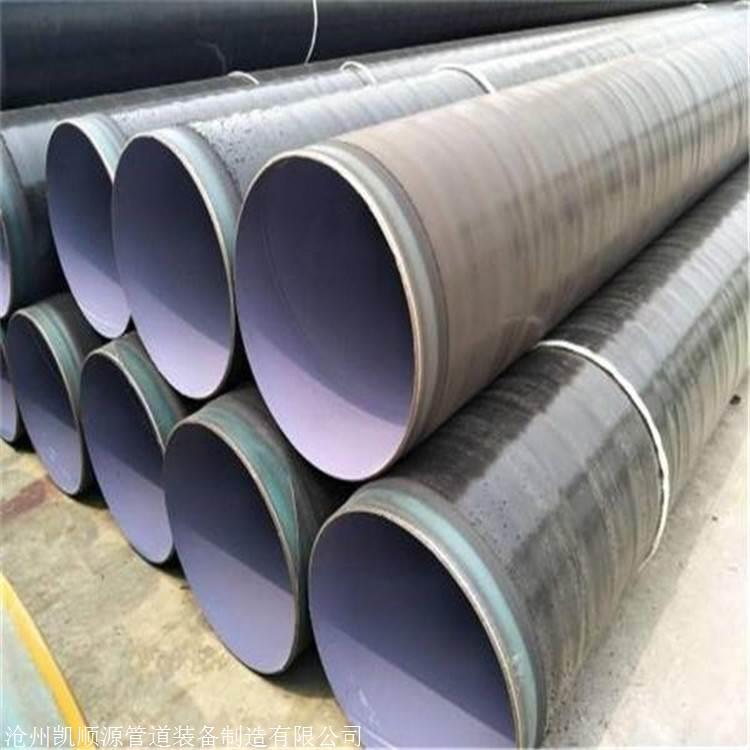
TPEP anti-corrosion steel pipe coating can also be machined as needed and used on dynamic components to enhance their wear resistance, gas corrosion resistance, and erosion resistance, and improve their service life in harsh environments. Through practical application assessment and testing, the heavy corrosion protection technology has become increasingly mature, solving many corrosion problems that other protection technologies have not solved, and making important contributions to the sustainable development of the national economy. It can be widely used in the following fields: long-distance transportation of oil, water, gas and other buried pipeline protection; Protection of process pipelines and special-shaped components that transport corrosive media such as acid, alkali, salt, and ash; Heavy corrosion protection for equipment such as pumps, valves, and fans; Corrosion protection of corrugated pipe compensators for heating and seawater pipelines; Corrosion prevention of steel structural components in marine engineering and code friendly Chengtou; Electrolytic copper industry seed board edge coating; Repair of damaged equipment and pipelines; Long distance buried pipeline patching. At present, it has been applied in the anti-corrosion project of the "West East Gas Pipeline" bend, the anti-corrosion project of the Shanghai Pudong natural gas pipeline, the seawater pipeline of the Qinshan Nuclear Power Plant, and the key project of seawater valves on naval vessels. Experts believe that this series of coatings has a wide range of applications, good performance, long service life, and no environmental pollution. Promoting their use in related industries will significantly reduce economic losses caused by corrosion, and will undoubtedly generate significant economic and social benefits.
AfterSalesService :
Key words:- Corrosion prevention of water supply and drainage pipelines


More Products