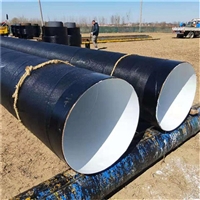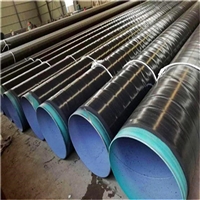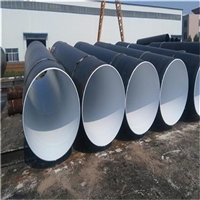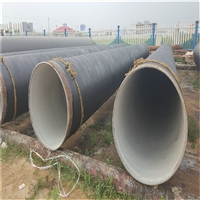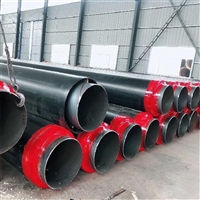
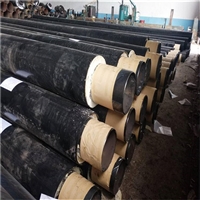
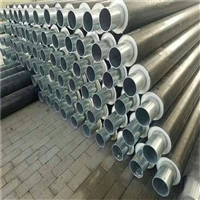

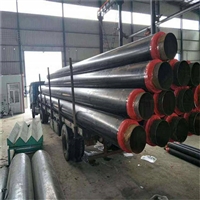


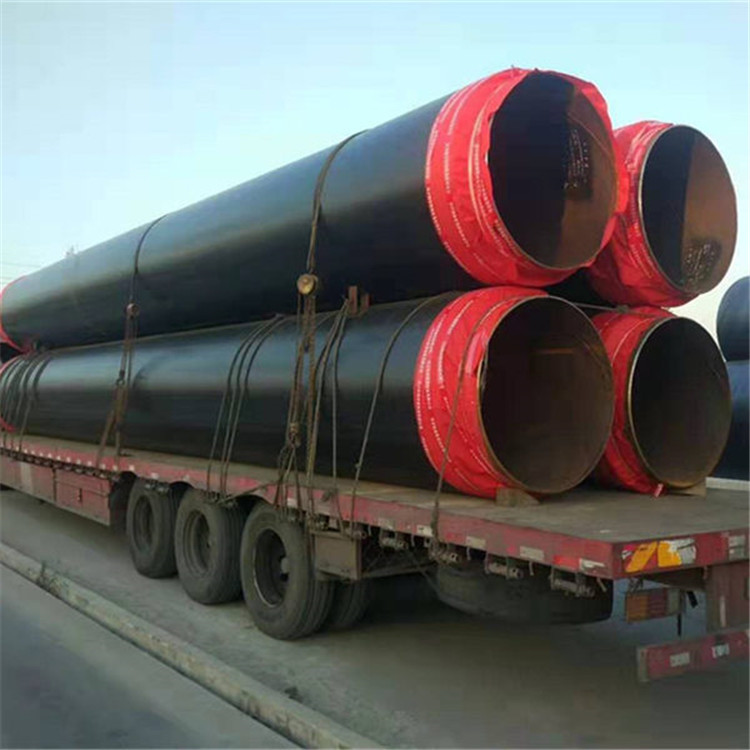
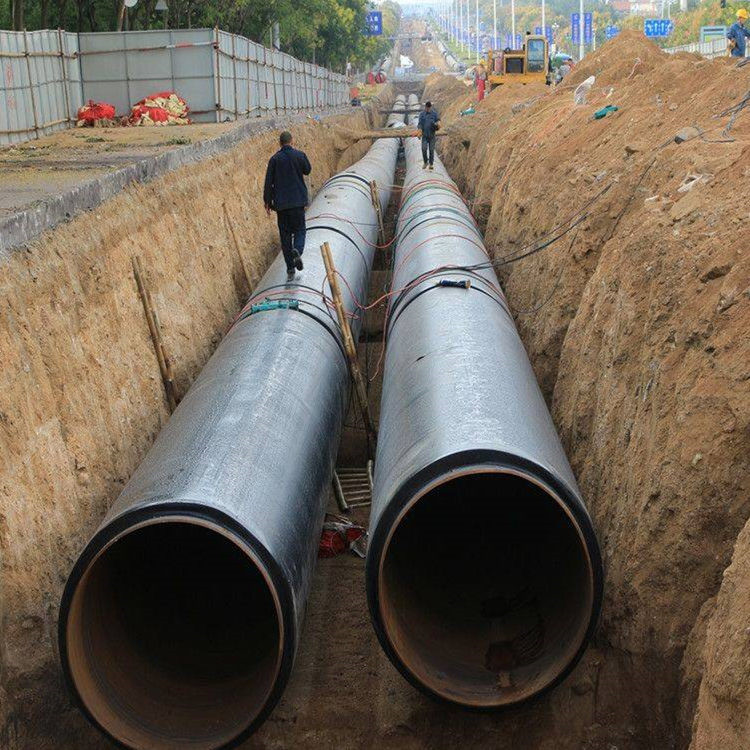
DN1400 insulated steel pipe thermal pipeline manufacturer for urban buried pipeline thermal network
Category:
metallurgy/tubing/Spiral tube
Model:
Brand:
Guanghui
Retail Price
310.00USD
重量
kg
- Product Description
-
Description :
As the polyurethane rigid foam insulation layer is closely bonded to the outer skin of the steel pipe, it can isolate the infiltration of air and water and play a good anti-corrosion role. At the same time, its foam pores are all closed, and its water absorption is very low. The high-density polyethylene shell and fiberglass shell both have good anti-corrosion, insulation, and mechanical properties. Therefore, the outer skin of the working steel pipe is difficult to be eroded by external air and water. As long as the water quality inside the pipeline is treated well, according to foreign data, its service life is 3-4 times longer than traditional trench laying and overhead laying. Compared with traditional trench laying pipelines, it has the advantages of good insulation performance, simple construction and installation, less land occupation, low engineering cost, and short construction period. Especially in terms of energy conservation, it is incomparable to any insulation pipeline. According to the test report of Tianjin Energy saving Technology Service Center, in a pipeline buried at a depth of about one meter, the temperature drops by 0.1 ℃ every 100 meters, and the heat loss rate per 100 meters is 2.07%. In general, one kilometer of insulation pipeline can save 10.4 tons of standard coal per year. Advantages such as good waterproof and anti-corrosion performance. The service life is generally around 40-50 years. The "pipe in pipe" insulation pipe is an important factor affecting energy conservation, and the development and application of insulation steel pipes are increasingly receiving widespread attention from countries around the world.

Therefore, the thermal insulation performance of polyurethane buried insulation pipe material is lower than almost all other insulation materials. Compared with other insulation materials, it can achieve the same insulation and reduce the thickness of the insulation layer by 30-80%. Overview of high-density low-pressure polyethylene (HDPE) outer protective layer polyurethane direct buried insulation pipe Overview of HDPE outer protective layer polyurethane direct buried insulation pipe Overview of energy-saving direct buried insulation pipe is composed of steel pipe, anti-corrosion layer, insulation layer, and anti-corrosion and compressive protection layer. If it is an ultra-high temperature pipeline, an additional cooling layer is added between the insulation layer and anti-corrosion layer. These pipelines have the advantages of low heat loss, strong compression resistance, and good waterproof and anti-corrosion performance. The service life is generally around 40-50 years Compared with traditional trench laying pipelines, it has the advantages of good insulation performance, simple construction and installation, less land occupation, low engineering cost, and short construction period. Especially in terms of energy conservation, it is incomparable to any insulation pipeline. According to the test report of Tianjin Energy saving Technology Service Center, in a pipeline buried at a depth of about one meter, the temperature drops by 0.1 ℃ every 100 meters, and the heat loss rate per 100 meters is 2.07%. In general, one kilometer of insulation pipeline can save 10.4 tons of standard coal per year. The advantages and characteristics of polyurethane insulated steel pipes for "pipe in pipe" insulation include: 1. reducing engineering costs; According to relevant departments' calculations, polyurethane insulated steel pipes can generally reduce project costs by about 25% (using fiberglass as the protective layer) and 10% (using high-density polyethylene as the protective layer). After the 1970s, foreign countries generally attached great importance to the production and application of insulated steel pipes, striving to significantly reduce energy consumption, thereby reducing environmental pollution and greenhouse effect. The insulation industry abroad has a long history, and new insulation materials are constantly emerging.




Before 1980, the development of insulation steel pipes in China was very slow, and the few insulation factories could only produce a small amount of underground buried insulation steel pipes. However, after more than 30 years of effort, especially after nearly 10 years of rapid development, many products in China's insulation industry have gone from scratch, from single to diversified, from low to high quality, and their applications have become increasingly common. Polyurethane material is a commonly used insulation material. Rigid polyurethane has many excellent properties and is widely used in the field of thermal insulation. About 49% of developed insulation materials are polyurethane materials, while in China, this proportion is still less than 20%. Therefore, there is still a lot of room for the development of polyurethane insulated steel pipes in China. Low heat loss, energy-saving; The thermal conductivity of polyurethane is also very low, with a water absorption rate of about 0.2kg/m2. The reason for low water absorption is that the closed cell rate of polyurethane foam is up to 92%. Low thermal conductivity and low water absorption, combined with insulation layer and high-density polyethylene or fiberglass protective shell with good waterproof performance, have changed the traditional situation of "wet cotton jacket" for laying heating pipes in underground trenches, greatly reducing the overall heat loss of heating pipes. The heat loss of the heating network is 2%, far less than the standard requirement of 10%.
AfterSalesService :
Key words:- Urban buried pipeline thermal network

More Products