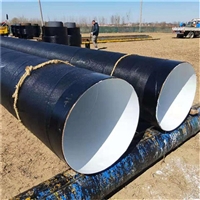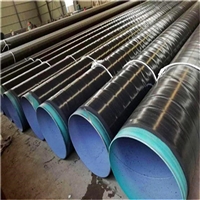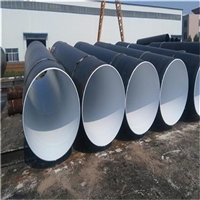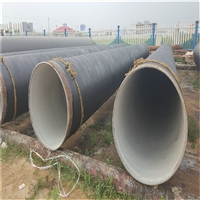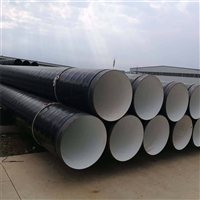
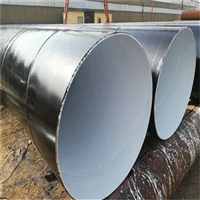


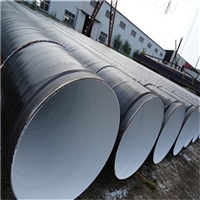


Spiral steel pipe for drainage in spiral steel pipe production plant, three oil two cloth epoxy coal tar anti-corrosion steel pipe
Category:
building materials/Pipe fittings/Welded steel pipe
Model:
Brand:
Cangzhou Guanghui Pipe Industry
Retail Price
3,960.00USD
重量
kg
- Product Description
-
Description :
The epoxy coal tar anti-corrosion layer is divided into ordinary anti-corrosion, reinforced anti-corrosion (one cloth and three oils), and extra reinforced anti-corrosion (two cloths and four oils). Scope of use: Used for anti-corrosion of buried steel oil pipelines, water pipelines, sewage pipelines, etc. With the development of science and technology, various organic and inorganic high-efficiency anti-corrosion coating technologies have been widely used in pipeline anti-corrosion construction, and various anti-corrosion technologies have gradually improved and enhanced. When applying epoxy coal tar paint, attention should be paid to changes in weather and temperature. Construction should not be carried out on rainy, foggy, snowy days or when the relative humidity is greater than 80%. Epoxy coal tar anti-corrosion coating is formulated with modified epoxy resin, polyamide resin, coal tar pitch, pigments and fillers, and additives. Product features: The coating is tough and full, with strong adhesion and excellent resistance to chemical media corrosion, outstanding water resistance, and resistance to microbial erosion. Epoxy coal tar anti-corrosion coating is composed of two main components: epoxy and coal tar. It is a two-component coating of A (epoxy) and B (curing agent), which has excellent adhesion, toughness, moisture resistance, water resistance, and chemical resistance. It has the performance of preventing various ions from passing through the paint film and has the characteristics of expansion and contraction with the coated object. The paint film never falls off or cracks. Our factory has an internationally advanced steel pipeline anti-corrosion operation line and specialized equipment for metal structure anti-corrosion and insulation. Can undertake anti-corrosion of cement mortar on the inner wall of steel pipelines, anti-corrosion of IPN8710 pipeline fittings (drinking water), and anti-corrosion of non-toxic coatings on the inner wall of steel pipes; Single layer and double-layer fusion bonded epoxy powder (FBE); Double layer polyethylene (2PE) and three-layer polyethylene (3PE); Double layered polymer (2PP); And three-layer polymer (3PP) external coating project. The outer wall of pipeline fittings is coated with epoxy coal tar anti-corrosion wrapped glass cloth (1 cloth, 3 oil, 2 cloth, 3 oil, 3 cloth, 5 oil, 4 cloth, 6 oil) for anti-corrosion, polyethylene bend pipe heat shrink tape for anti-corrosion, fiberglass anti-corrosion, polyurethane foam insulation, and various polymer anti-corrosion coatings.

The internal and external epoxy coal tar anti-corrosion spiral pipe process involves coating a layer of anti-corrosion oil, wrapping it with a layer of glass cloth, then coating it with another layer of anti-corrosion oil, wrapping it with another layer of glass cloth, and finally coating it with another layer of anti-corrosion oil, for a total of three oils and two cloths. The function of the glass cloth is to increase the tensile strength of the anti-corrosion layer, prevent cracking and water leakage after the anti-corrosion oil is hard bonded. Galvanized steel pipes cannot be welded because the pipeline cannot be galvanized twice, and the inner side of the weld cannot be treated with anti-corrosion. Nowadays, from the design perspective, pipes with a diameter greater than or equal to DN100 are usually connected with clamps, and pipes with a diameter less than DN100 can be connected with wire joints. The construction technology and quality of the pipeline are also increasingly demanding, and for buried steel pipes, welding cannot be used. In terms of external anti-corrosion, we have eliminated petroleum asphalt external anti-corrosion and uniformly used epoxy coal tar anti-corrosion steel pipes. The advantages of using epoxy coal tar pitch anti-corrosion steel pipes are: 1. It combines the advantages of good water resistance, excellent rust prevention performance, and bacterial erosion resistance of coal tar pitch, as well as the characteristics of tough epoxy resin coating, good adhesion, and high mechanical strength. The chemical resistance, electrical insulation performance, microbial resistance, and seawater resistance of the film-forming coating are relatively stable. Especially with a low water absorption rate, it is far more resistant to microbial erosion than petroleum asphalt. 3. Long service life. In order to correctly use epoxy coal tar anti-corrosion steel pipes for buried steel pipes, ensure the quality of the anti-corrosion layer, and extend the service life of buried steel pipes, the following requirements should be strictly followed during construction: 1. Construction technology requirements: 1. Surface treatment of steel pipes. Generally, the surface of steel pipes has oxide scale, rust, oil stains, dust, etc. If not treated, it will directly affect the adhesion of the coating. In order to ensure the service life of the anti-corrosion layer, sandblasting is required for steel surface treatment, so that the basic surface can reach SaZ (l/2) level (with obvious roughness visible to the naked eye). After rust removal, primer should be applied within 6 hours. 2. Apply primer. Primer can be applied using a roller brush or a paintbrush, and the primer should be applied as thinly as possible, generally ranging from 0 to 5 microns. Attention should be paid to ensuring that the paint film is uniform and not missed. It is mainly used for anti-corrosion of the outer walls of buried or underwater steel oil, gas, water, and heating pipelines. It is also suitable for anti-corrosion of various steel structures, docks, ships, water gates, gas storage tanks, equipment in refineries and chemical plants, as well as waterproofing and leakage prevention of concrete pipes, sewage tanks, roof waterproof layers, bathrooms, basements, and other concrete structures. [1] 1. Anti corrosion of three-layer polyethylene (3PE) steel pipes and two-layer polyethylene (2PE) steel pipes for oil and gas. Standard: SY/T? It is understood that in order to ensure the normal water supply in our city and provide assistance for the construction of key projects in our city, the water company has conducted sufficient research and demonstration on this relocation project. Zhang Zichen, the person in charge of the construction of three water transmission pipelines in Hanfeng Phase II, Hanyue Phase I, and Phase II, stated that in order to ensure project quality, the water company adopted a segmented construction method, taking turns to construct and test the three water transmission pipelines in stages to ensure their safety. It is expected that the entire relocation and renovation project will be completed in March next year. At that time, the safety operation coefficient of our city's water transmission pipelines will be improved, and new product quality will be promoted, advocating for technological innovation; Since its establishment, the company has always regarded quality as the foundation of its development. From the re inspection of raw materials to the final inspection of finished products, it has gone through a complete set of management procedures and organizational structures to control Spiral tubes are mainly used in water engineering, petrochemical industry, chemical industry, power industry, agricultural irrigation, and urban construction, and are one of the twenty key products developed in China. Used for liquid transportation: water supply, drainage, sewage treatment engineering, mud transportation, ocean water transportation. Used for gas transportation: coal gas, steam, liquefied petroleum gas.

The construction coating of internal and external epoxy coal tar anti-corrosion layer is prepared according to the mix ratio provided by the manufacturer. First, pour the primer or topcoat into a clean container, and then slowly add the curing agent while stirring evenly. After opening the paint bucket, stir the paint inside the bucket thoroughly to ensure even mixing and no sedimentation. The prepared seasoning must be matured for 30 minutes before use, and the coating prepared at room temperature can be used for about 4-6 hours. Brushing, during the brushing process, if the viscosity is too high to brush, a diluent with a weight not exceeding 5% can be added. When operating, first apply primer on the rust removed steel pipe as soon as possible, evenly and without omission. Leave about 150mm at each end of each steel pipe for welding before painting. After the primer is completely dry, mix it with topcoat and talcum powder to form putty. Apply the topcoat evenly on top of the primer and ensure that it is not missed. At room temperature, the interval between primer and topcoat should not exceed 24 hours. For ordinary anti-corrosion, a second coat of topcoat can be applied after the first coat of topcoat is dry; Enhanced anti-corrosion coating - After one coat of topcoat, wrap the glass fiber cloth. When wrapping, the glass fiber cloth must be pulled to avoid bulges and wrinkles. The circumferential edge width of the glass cloth is 100-150mm. After wrapping, apply a second coat of topcoat with a full amount of paint to a certain thickness, and fill the gaps in the glass fiber cloth tightly. After the second coat of topcoat is dry, apply the third coat of topcoat; Special enhanced anti-corrosion - The operation method is the same as that of enhanced anti-corrosion. The direction of winding the two layers of glass fiber cloth must be opposite. Each layer of topcoat must be applied after the previous layer of topcoat has dried. At this time, dryness refers to not moving when pushing and twisting the anti-corrosion layer with fingers.
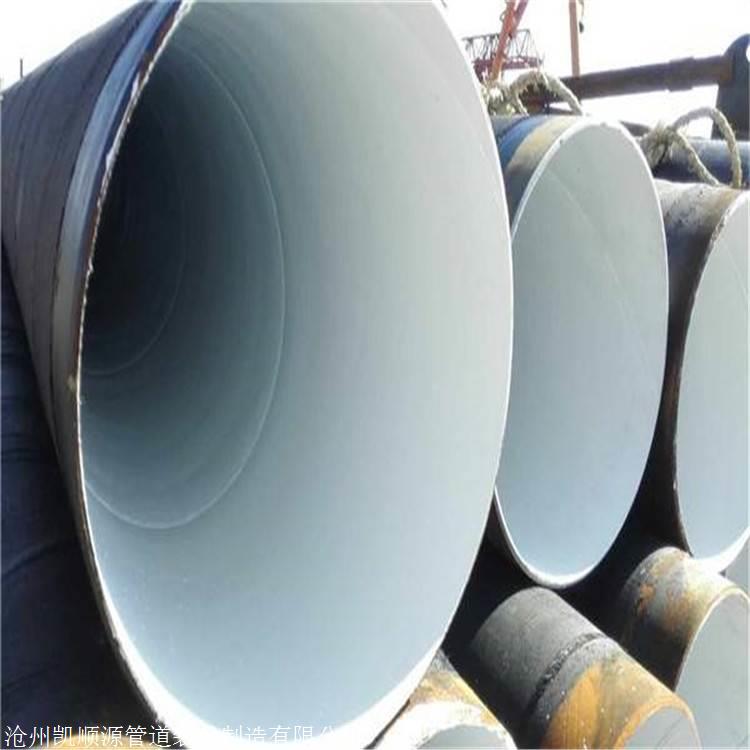
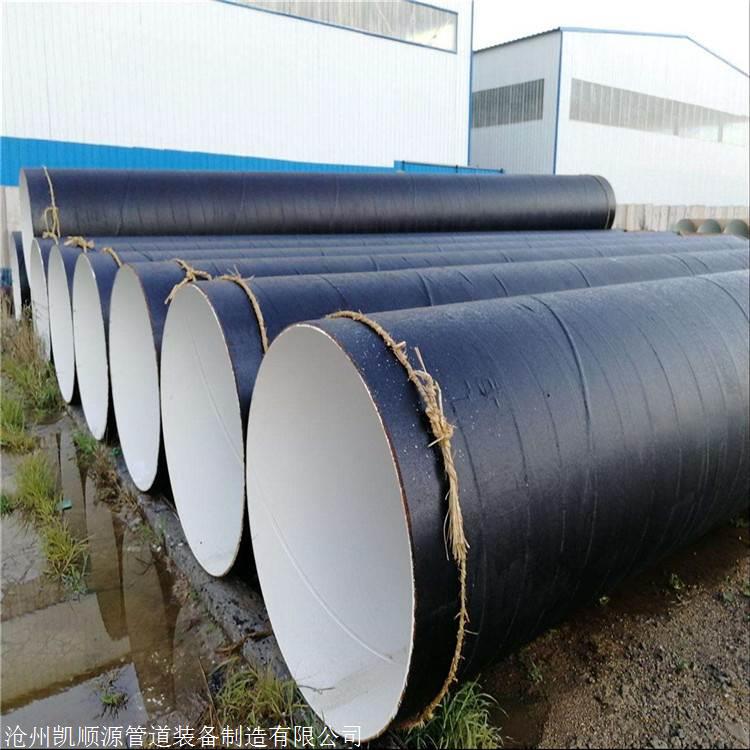
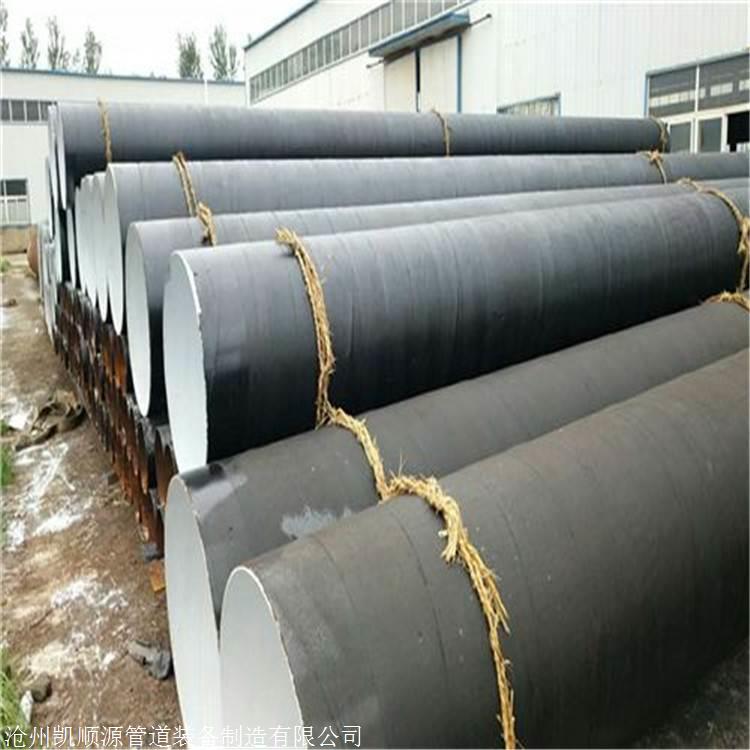
With the continuous development of municipal construction, higher and higher requirements have been put forward for the construction technology and quality of pipelines. For the external anti-corrosion of buried steel pipes, we have eliminated petroleum asphalt external anti-corrosion and uniformly adopted epoxy coal tar anti-corrosion steel pipes. The advantages of using epoxy coal tar pitch anti-corrosion steel pipes are: they have the advantages of good water resistance, excellent rust prevention performance, and bacterial erosion resistance of coal tar pitch, as well as the characteristics of tough epoxy resin coating, good adhesion, and high mechanical strength. The chemical resistance, electrical insulation performance, microbial resistance, and seawater resistance of the film-forming coating are relatively stable. Especially with a low water absorption rate, it is far more resistant to microbial erosion than petroleum asphalt. Long service life. In order to correctly use epoxy coal tar anti-corrosion steel pipes for buried steel pipes, ensure the quality of the anti-corrosion layer, and extend the service life of buried steel pipes, the following requirements should be strictly followed for construction: 1. Construction technology requires surface treatment of steel pipes. Generally, the surface of steel pipes has oxide scale, rust, oil stains, dust, etc. If not treated, it will directly affect the adhesion of the coating. In order to ensure the service life of the anti-corrosion layer, sandblasting is required for steel surface treatment, so that the basic surface can reach SaZ (l/2) level (with obvious roughness visible to the naked eye). After rust removal, primer should be applied within 6 hours. Apply primer. Primer can be applied using a roller brush or a paintbrush. The primer should be applied as thinly as possible, usually between 30 and 5 microns. Attention should be paid to ensuring that the paint film is evenly distributed and not missed. At present, the application effect of anti-corrosion coatings is well evaluated both domestically and internationally, and there are few reports on the defects that occur during their use. The main shortcomings of the report include dew point, peeling, cathodic peeling, cathodic protection shielding, and corrosion under the peeling anti-corrosion layer film. Moreover, most of the reports related to defects are still in the theoretical speculation stage, such as the issue of cathodic protection shielding mentioned in the data. So far, there have been no case reports of cathodic protection shielding occurring in the actual operation of the anti-corrosion layer. After years of practice, it has been shown that with the increase of service life, the coating system with fewer defects is the FBE/extruded polyethylene 3-layer structure anti-corrosion system.
AfterSalesService :
Key words:- Spiral steel pipe production plant


More Products