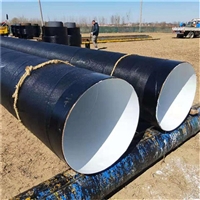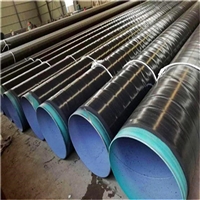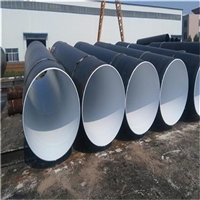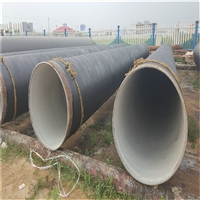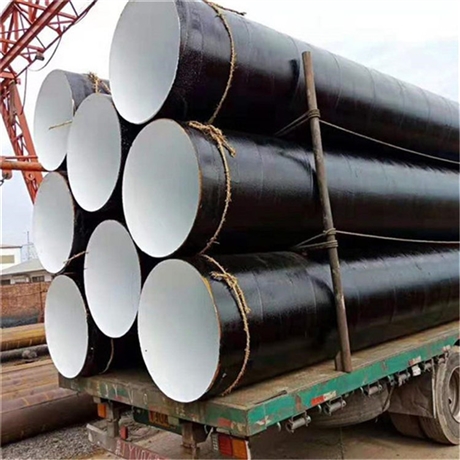


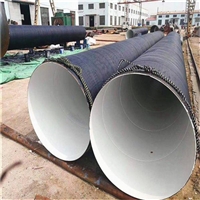
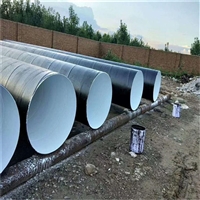
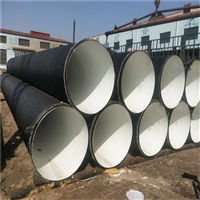
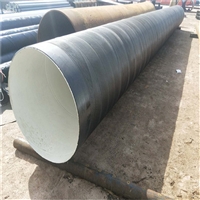
Reinforced epoxy coal tar anti-corrosion steel pipe, large-diameter anti-corrosion spiral steel pipe manufacturer
Category:
metallurgy/tubing/Spiral tube
Model:
Brand:
Guanghui
Retail Price
3,630.00USD
重量
kg
- Product Description
-
Description :
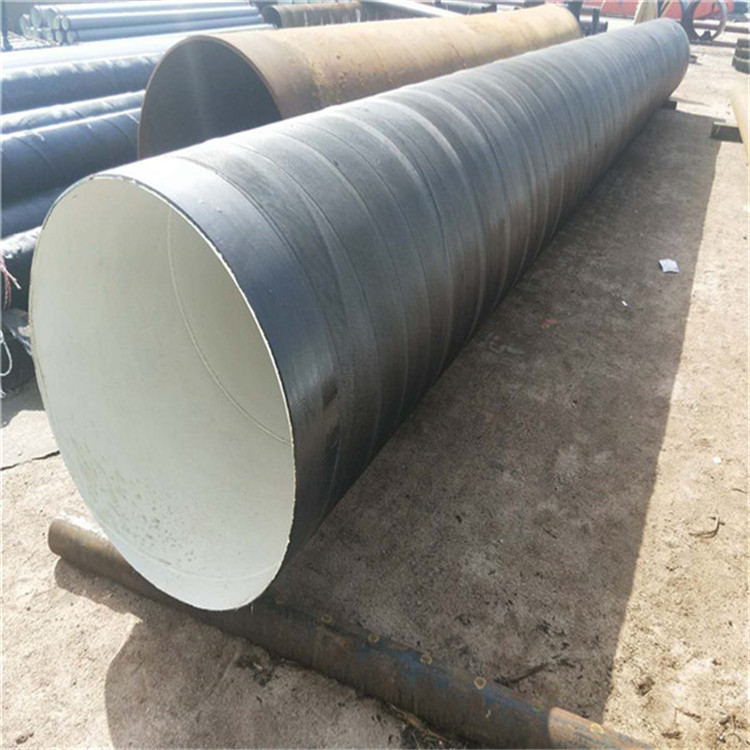
For directly buried pipelines, reinforced grade should be selected; For situations with harsh corrosive environments or difficult maintenance, special anti-corrosion measures should be selected, such as crossing pipelines, underwater pipelines, tank bottoms, etc. Epoxy coal tar anti-corrosion steel pipe: Simply put, it is a pipeline with epoxy coal tar (3-layer structural polyethylene) anti-corrosion medium applied to the outer wall of the steel pipe after strict rust removal treatment as required by the project. Epoxy coal tar anti-corrosion is currently an advanced and mature external wall anti-corrosion technology. It has the advantages of good anti-corrosion performance and long service life (the epoxy coal tar anti-corrosion steel pipe produced by the manufacturer of Youxiu can have a service life of up to 50 years), and is widely used in natural gas transportation, oil transportation, heating, refrigeration and other project engineering.

Epoxy coal tar anti-corrosion steel pipe includes the original asphalt paint anti-corrosion steel pipe and epoxy paint anti-corrosion steel pipe. In recent years, due to the development of the market and the continuous improvement of engineering products, anti-corrosion steel pipe products have also introduced 3PE anti-corrosion steel pipe and cold wrapped anti-corrosion steel pipe. Years of practice have shown that As the service life increases The scope of application is mainly used for underground or underwater steel oil transportation Gas transmission Water supply Corrosion prevention of the outer wall of heating pipelines It is also applicable to various types of steel structures The dock a ship. Water gates Gas storage tank Corrosion prevention and concrete pipes for equipment in refining and chemical plants Sewage tank Roof waterproof layer TOILET. Waterproofing and leakage prevention of concrete structures such as basements Epoxy coal tar anti-corrosion steel pipe is what we often refer to as' a few cloth and a few oil '.
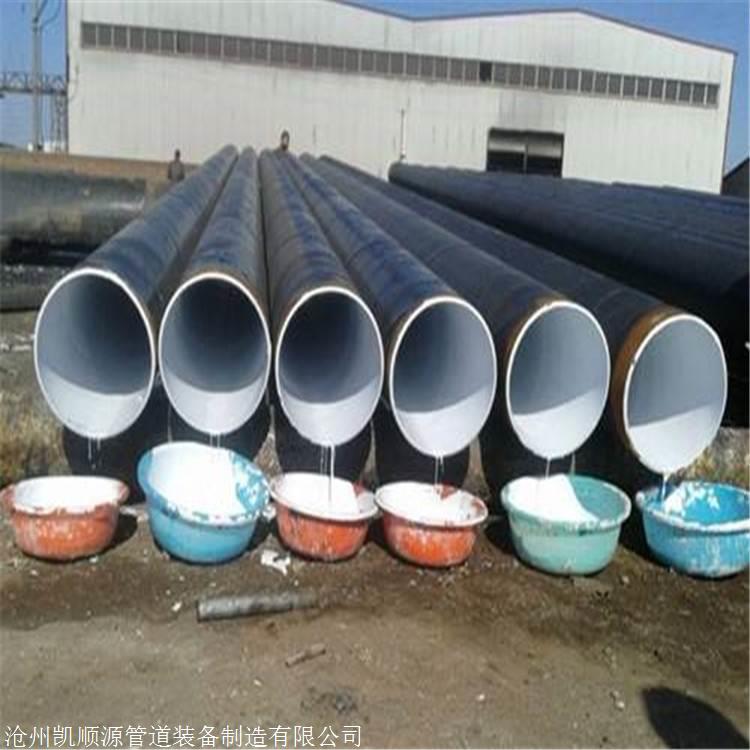
Introduction to epoxy coal tar anti-corrosion steel pipe: Epoxy coal tar anti-corrosion coating is composed of two main components: epoxy and coal tar. It is a two-component coating of A (epoxy) and B (curing agent), which has excellent adhesion, toughness, moisture resistance, water resistance, chemical resistance, and the ability to prevent various ions from passing through the paint film. It has the characteristics of expansion and contraction with the coated object. The paint film never falls off or cracks. Thickness of 0.5-1.0mm. Epoxy coal tar is a cost-effective form of anti-corrosion, and engineering tests have shown that using epoxy coal tar combined with cathodic protection. Oil and gas pipelines have been used for 20 years without any corrosion. The components are epoxy coal tar primer and topcoat, both of which are mainly composed of epoxy resin and coal tar as film-forming materials, and are made by adding various anti rust pigments, insulating fillers, toughening agents, leveling agents, diluents, anti settling agents, etc. The B component is a modified amine curing agent or a curing agent as the main material, and is made by adding pigments and fillers. 2. Apply primer. Primer can be applied using a roller brush or a paintbrush. The primer should be applied as thinly as possible, usually between 30 and 5 microns. Attention should be paid to ensuring that the paint film is evenly distributed and not missed.
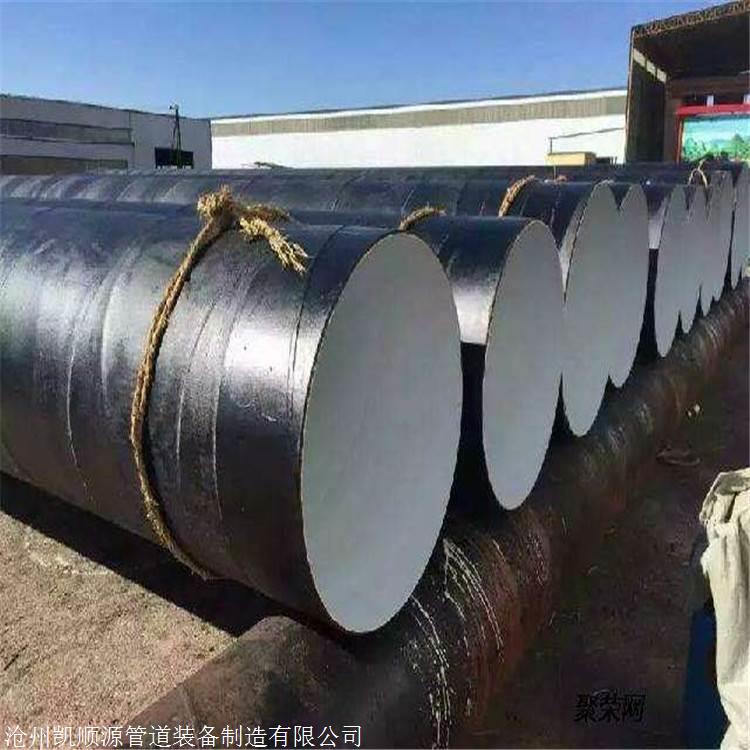
The company mainly produces and sells 3pe anti-corrosion steel pipes, epoxy coal tar anti-corrosion steel pipes, ipn8710 anti-corrosion steel pipes, cement mortar anti-corrosion steel pipes, polyurethane insulation steel pipes, steel plastic composite pipes, coated steel pipes, and lined plastic steel pipes made from seamless steel pipes, straight seam steel pipes, and spiral steel pipes as base pipes for drainage. The company's products are widely used in pipeline engineering fields such as oil and gas, chemical, power, shipbuilding, papermaking, heating, water supply and drainage, hydropower stations, pile driving, bridges, steel structures, etc. The products are sold to 28 provinces, cities, and autonomous regions in China, and exported to Southeast Asia and other regions, enjoying a high reputation in the market. We adhere to the business philosophy of honesty and trustworthiness, and strictly control the quality of our products; Explore and innovate, strive to improve product production technology. There are three types of goals: the goal of improving ecological environment quality, the goal of reducing the total amount of major pollutants, and the goal of environmental risk control. Highlight the urgent development and release of the next stage of the 'Action Plan for Air Pollution Prevention and Control'.

Mix evenly and use up within the specified time. Epoxy coal tar anti-corrosion steel pipe reinforced structure: The reinforced structure anti-corrosion layer can be wrapped with glass cloth after applying * layer of topcoat. The glass cloth should be tightened, the surface should be smooth, without wrinkles or bulges. The edge width is 20-25mm, and the overlap length of the cloth head is 100-150mm. After winding the glass cloth, the second layer of topcoat should be applied, and the paint amount should be full. All mesh holes of the glass cloth should be filled with paint. After the second layer of topcoat is dry, the third layer of topcoat can be applied. 3. The anti-corrosion layer of the reinforced structure should be applied in the order of one layer of topcoat and one layer of glass cloth. After the third coat of paint has dried, the fourth coat of paint can be applied, and the winding direction of the two layers of glass cloth should be opposite. As for damp glass cloth, it should be dried, otherwise it cannot be used. The structure and materials of the anti-corrosion coating for joint and joint repair (1) should be consistent with the important content of the inspection, mainly to discover defects and dimensional deviations on the surface of the weld seam. Generally, inspection is carried out through visual observation, using tools such as standard templates, gauges, and magnifying glasses. If there are defects on the surface of the weld seam, there is a possibility of defects inside the weld seam. The verification of physical methods: The verification method of physics is a method that uses some physical phenomena to determine or verify. The inspection of internal defects in materials or workpieces is generally carried out using non-destructive testing methods. Non destructive testing includes ultrasonic testing, radiographic testing, penetrant testing, magnetic testing, etc. Strength testing of pressure vessels: In addition to conducting sealing tests, pressure vessels also need to undergo strength tests. There are two common types: hydrostatic test and pneumatic test. They can all test the weld tightness of containers and pipelines working under pressure. Pneumatic testing is more sensitive and rapid than hydraulic testing, and the tested products do not require drainage treatment, making it particularly suitable for products with difficult drainage. But the danger of testing is greater than that of hydrostatic testing. When conducting experiments, corresponding safety technical measures must be followed to prevent incidents during the testing process.


AfterSalesService :
Key words:- Epoxy coal tar anti-corrosion steel pipe


More Products