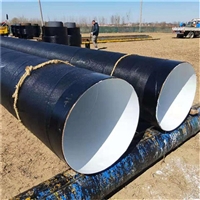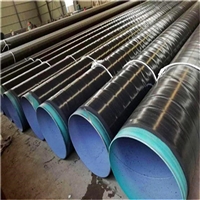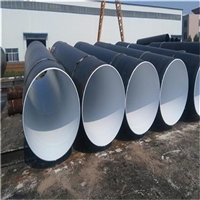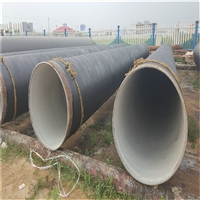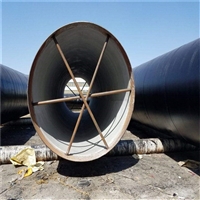
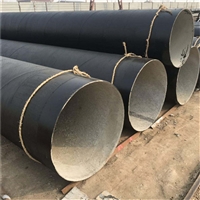


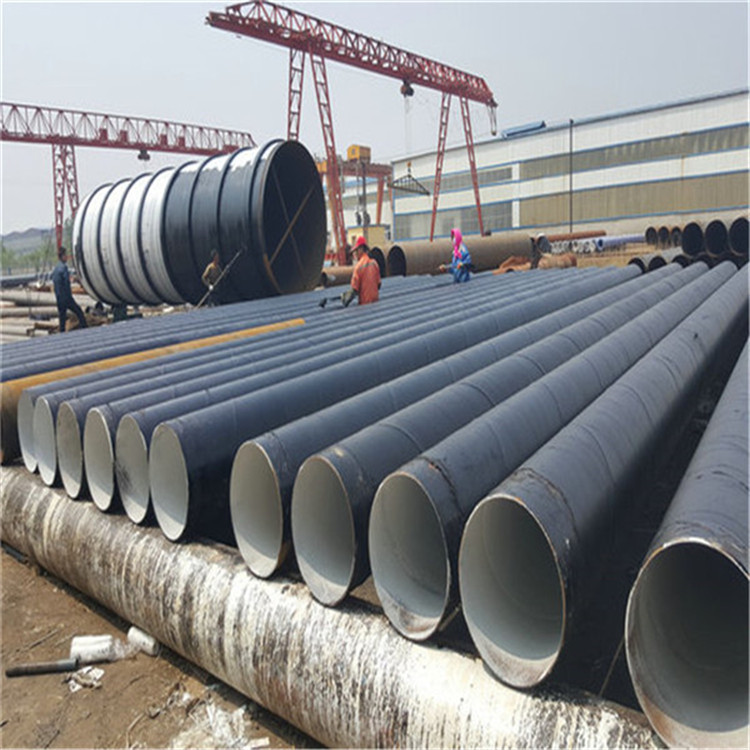
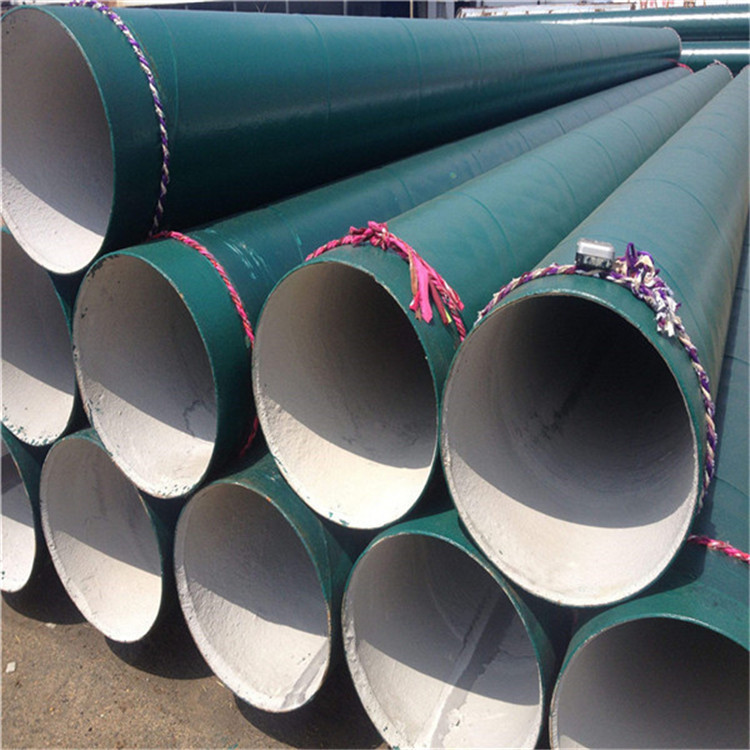
Three oil and two cloth epoxy coal tar anti-corrosion steel pipe lining cement mortar anti-corrosion steel pipe manufacturer
Category:
metallurgy/tubing/Spiral tube
Model:
Brand:
Guanghui Pipe Industry
Retail Price
450.00USD
重量
kg
- Product Description
-
Description :
The strength of cement mortar grade refers to a value in the overall distribution of compressive strength measured by standard testing methods for cubic specimens made and cured according to standard methods at 28 days of age. Maintenance: After spraying a section of steel pipe, immediately seal all ventilation holes to keep the inside of the pipe moist and carry out maintenance. Inspection and acceptance: Measure the anti-corrosion thickness and surface flatness, check for cracks and hollowing, and ensure that the compressive strength of the cement slurry reaches 30N/m 2. In April of the year, leakage and water pressure reduction tests were conducted after compression. The results showed that the water leakage of the two steel pipes was 01/min and 0/min, respectively, which met the design requirements. Steel pipes are strictly designed, manufactured, and installed in accordance with design and specification requirements, overcoming various difficulties in steel pipe production, construction, and installation, and ensuring strict quality control. Through quality acceptance, the excellent product rate of the unit project is 96%, achieving satisfactory results and laying a solid foundation for the safe operation of the project. The pipeline execution standard is CECS.


Production process: The anti-corrosion coating on the inner wall of the steel pipe is made of cement mortar, and the raw material is a mixture of cement, sand, and water. Usually, the ratio of water, cement, and sand is used for production. Then, the mixed cement mortar is applied to the cleaned inner wall of the pipeline according to the design thickness requirements, and after a certain period of curing, a high-strength circular shell inner lining layer is formed that is closely combined with the inner wall of the pipe. When using cement mortar, additives such as micro foaming agents and waterproof powders should be frequently added in proportion to improve its workability and viscosity. Then, a cement coating of 8-16mm is formed on the inner wall of the steel pipe using a pipe spraying machine The range of pipe diameters that our company can process is Φ. Cement mortar anti-corrosion steel pipes are formed using molding technology. Generally, large-diameter pipes with a diameter of 800 or more need to be reinforced with wire mesh to enhance the strength of the cement mortar and prevent crack detachment when using cement mortar for anti-corrosion. The use of the unique alkalinity of cement mortar to form a passive film on the inner surface of pipelines for protection has been widely adopted for internal anti-corrosion of water pipelines both domestically and internationally. During construction, adding additives to increase the temperature and humidity during the curing period can effectively reduce the occurrence of cracks in the early stages of construction. In addition, the final contraction period of cement mortar is 1-2 years. After the anti-corrosion steel pipe is put into operation, the cement mortar continues to harden in water for a long time, which can automatically close the cracks without affecting the anti-corrosion effect.
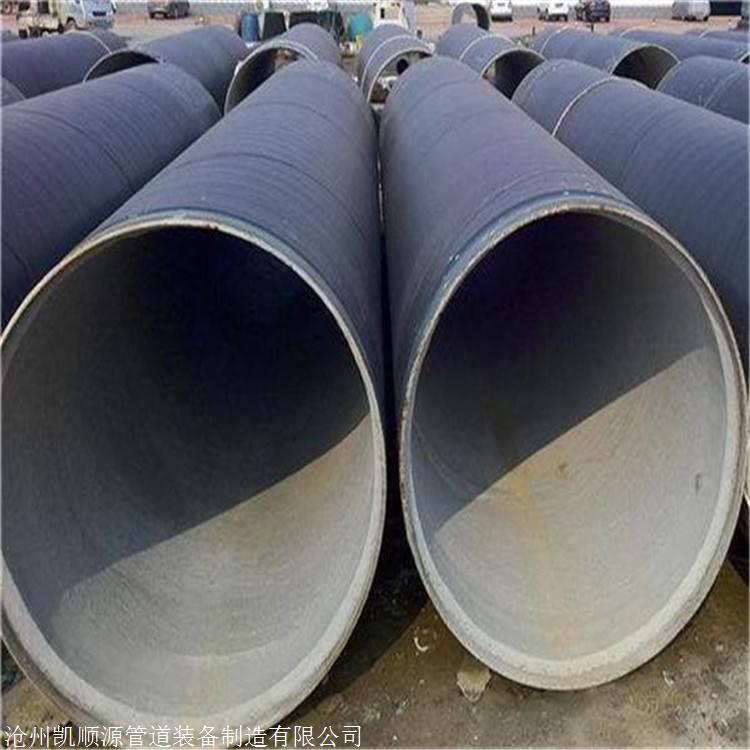
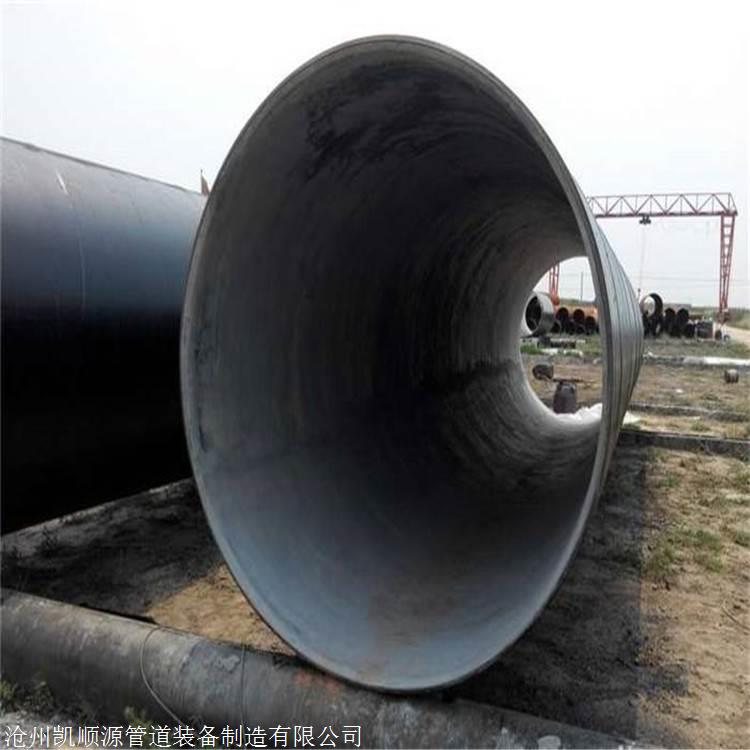
Cement mortar lined anti-corrosion steel pipes are used in municipal engineering: suitable for high-rise building water supply, heating network, tap water engineering, gas transmission, buried water transmission and other pipelines. Petroleum: Process pipelines used for transporting corrosive media in industries such as petroleum transportation pipelines, chemical pharmaceuticals, and printing and dyeing. Sewage treatment: Sewage treatment discharge pipes, sewage pipes, and biological pool anti-corrosion engineering. Agriculture: agricultural irrigation pipes, deep well pipes, drainage pipes, and other networks have better corrosion resistance than steel structures, which is beneficial for the fire resistance and prevention of steel pipes. The main production base is in Cangzhou, Hebei. The strength of cement mortar grade refers to the overall distribution of compressive strength measured by standard testing methods on cubic specimens made and cured according to standard methods at 28 days of age. The main implementation standards include cement mortar anti-corrosion spiral steel pipes, which have good corrosion resistance and impact resistance under low temperature conditions and can be directly buried in underground frozen soil. Fire water supply pipes and connections 1. Pipes before the alarm valve of the automatic sprinkler system and water spray fire extinguishing system and the water supply pipes of the hydrant system shall be hot-dip galvanized steel pipes on the inner and outer walls when overhead; Ductile iron pipes shall be used for burial. Pipes behind the alarm valve of automatic sprinkler system and water spray extinguishing system can be hot-dip galvanized steel pipes, copper pipes, stainless steel pipes, steel plastic coating pipes, stainless steel plastic lining pipes, etc. When using steel pipes with a pressure of less than or equal to 2MPA, there are requirements for small wall thickness. Please refer to technical measure P274 for details. 3. Hot dip galvanized welded steel pipes are divided into ordinary steel pipes, thickened steel pipes, and seamless steel pipes. When the system pressure is less than or equal to 1.0MPA, hot-dip galvanized welded steel pipes can be used; When the system pressure is between 1.0-1.6, hot-dip galvanized welded thickened steel pipes should be used; When the system pressure exceeds 1.6, hot-dip galvanized seamless steel pipes should be used. When the nozzle has a 60 degree tapered pipe thread (NT), hot-dip galvanized seamless steel pipe should be used.


AfterSalesService :
Key words:- Epoxy coal tar anti-corrosion steel pipe


More Products