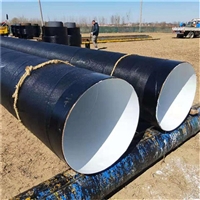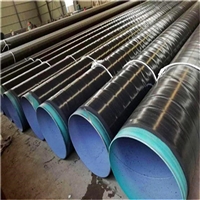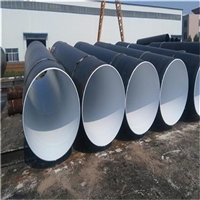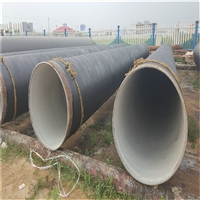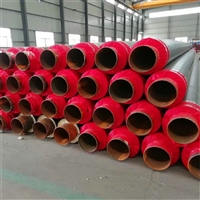
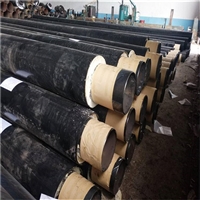
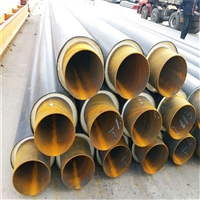
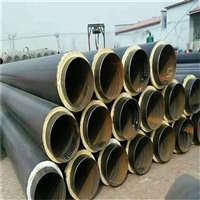
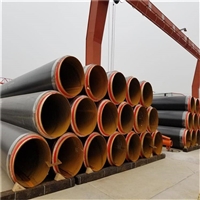
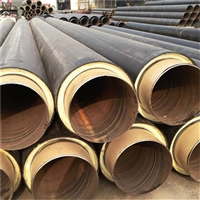
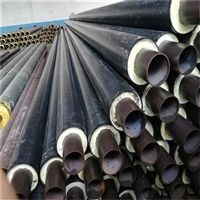
Heating direct buried insulation pipe manufacturer polyurethane insulation pipe price
Category:
metallurgy/tubing/Spiral tube
Model:
Brand:
Guanghui
Retail Price
490.00USD
重量
kg
- Product Description
-
Description :
Introduction to Directly Buried Insulation Pipe:
The directly buried insulation pipe, also known as "pipe in pipe", is composed of a "two-step method", which is composed of high-density polyethylene outer protective layer, polyurethane rigid foam plastic insulation material and steel pipe. The insulation layer is made of rigid polyurethane foam with a density of 60kg/m3 to 80kg/m3, which can fully fill the gap between the steel pipe and the casing, and has a certain bonding strength, so that the steel pipe, the casing and the insulation layer form a solid whole.
Application of buried insulation pipe:
Directly buried insulation pipes are widely used in liquid and gas transportation pipelines, chemical pipeline insulation engineering, petroleum, chemical, centralized heating pipelines, air conditioning and ventilation pipelines, municipal engineering, etc. Directly buried insulation pipe is a type of insulation pipeline with good insulation performance, safety and reliability, and low engineering cost. Effectively solved the high temperature heat transfer of 130 ℃ -600 ℃ in urban centralized heating. Directly buried insulation pipes not only have traditional trench and overhead pipeline technology and practical performance, but also have social and economic benefits, and are a powerful measure for heating energy conservation.
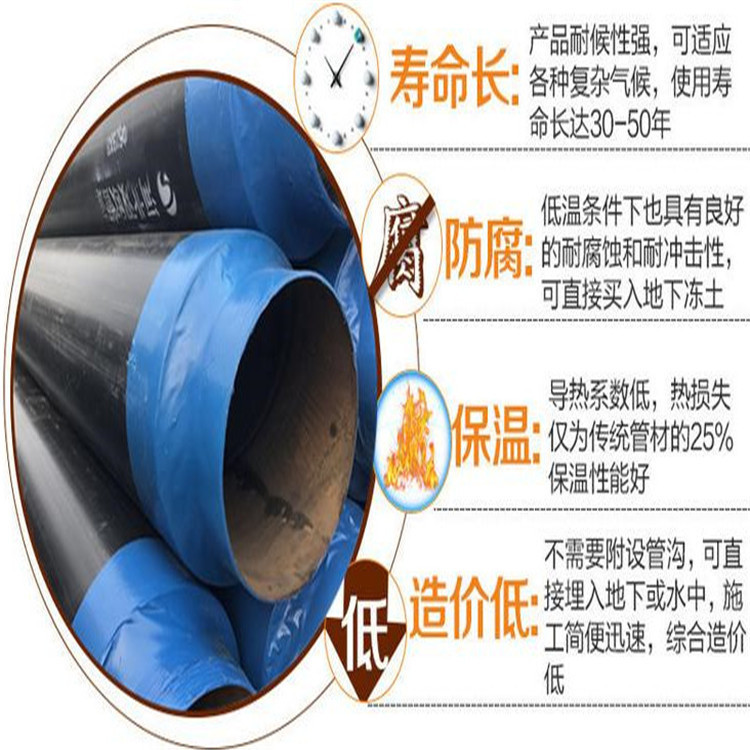
Directly buried insulation pipelines have excellent characteristics such as high efficiency insulation, waterproofing, anti-corrosion, thermal insulation, sound insulation, flame retardancy, cold resistance, light capacity, high strength, easy and fast construction, and are not afraid of plant roots. They have become indispensable materials for insulation, waterproofing, sealing, and other industrial sectors such as construction, transportation, petroleum, chemical, power, refrigeration, etc. Directly buried insulation pipes are used for insulation and cooling engineering of various indoor and outdoor pipelines, centralized heating pipelines, air conditioning pipelines, chemical and other industrial pipelines, oil pipeline engineering, steam pipeline engineering and other pipeline engineering. Directly buried insulation pipelines can reduce heat loss by more than 40% compared to ordinary pipelines in frozen soil layers of 0.6-1.2 meters. Their service life is more than 3-5 times longer than other insulation and anti-corrosion materials, and can reach 30-50 years.

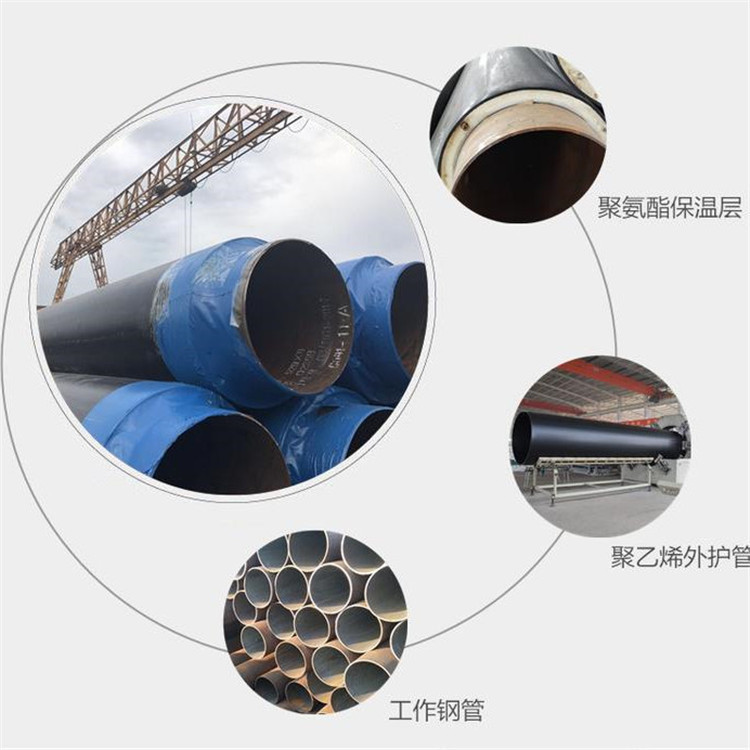
The structure of directly buried insulation pipes is divided into three layers from inside to outside:
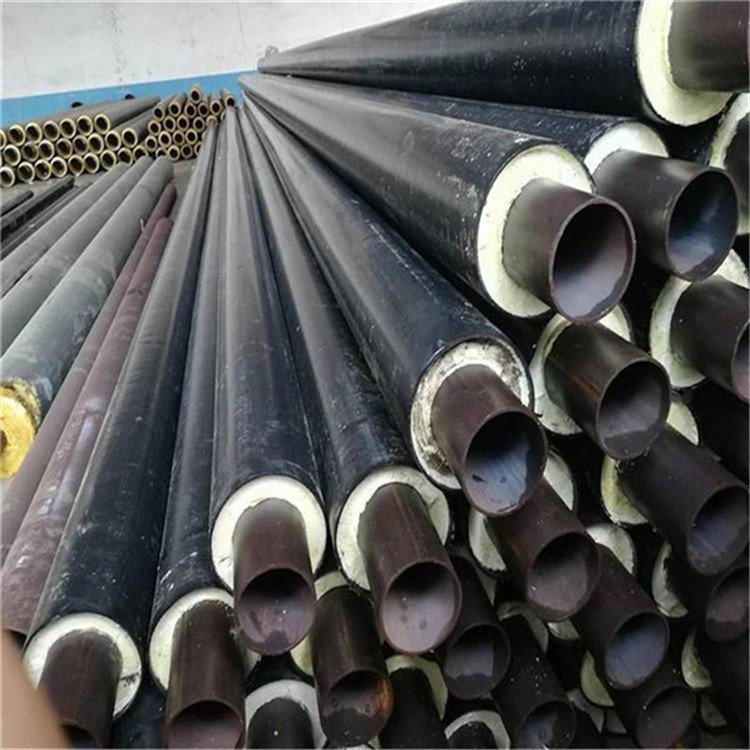
The inner layer is a working core pipe for conveying media. The core pipe is generally made of seamless pipe (GB8163-87), spiral welded pipe (GB9711-88; SY/T5038-92), straight seam welded pipe (GB3092-93), galvanized steel pipe, PPR, etc. The core pipe diameter is selected according to different user requirements φ22、25、32、38、45、57、76、89、108、133、159、219、273、325、377、426、478、529、630、720、820、920、1220;
The middle (thermal insulation) layer material is polyurethane foam plastic or composite thermal insulation material, and the thickness of the thermal insulation layer is 30-150mm;
The outer (protective) layer consists of high-density polyethylene jacket pipe, fiberglass wrapped pipe, and anti-corrosion steel pipe.
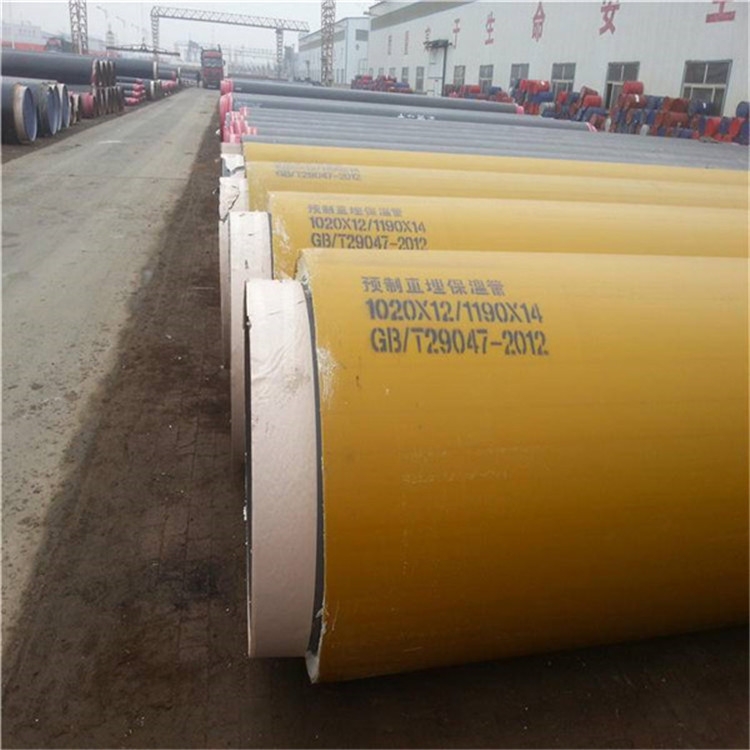


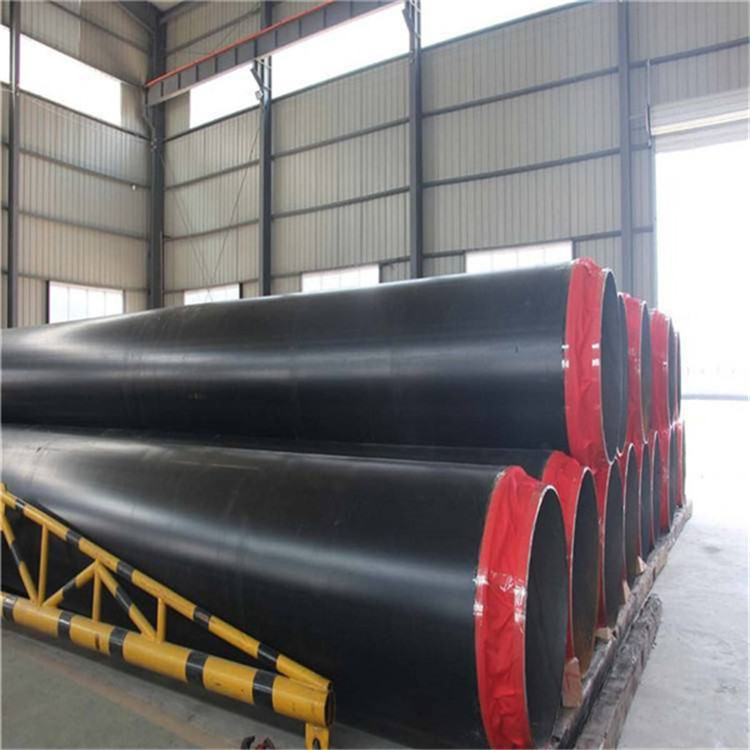

Common problems and solutions in the construction of buried insulation pipes:
1. Slow starting speed of buried insulation pipes
This phenomenon usually occurs during autumn and winter seasons or during morning construction, due to sudden drops in temperature or low temperatures. Raising the ambient temperature and black material temperature can solve the problem. Generally, raising the temperature of the black material to 30-60 ℃ and the ambient temperature to 20-30 ℃ is sufficient.
2. Directly buried insulation pipes have a fast starting speed
This phenomenon usually occurs during the spring and summer seasons or during construction at noon, due to sudden temperature increases caused by high temperatures. Black materials can be cooled with cold water or left outdoors for natural cooling at night to avoid direct sunlight.
3. The foam strength of directly buried insulation pipe is low and the foam is soft
This phenomenon is caused by the proportion of black and white materials. Increasing the proportion of black materials appropriately (1:1-1.05) should be careful not to make the proportion too large, otherwise it will make the foam brittle and affect the foam performance.
AfterSalesService :
Key words:- Heating insulation pipeline
More Products