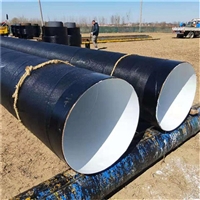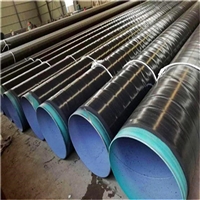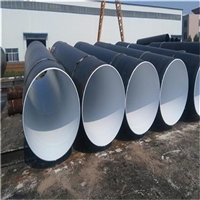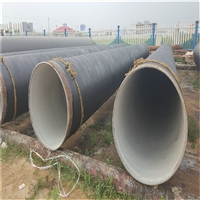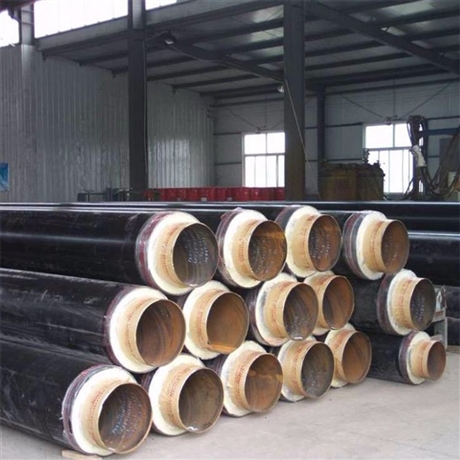

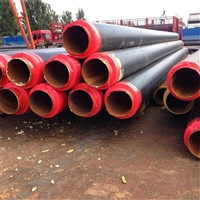
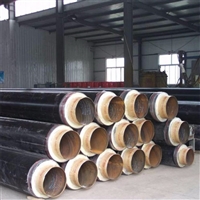
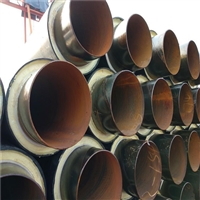

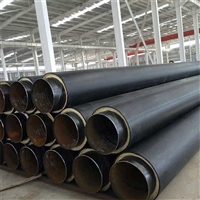

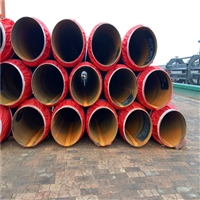
Production and supply of polyurethane direct buried insulation pipes and buried heating insulation pipe production plant
Category:
metallurgy/tubing/Spiral tube
Model:
Brand:
Guanghui
Retail Price
130.00USD
重量
kg
- Product Description
-
Description :
Due to the polyurethane rigid foam insulation layer is closely bonded to the steel pipe skin, the polyurethane directly buried insulation pipe can isolate the infiltration of air and water and play a good anti-corrosion role. At the same time, its foam pores are all closed, and its water absorption is very low. The high-density polyethylene shell and fiberglass shell both have good anti-corrosion, insulation, and mechanical properties. Therefore, the outer skin of the working steel pipe is difficult to be eroded by external air and water. The reason for low water absorption is that the closed cell rate of polyurethane foam is up to 92%. Low thermal conductivity and low water absorption, combined with insulation layer and high-density polyethylene or fiberglass protective shell with good waterproof performance on the outside, have changed the traditional situation of "wet cotton jacket" for laying heating pipes in underground trenches, reducing the overall heat loss of heating pipes, and the heat loss of the heating network is 2%. Polyurethane direct buried insulation pipes are suitable for insulation and cooling projects that transport various media within the range of -50 ℃ to 150 ℃. It is widely used in insulation and cooling projects in industries such as urban centralized heating, warm rooms, cold storage, coal mines, oil pipeline ports, chemical industry, natural gas pipelines, power direct burial, air conditioning pipeline insulation, cable conduit, steam insulation pipelines, etc.


The polyurethane directly buried insulation pipe, also known as "pipe in pipe", is composed of a "two-step method", which is composed of high-density polyethylene outer protective layer, polyurethane rigid foam plastic pipe and steel pipe. The insulation layer is made of rigid polyurethane foam with a density of 60kg/m3 to 80kg/m3, which can fully fill the gap between the steel pipe and the casing, and has a certain bonding strength, so that the steel pipe, the casing and the insulation layer form a solid whole. The polyurethane directly buried insulation pipe foam has good mechanical properties and thermal insulation properties. Generally, it can withstand the temperature of 120 and can withstand the temperature of 180 through modification or combination with other insulation materials.
Main physical properties and project index requirements of pipeline polyurethane
1 density, kg/m3 ≥40
2 thermal conductivity, (23 ± 2 ℃) W/(M? K) ≤ 0. compressive strength, KPA ≥ water absorption,% ≤ 3
5 dimensional stability,% ≤ 1.0
6 self extinguishing self extinguishing
7 Corrosion resistance, alkali resistance, acid resistance
Polyurethane direct buried insulation pipes are made of high-density polyethylene material, which has strong waterproof and corrosion-resistant capabilities. Polyurethane direct buried insulation pipes do not require pipe trenches and can be directly buried underground or in water. The construction is simple and fast, and the overall cost is low. Made with various additives such as antioxidants, and strictly inspected for the quality of raw materials and products to ensure that the product quality meets the CJ/1142000 standard and the technical requirements for direct buried pipe outer protective pipes, improving the overall quality of the outer protective pipes. Polyurethane direct buried insulation pipe is a hard polyurethane insulation material with low thermal conductivity and good thermal insulation performance, which has excellent thermal insulation properties. The on-site joint insulation of polyurethane buried insulation pipes must be carried out after passing the pressure test. The on-site joint insulation construction is unique to the construction of polyurethane buried insulation pipes, and the quality of construction directly affects the service life. There are two methods for insulation layer: on-site foaming construction and insulation tile construction. Regardless of which method is used for construction, defects such as circular space, cracking, and delamination must not occur. There are various methods for protective layer (such as high-density polyethylene and fiberglass protective layer), but the integrity, tightness, and waterproofness of the joint must be ensured.
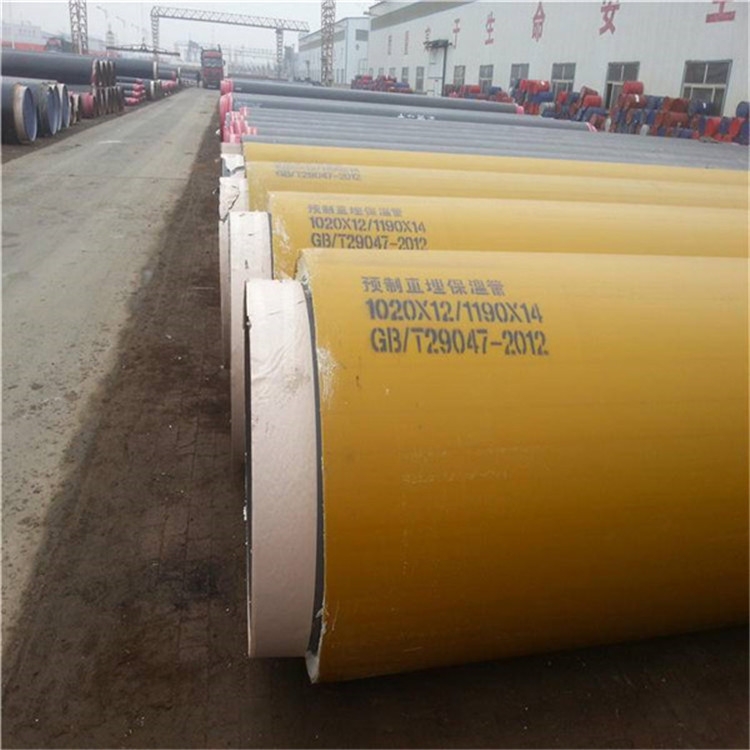
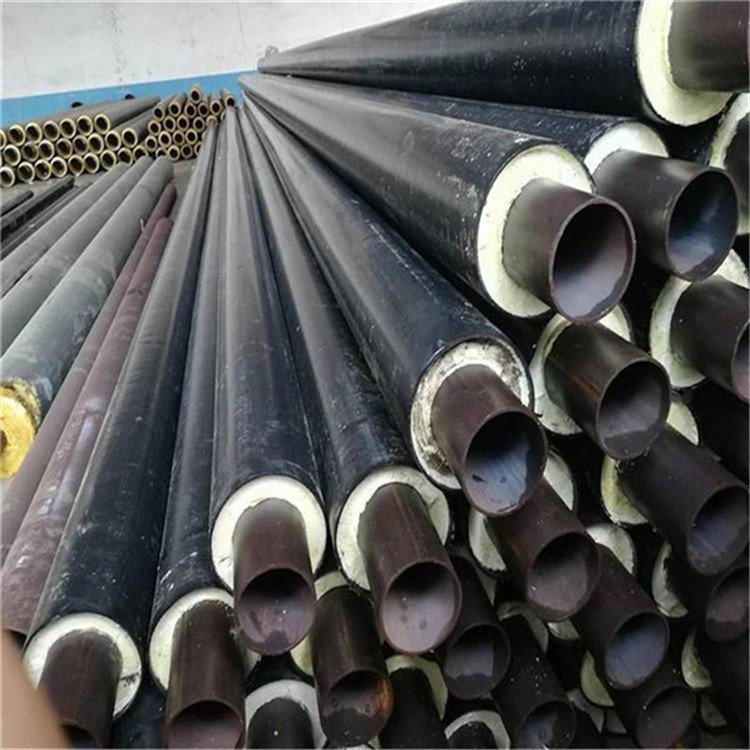

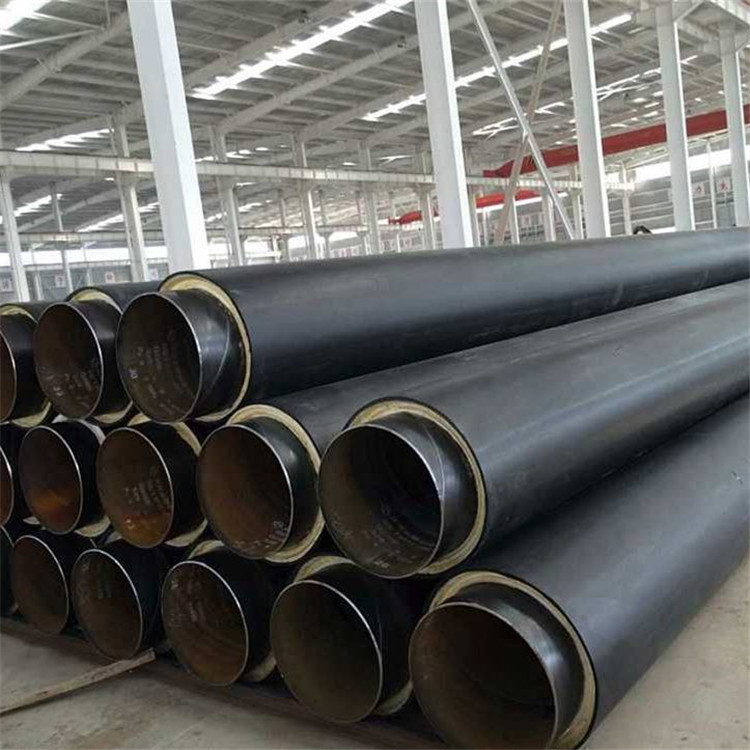
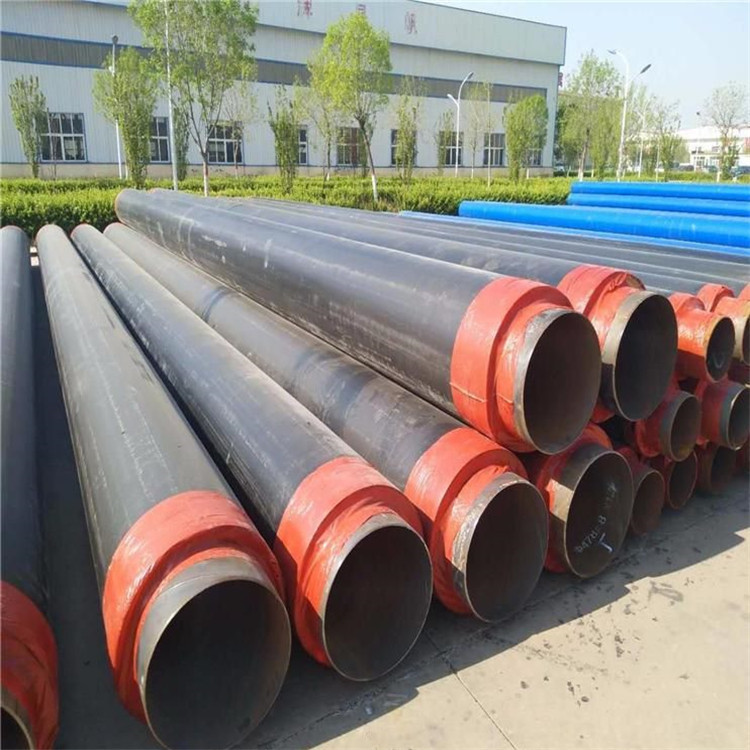
Polyurethane direct buried insulation pipes have excellent characteristics such as efficient insulation, waterproofing, anti-corrosion, thermal insulation, sound insulation, flame retardancy, cold resistance, anti-corrosion, light capacity, high strength, easy and fast construction, and are not afraid of plant roots. They have become an indispensable material for insulation, waterproofing, sealing and other industrial sectors such as construction, transportation, petroleum, chemical, power, refrigeration, etc. Polyurethane direct buried insulation pipes are used for insulation and cooling engineering of various indoor and outdoor pipelines, centralized heating pipelines, air conditioning pipelines, chemical and other industrial pipelines, oil pipeline engineering, steam and other pipeline engineering. Polyurethane direct buried insulation pipelines can reduce heat loss by more than 40% compared to ordinary pipelines in frozen soil layers of 0.6-1.2 meters. Their service life is more than 3-5 times longer than other insulation and anti-corrosion materials, and can reach 30-50 years. Polyurethane direct buried insulation pipes have become a relatively mature technology in some developed countries abroad, bringing great economic and social benefits to users with their excellent performance, convenient construction, and long service life. This energy-saving technology is being increasingly widely applied in China Polyurethane composite materials have the characteristics of fine pores, good flow, sufficient toughness, and high strength. They are suitable for use on pipes of different sizes and specifications, with uniform density distribution. At the same time, they can adapt to low-temperature environments for construction, and special varieties can withstand low temperatures of minus 200 ℃ for a long time.
AfterSalesService :
Key words:- Polyurethane insulation pipe
More Products