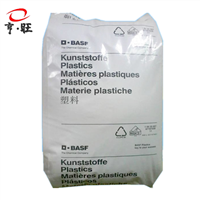


Oil resistant PA66, BASF A3EG3 from Germany, high rigidity fiberglass reinforced 15%
Category:
Rubber and plastic/engineering plastic/PA66
Model:
Brand:
BASF Germany
Retail Price
36.00USD
重量
kg
- Product Description
-
Description :
Oil resistant PA66, BASF A3EG3 from Germany, high rigidity fiberglass reinforced 15%
Our company supplies nylon plastics such as PA11, PA12, PA6, PA66, etc. If you need them, please contact Ms. He directly.

Filler/reinforcement material Glass fiber reinforced material, 15% filler by weight
feature Rigid, good
Oil resistance performance
purpose electrical components
Electronic insulation
Machine/mechanical components
shell
institutional rating EC 1907/2006 (REACH)
RoHS compliance RoHS compliance
form particle
processing method injection molding
Typical application scope: Compared with PA6, PA66 is more widely used in the automotive industry, instrument housings, and other products that require impact resistance and high strength.
Injection mold process conditions: drying treatment: If the material is sealed before processing, there is no need to dry it. However, if the storage container is opened, it is recommended to dry it in hot air at 85 ℃. If the humidity is greater than 0.2%, vacuum drying at 105 ℃ for 12 hours is also required. Melting temperature: 260-290 ℃. The temperature range for glass additive products is 275-280 ℃. The melting temperature should avoid exceeding 300 ℃. Mold temperature: Recommended at 80 ℃. Mold temperature will affect crystallinity, which in turn will affect the physical properties of the product. For thin-walled plastic parts, if a mold temperature below 40C is used, the crystallinity of the plastic part will change over time. In order to maintain the geometric stability of the plastic part, annealing treatment is required. Injection pressure: usually between 750 and 1250 bar, depending on the material and product design. Injection speed: High speed (slightly lower for reinforced materials). Runner and sprue: Due to the short solidification time of PA66, the position of the sprue is very important. The gate aperture should not be less than 0.5 × t (where t is the thickness of the plastic part). If using a hot runner, the gate size should be smaller than using a conventional runner, as the hot runner can help prevent premature solidification of the material. If a submerged gate is used, the minimum diameter of the gate should be 0.75mm.
PA66 has a high melting point in polyamide materials due to its chemical and physical properties. It is a semi crystalline crystalline material. PA66 can maintain strong strength and stiffness even at higher temperatures. PA66 still has moisture absorption after molding, which mainly depends on the composition of the material, wall thickness, and environmental conditions. When designing a product, it is important to consider the impact of moisture absorption on geometric stability. In order to improve the mechanical properties of PA66, various modifiers are often added. Glass is the most common additive, and sometimes synthetic rubber such as EPDM and SBR are added to improve impact resistance. PA66 has lower viscosity, so its flowability is good (but not as good as PA6). This property can be used to process very thin components. Its viscosity is very sensitive to temperature changes. The shrinkage rate of PA66 is between 1% and 2%, and adding glass fiber additives can reduce the shrinkage rate to 0.2% to 1%. The difference in shrinkage rate between the process direction and the direction perpendicular to the process direction is significant. PA66 is resistant to many solvents, but has weaker resistance to acids and other chlorinating agents.
AfterSalesService :
Key words:- Oil resistant PA66