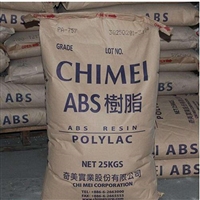
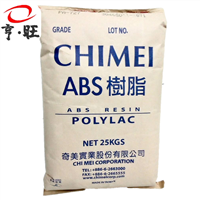


Qimei ABS D-2400 Zhenjiang Qimei heat-resistant and impact resistant home appliances and automotive parts
Category:
Rubber and plastic/General plastic/ABS
Model:
Brand:
Hengwang Industry
Retail Price
18.00USD
重量
kg
- Product Description
-
Description :
Qimei ABSD-2400 Zhenjiang Qimei heat-resistant and impact resistant heating appliances with an outer square meter, dry hair dryer, iron with an outer square meter, heater, automotive parts, water tank cover
How to distinguish between AS plastic and ABS plastic: In ABS, A is acrylonitrile, B is butadiene, and S is styrene. This plastic is opaque, while AS lacks the component of butadiene, resulting in a semi transparent product. During electroplating, ABS corrodes butadiene B during roughening to form small pits and increase the contact area between the coating and the product. This creates a tensile force on the nails, resulting in a strong bond between the coating and the product. However, AS no longer has this feature.
ABS is a resin with excellent comprehensive performance, non-toxic, slightly yellow, and has high impact strength over a wide temperature range. Its thermal deformation temperature is higher than that of Pa and PVC, and its dimensional stability is good. The shrinkage rate is in the range of 0.4% -0.8%. If reinforced with fiberglass, it can be reduced to 0.2% -0.4%, and shrinkage after plasticization is rare.
ABS has good formability, high surface smoothness of products, and good coating and dyeing properties, and can be electroplated into various colors.
ABS still has good blending properties and can be mixed with various resins to form alloys (blends), such as PC/aBS, aBS/PC, aBS/PVC, Pa/ABS, PBT/ABS, etc., giving it new properties and new application areas. If ABS is mixed with PMMA, it can be made into transparent aBS with a transmittance of up to 80%.
Although ABS is not included in the five major general engineering plastics (due to its HDT of around 80 ℃, not exceeding 100 ℃), its usage far exceeds any of the five major categories of general engineering plastics. In 1998, the global consumption reached 3.427 million tons, and in China, the consumption reached 1.14 million tons, accounting for 33% of the total global consumption. aBS has better comprehensive performance than general plastics, so it is generally referred to as sub engineering plastics.

D-2400 Physical Property Table
Performance project Test conditions [status] test data data unit Basic Performance Melt Flow Index 220℃,10kg five point five g/10min specific gravity 23℃ one point zero six mechanical properties IZOD notch impact strength 1/4",23℃ twelve kg-cm/cm Tensile strength, 1/8 ", 6mm/min four hundred and forty-five Kg/cm2 Elongation, 1/8 ", 6mm/min twenty % Bending elasticity, 1/4 ", 2.8mm/min twenty-six thousand Kg/cm2 Bending strength, 1/4 ", 2.8mm/min six hundred and fifty Kg/cm2 hardness one hundred and fifteen R Scale IZOD notch impact strength thermal performance Softening point, 1/8 ", 50 ℃/hr one hundred and twenty-four ℃ IZOD notch impact strength Hot deformation temperature, 1/4 ", 120 ℃/hr one hundred and two ℃ Burning rate, 1.5mm HB AfterSalesService :
Key words:- Qimei ABS