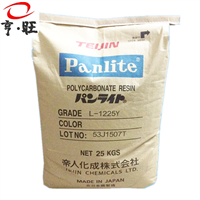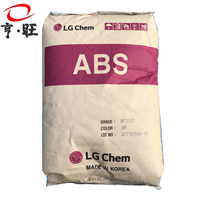
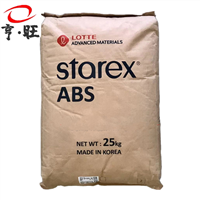


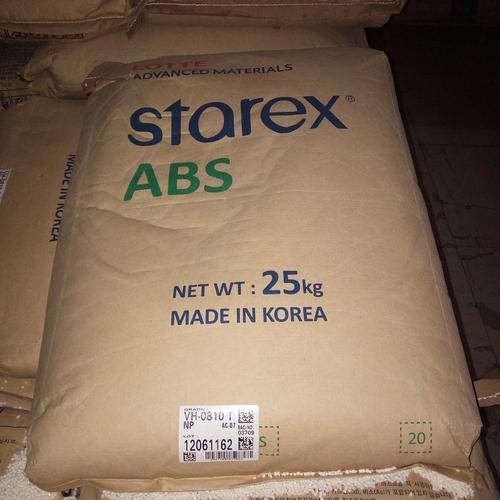
Halogen free flame retardant ABS, Korean Samsung Lotte NH-0825 S, black in stock
Category:
Rubber and plastic/General plastic/ABS
Model:
Brand:
Han Sanxing's woolen weaving
Retail Price
24.20USD
重量
kg
- Product Description
-
Description :
Halogen free flame retardant ABS, Korean Samsung Lotte NH-0825 S, black in stock
In daily life, we often hear about ABS plastic. ABS plastic is a material used in electronic appliances and building materials. Many electronic appliances such as washing machines, televisions, refrigerators, computers, copiers, etc. commonly use ABS plastic in our daily lives. So what is ABS plastic?
Introduction to ABS Plastic
ABS is a polymer formed by copolymerization of three monomers: Acrylonitrile (23-41%), Butadiene (10-30%), and Styrene (29-60%). Its English name is Acrylonitrile Butadine Styrene, abbreviated as ABS.
The manufacturing methods of ABS are divided into two types: mixing method and grafting method. The mixing method ABS was first developed by the American Rubber Company in 1945, while the grafting method ABS was first synthesized by the American company Marbon in 1954. Synthetic ABS can be classified into four types: medium impact, high impact, ultra-high impact, and heat-resistant.
The general ratio of the three monomers in ABS copolymers is 20:30:50. By changing the ratio, polymerization method, and particle size of the three monomers, a series of ABS varieties with different impact strengths and flow characteristics can be produced. For example, increasing the content of butadiene component can improve the impact strength of ABS, but the hardness and flowability will decrease, and the strength and heat resistance will deteriorate. If the content of butadiene in ABS reaches 50% or more, it is called high rubber powder and is commonly used for toughening modification of ABS and PC/ABS.
ABS was initially developed on the basis of PS modification. Due to its unique advantages of toughness, rigidity, and hardness, its dosage is equivalent to PS, and its application range has far exceeded PS, making it an independent plastic variety from PS. ABS was initially classified as an engineering plastic, but with its rapid development, its production quickly approached that of its parent material PS. Therefore, since 2000, it has been classified as a general-purpose plastic, becoming the fifth largest variety of general-purpose plastics.
AfterSalesService :
Key words:- Halogen free flame retardant ABS