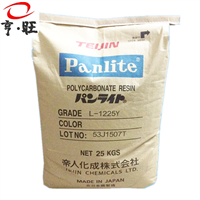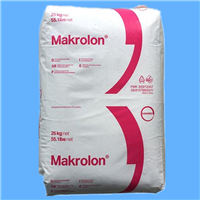
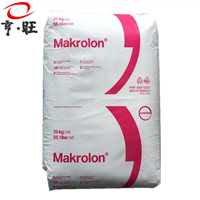


Polycarbonate PC 2805 has good thermal stability
Category:
Rubber and plastic/engineering plastic/PC
Model:
Brand:
Bayer Germany
Retail Price
14.50USD
重量
kg
- Product Description
-
Description :
Polycarbonate PC 2805 Covestro
Our company has a complete range of PC plastic models and numerous brands. If there are specific requirements, we can directly connect them by electricity.
PC 2805 Bayer Physical Properties Table, Germany

polycarbonate
Introduction: Polycarbonate is a thermoplastic resin containing [O-R-O-CO] - chain segments in its molecular hair chains. It can be classified into aliphatic, cycloaliphatic, and aliphatic aromatic types based on the ester groups carried in its molecular structure. Among them, aromatic polycarbonate has practical value, with bisphenol A polycarbonate being the most important, with a molecular weight typically ranging from 30000 to 100000.
Polycarbonate, also known as PC, is an amorphous, odorless, non-toxic, highly transparent colorless or slightly yellow thermoplastic engineering plastic with excellent physical and mechanical properties, especially excellent impact resistance, high tensile strength, bending strength, and compression strength; Low creep resistance and stable size; Has good heat resistance and low temperature resistance, stable mechanical properties, dimensional stability, electrical properties, and flame retardancy over a wide temperature range, and can be used for a long time at -60~120 ℃; No obvious melting point, in
Melting state at 220-230 ℃; Due to the high rigidity of the molecular chain, the viscosity of the resin melt is high; Low water absorption rate, low shrinkage rate, high dimensional accuracy, good dimensional stability, and low film permeability; Belonging to self extinguishing materials; Stable to light, but not resistant to ultraviolet light, with good weather resistance; Resistant to oil, acid, strong alkali, oxidizing acids, as well as amines and ketones, soluble in chlorinated hydrocarbons and aromatic solvents, it is prone to hydrolysis and cracking in water for a long time. The disadvantage is that due to poor fatigue strength, it is prone to stress cracking, poor solvent resistance, and excellent wear resistance. PC can be injection molded, extruded, molded, blow molded, printed, bonded, coated, and machined, with injection molding being the most important processing method. Before forming, it must be pre dried with a moisture content of less than 0.02%. Processing with trace amounts of moisture at high temperatures can cause the product to produce a cloudy white color, silver threads, and bubbles. PC has a considerable ability to undergo forced high elasticity deformation at room temperature. High impact toughness allows for cold forming processes such as cold pressing, cold drawing, and cold rolling. The molecular weight of PC used for extrusion should be greater than 30000, and a gradient compression screw with a length to diameter ratio of 1:18-24 and a compression ratio of 1:2.5 should be used. Extrusion blow molding, injection blow molding, and injection pull blow molding can be used to form high-quality and highly transparent bottles

Specification level: Injection molding
Product Usage: Used for industrial accessories, automotive electronic components, electronic and electrical accessories; In UL certification, viscosity is generally used for injection molding.
Note: Characteristics: Medium viscosity, injection or extrusion molding, colorless, colored, transparent, semi transparent, good thermal stability.
Basic performance rating unit testing method
Moisture absorption (23 ℃. 50% humidity) 0.12% ISO 62
Water absorption (23 ℃ water, saturation value) 0.30% ISO 62
Melt flow rate ISO 1133
(200℃. 1.2kg) 9.5 cm/10min
(200℃. 1.2kg) 10 g/10min
Density 1200 Kg/cm ISO 1183
Physical performance rating unit testing method
Transmittance DIN 5036-1
(1mm) 89 %
(2mm) 89 %
Transmittance DIN 5036-1
(4mm) 87 %
(3mm) 88 %
Refractive index 1.586 ISO 489
Mechanical performance rating unit testing method
IZOD Impact Strength ISO 180-4A
(23℃) 85 KJ/m
(-30℃) 12 KJ/m
Penetration (23 ℃/2mm) 5400 N ISO 6603-2
Yield stress (50mm/min) 65 MPa ISO 527
Penetration energy (23 ℃/2mm) 60 J ISO 6603-2
Charpy impact strength (23 ℃) N KJ/m ISO 179 LeU
Nominal elongation at break (50mm/min)>50% ISO 527
Tensile modulus (1mm/min) 2400 MPa ISO 527
Tensile creep modulus (lh) 2200 MPa ISO 899-1
Penetration (-30 ℃/2mm) 6400 N ISO 6603-2
Yield strain (50mm/min) 6.0% ISO 527
Tensile creep modulus (1000h) 1900 MPa ISO 899-1
Penetration energy (-30 ℃/2mm) 65 J ISO 6603-2
Charpy impact strength (-30 ℃) N KJ/m ISO 179 LeU
Unit testing method for rated electrical performance values
Relative dielectric constant (1MHz) 3.0 IEC 60250
Surface resistivity 10 Ω IEC 60093
Loss factor IEC 60250
(100Hz) 5 10-4
(1MHz) 90
Relative dielectric constant (100Hz) 3.1 IEC 60250
Anti arc track CTI/solution A 275 level IEC 60112
Volume resistivity 10 Ω. cm IEC 60093
AfterSalesService :
Key words:- Polycarbonate PC