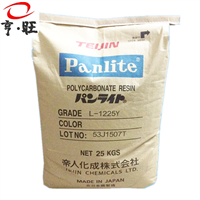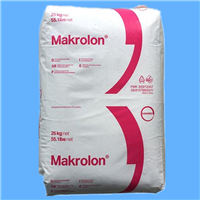
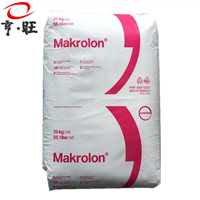


High viscosity PC 1095 Shanghai Covestro 15% fiberglass reinforced power tool housing
Category:
Rubber and plastic/engineering plastic/PC
Model:
Brand:
Shanghai Bayer
Retail Price
19.60USD
重量
kg
- Product Description
-
Description :
PC 1095 Shanghai Covestro
Filler/reinforcement material glass fiber reinforcement material, 15% filler by weight
Characteristics: Good demolding performance, high viscosity
Usage: Power/Other Tools
Shell RoHS compliance RoHS compliant appearance opaque
Color processing methods can be used for extrusion injection molding
The excellent comprehensive performance, customized product development, design freedom, and rich color schemes of polycarbonate materials can organically combine material properties with aesthetic effects. Therefore, in the mid to high end home appliance and consumer electronics markets, the trend of polycarbonate replacing other plastics is highlighted. At the same time, with the low price of polycarbonate raw materials, it provides a more economical and feasible choice for industrial designers and downstream end enterprises.
Taking the handheld wireless vacuum cleaner, a popular product in the field of cleaning appliances in the past two years, as an example, traditionally the body shell is mostly made of ABS material, and only the transparent dust collection cup is made of polycarbonate. In order to meet consumers' higher requirements for material performance and appearance texture, polycarbonate material is used to make the body shell, which is lighter in weight, stronger in strength, resistant to pressure and drop, and has a more delicate and exquisite appearance texture.
1095 Physical Property Table
Physical performance rating unit testing method
Density (23 ° C) 1.29 g/cm3 ISO 1183
Apparent density 1 0.64 g/cm3 ISO 60
Melt flow rate (melt flow rate) (300 ° C/1.2 kg) 7.0 g/10 min ISO 1133
Dissolved Volume Flow Rate (MVR) (300 ° C/1.2 kg) 6.00 cm3/10 min ISO 1133
Shrinkage rate 2 ISO 294-4
Vertical flow direction: 2.00 mm 0.45% ISO 294-4
Flow direction: 2.00 mm 0.45% ISO 294-4
Water absorption rate ISO 62
Saturation, 23 ° C 0.24% ISO 62
Balance, 23 ° C, 50% RH 0.10% ISO 62
Test method for hardness rating unit system
Ball hardness 129 MPa ISO 2039-1
Mechanical performance rating unit testing method
Tensile modulus (23 ° C) 4600 MPa ISO 527-2/1
Tensile stress ISO 527-2/5
Yield, 23 ° C 64.0 MPa ISO 527-2/5
Fracture, 23 ° C 45.0 MPa ISO 527-2/5
Tensile strain ISO 527-2/5
Yield, 23 ° C 4.6% ISO 527-2/5
Fracture, 23 ° C 12% ISO 527-2/5
Bending modulus 3 (23 ° C) 4400 MPa ISO 178
Bending stress 4 ISO 178
3.5% strain, 23 ° C 95.0 MPa ISO 178
23°C 105 MPa ISO 178
Flexural Strain at Flexural Strength (23°C) 5 5.8 % ISO 178
Test method for flammability rating unit system
Burning Rate - US-FMVSS (> 1.00 mm) passed ISO 3795
Flash Ignition Temperature 470 °C ASTM 1929
Needle Flame Test IEC 60695-11-5
Method F : 1.50 mm 2.0 min IEC 60695-11-5
Method F : 2.00 mm 2.0 min IEC 60695-11-5
Method F : 3.00 mm 2.0 min IEC 60695-11-5
Method K : 1.50 mm 1.0 min IEC 60695-11-5
Method K : 2.00 mm 1.0 min IEC 60695-11-5
Method K : 3.00 mm 2.0 min IEC 60695-11-5
Self Ignition Temperature 550 °C ASTM 1929
Supplementary Information Rating Test Method
Electrolytical Corrosion (23°C) A1 IEC 60426
ISO Shortname ISO 7391-PC,MR,(,,)-09-9,GF15
Test method for impact performance rating unit system
Simply supported beam notch impact strength 6 (23 ° C, complete fracture) 10 kJ/m2 ISO 7391
Simply supported beam without notch impact strength ISO 179/1eU
-60 ° C, complete fracture 90 kJ/m2 ISO 179/1eU
-30 ° C, complete fracture 100 kJ/m2 ISO 179/1eU
23 ° C, complete fracture 120 kJ/m2 ISO 179/1eU
Suspended wall beam notch impact strength 7 (23 ° C, complete fracture) 10 kJ/m2 ISO 7391
Multi axis Instrumented Impact Energy ISO 6603-2
-30°C 13.0 J ISO 6603-2
23°C 25.0 J ISO 6603-2
Multi axis Instrumented Peak Impact Force ISO 6603-2
-30°C 3000 N ISO 6603-2
23°C 3600 N ISO 6603-2
Test method for thermal performance rating unit system
Heat Deflection Temperature
0.45 MPa, Unanealed 141 ° C ISO 75-2/B
1.8 MPa, Unanealed 135 ° C ISO 75-2/A
Vicat softening temperature
-- 142 °C ISO 306/B50
-
AfterSalesService :
Key words:- High viscosity PC