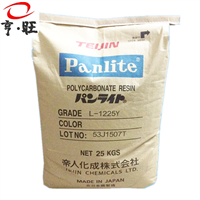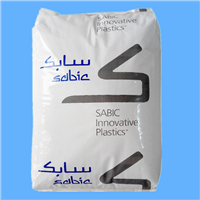
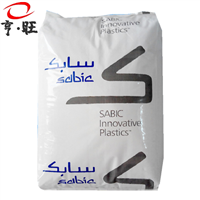


Low temperature ductility PC Saudi Arabia base EXL1330 black white
Category:
Rubber and plastic/engineering plastic/PC
Model:
Brand:
Basic Innovative Plastics&# 40; United States&# 41
Retail Price
25.00USD
重量
kg
- Product Description
-
Description :
Low temperature ductility PC Saudi Arabia base EXL1330 black white
Color code: EXL1330 BK11140EXL1330 WH
Suitable for medical equipment and drug packaging.
For questions about PC raw material injection molding process and other related issues, you can directly click on the "Call" button below for free consultation!
Polycarbonate (PC) siloxane copolymer resin is a UV stable opaque injection molding (IM) and sheet extrusion grade.
Compared to standard PCs,This resin has extremely low temperature (-60 ℃) ductilityMedium flow characteristics and excellent processing performance, with short IM cycle time.
LEXAN EXL1330 resin is a universal product with multiple opaque colors to choose from, making it a widely used choice.

Physical Property Table of PC Saudi Arabia Basic EXL1330:
Additive UV stabilizer
Characteristic copolymer processability, good and fast molding cycle flowability, moderate universal ductility
Universal use
Opaque appearance, available colors
Processing methods: sheet extrusion molding, injection molding
Physical properties rated value system of units test method
Specific gravity 1.18 g/cm3
Melt flow rate (melt flow rate) (300 ° C/1.2 kg) 10 g/10 min
Dissolved Volume Flow Rate (MVR) (300 ° C/1.2 kg) 9.00 cm3/10 min ISO 1133
Internal method of shrinkage rate
Flow: 3.20 mm 0.40 to 0.80% internal method
Lateral flow: 3.20 mm 0.40 to 0.80% internal method
Water absorption rate ISO 62
Saturation, 23 ° C 0.35% ISO 62
Balance, 23 ° C, 50% RH 0.15% ISO 62
hardness rated value system of units test method
Ball indentation hardness (H 358/30) 90.0 MPa ISO 2039-1
mechanical properties rated value system of units test method
tensile modulus
-- 1 2100 MPa
-- 2100 MPa ISO 527-2/1
tensile strength
Yield 2 58.6 MPa
Yield 55.0 MPa ISO 527-2/50
Fracture 3 61.4 MPa
Fracture 56.0 MPa ISO 527-2/50
elongation
Yield 4 6.0%
Yield 5.0% ISO 527-2/50
Fracture 5 130%
Fracture>100% ISO 527-2/50
flexural modulus
50.0mm span 6 2070 MPa
-- 7 2100 MPa ISO 178
bending stress
-- 85.0 MPa ISO 178
Yield, 50.0 mm span, 88.9 MPa
impact performance rated value system of units test method
Simply supported beam notch impact strength 9 ISO 179/1eA
-30°C 60 kJ/m2 ISO 179/1eA
23°C 75 kJ/m2 ISO 179/1eA
Simply supported beam without notch impact strength 10 ISO 179/1eU
-30 ° C without fracture ISO 179/1eU
23 ° C without fracture ISO 179/1eU
Impact strength of cantilever beam gap
-50°C 590 J/m
-30°C 680 J/m
23°C 800 J/m
23°C, 6.40 mm 640 J/m
-30°C 11 55 kJ/m2 ISO 180/1A
23°C 12 70 kJ/m2 ISO 180/1A
Non notched cantilever beam impact
Internal method at 23 ° C 13 1100 J/m
-30 ° C 14 without fracture ISO 180/1U
23 ° C 15 without fracture ISO 180/1U
Dart impact equipped with measuring instruments (23 ° C, Total Energy) 52.9 J

thermal performance rated value system of units test method
Thermal deformation temperature under load
0.45 MPa, Unanealed, 3.20 mm, 134 ° C
0.45 MPa, Unanealed, 100mm span 16 136 ° C ISO 75-2/Be
1.8 MPa, Unanealed, 3.20 mm, 121 ° C
1.8 MPa, Unanealed, 6.40 mm, 124 ° C
1.8 MPa, Unanealed, 100mm span 17 125 ° C ISO 75-2/Ae
Vicat softening temperature
-- 143 °C
-- 145 °C ISO 306/B120
Ball Pressure Test (125°C) Pass IEC 60695-10-2
Linear coefficient of thermal expansion
Flow: -40 to 40 ° C 6.7E-5 cm/cm/° C
Flow: 23 to 80 ° C 7.2E-5 cm/cm/° C ISO 11359-2
Horizontal: -40 to 40 ° C 6.7E-5 cm/cm/° C
Horizontal: 23 to 80 ° C 7.2E-5 cm/cm/° C ISO 11359-2
RTI Elec 125 °C UL 746
RTI Imp 115 °C UL 746
RTI 120 °C UL 746
flammability rated value system of units test method
UL flame retardant rating (0.800 mm) HB UL 94
Burning wire flammability index IEC 60695-2-12
0.800 mm 850 °C IEC 60695-2-12
1.00 mm 960 °C IEC 60695-2-12
Hot filament ignition temperature IEC 60695-2-13
1.00 mm 875 °C IEC 60695-2-13
3.00 mm 875 °C IEC 60695-2-13
Extreme Oxygen Index 35% ISO 4589-2
injection rated value system of units
Drying temperature 121 ° C
Drying time 3.0 to 4.0 hours
Drying time 48 hours
Suggested moisture content of 0.020%
Suggested injection volume of 40 to 60%
The temperature at the rear of the barrel is 217 to 293 ° C
The temperature in the middle of the barrel is 282 to 304 ° C
The temperature at the front of the barrel is 293 to 316 ° C
Spray nozzle temperature 288 to 310 ° C
Processing (melt) temperature 293 to 316 ° C
Mold temperature 71.0 to 93.0 ° C
Back pressure ranging from 0.345 to 0.689 MPa
Screw speed 40 to 70 rpm
Exhaust hole depth 0.025 to 0.076 mm
extrude rated value system of units
Drying temperature 110 to 121 ° C
Drying time 3.0 to 4.0 hours
Suggested moisture content of 0.020%
The temperature in Zone 1 of the material cylinder ranges from 249 to 288 ° C
Material cylinder zone 2 temperature 243 to 271 ° C
The temperature in Zone 3 of the material cylinder ranges from 227 to 254 ° C
Joint temperature 227 to 254 ° C
Melt temperature 243 to 260 ° C
Mold temperature 238 to 260 ° C
AfterSalesService :
Key words:- Low temperature ductility PC