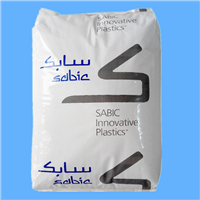
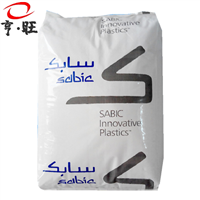


High flow polycarbonate PC basic innovative plastic American HP2 medical infusion bag
Category:
Rubber and plastic/engineering plastic/PC
Model:
Brand:
Basic Innovative Plastics&# 40; United States&# 41
Retail Price
45.00USD
重量
kg
- Product Description
-
Description :
High flow polycarbonate PC basic innovative plastic (USA) HP2 medical infusion bag
Our company supplies medical grade polymer materials from brands such as SABIC and Covestro. Regarding questions about medical grade raw materials such as PC, PEI, PP, PE, PTFE, etc,You can directly click on 'Call' below for free consultation!
Mediterranean/high flow polycarbonate. Used for medical equipment and pharmaceutical applications. Changes in healthcare management, biocompatibility (ISO 10993 or USP Class VI). Steam disinfection includes demolding.
PC Basic Innovative Plastic (USA) HP2 color code in stock:HP2-1H111、HP2-8H9D375。
LEXAN? Property Table of HP2 Resin
Additive demolding
Characteristics: Ethylene oxide disinfection has high fluidity and biocompatibility for steam disinfection
Usage: Pharmaceuticals, Medical/Nursing Supplies
Processing method: Injection molding
Physical properties rated value system of units test method
specific gravity
-- 1.20 g/cm3
-- 1.19 g/cm3
Specific volume 0.830 cm3/g
Melt flow rate (melt flow rate) (300 ° C/1.2 kg) 18 g/10 min
Dissolved Volume Flow Rate (MVR) (300 ° C/1.2 kg) 16.0 cm3/10 min ISO 1133
Shrinkage rate - flow (3.20 mm) 0.50 to 0.70% internal method
water absorption rate
24 hr 0.15 %
Balance, 23 ° C 0.35%
Balance, 100 ° C 0.58%
hardness rated value system of units test method
Rockwell hardness
M-grade 70
R-grade 118
mechanical properties rated value system of units test method
tensile modulus
-- 1 2370 MPa
-- 2350 MPa ISO 527-2/1
tensile strength
Yield 2 62.0 MPa
Yield 63.0 MPa ISO 527-2/50
Fracture 3 68.0 MPa
Fracture at 65.0 MPa ISO 527-2/50
elongation
Yield 4 7.0%
Yield 6.0% ISO 527-2/50
Fracture 5 130%
Fracture 100% ISO 527-2/50
flexural modulus
50.0mm span 6 2340 MPa
-- 7 2300 MPa ISO 178
bending stress
-- 90.0 MPa ISO 178
Yield, 50.0 mm span, 8 96.0 MPa
Taber Wear Resistance (1000 Cycles, 1000 g, CS-17 Wheel) 10.0 mg
impact performance rated value system of units test method
Simply supported beam notch impact strength (23 ° C) 35 kJ/m2 ISO 179/2C
Impact strength of cantilever beam gap
23°C 690 J/m
-30°C 9 10 kJ/m2 ISO 180/1A
23°C 10 12 kJ/m2 ISO 180/1A
Non notched cantilever beam impact (23 ° C) 3200 J/m
Dart impact equipped with measuring instruments (23 ° C, Energy at Peak Load) 62.0 J
Hammer impact (23 ° C) 169 J
Tensile impact strength 11 546 kJ/m2
thermal performance rated value system of units test method
Thermal deformation temperature under load
0.45 MPa, Unanealed, 6.40 mm, 137 ° C
0.45 MPa, Unanealed, 100mm span 12 133 ° C ISO 75-2/Be
1.8 MPa, Unanealed, 6.40 mm, 129 ° C
1.8 MPa, Unanealed, 100mm span 13 122 ° C ISO 75-2/Ae
Vicat softening temperature
-- 154 °C
-- 140 °C ISO 306/B50
-- 141 °C ISO 306/B120
Ball Pressure Test (125°C) Pass IEC 60695-10-2
Linear coefficient of thermal expansion - flow
-40 to 95 ° C 6.8E-5 cm/cm/° C
23 to 80 ° C 7.0E-5 cm/cm/° C ISO 11359-2
Specific heat 1250 J/kg/° C
thermal conductivity
-- 0.19 W/m/K
-- 0.20 W/m/K ISO 8302
RTI Elec 130 °C UL 746
RTI Imp 130 °C UL 746
RTI 130 °C UL 746

Electrical performance rated value system of units test method
Surface resistivity>1.0E+15 ohms IEC 60093
volume resistivity
-- > 1.0E+17 ohms·cm
-- > 1.0E+15 ohms·cm IEC 60093
dielectric strength
3.20 mm, in Air 15 kV/mm
3.20 mm, 17 kV/mm IEC 60243-1 in oil
dielectric constant
50 Hz 3.17
60 Hz 3.17
1 MHz 2.96
50 Hz 2.70 IEC 60250
60 Hz 2.70 IEC 60250
1 MHz 2.70 IEC 60250
Dissipation factor
50 Hz 9.0E-4
60 Hz 9.0E-4
1 MHz 0.010
50 Hz 1.0E-3 IEC 60250
60 Hz 1.0E-3 IEC 60250
Compared to the Leakage Traceability Index (CTI) PLC 2 UL 746
High Arc Ignition Index (HAI) PLC 1 UL 746
High Voltage Arc Traceability Rate (HVTR) PLC 2 UL 746
Hot wire ignition (HWI) PLC 2 UL 746
flammability rated value system of units test method
UL flame retardant rating (1.47 mm) HB UL 94
Extreme Oxygen Index 25% ISO 4589-2
optical performance rated value system of units test method
Refractive index 1.586
Transmittance (2540 μ m) 88.0%
Haze (2540 μ m) 1.0%
injection rated value system of units
Drying temperature 121 ° C
Drying time 3.0 to 4.0 hours
Drying time 48 hours
Suggested moisture content of 0.020%
Suggested injection volume of 40 to 60%
The temperature at the rear of the barrel is 260 to 282 ° C
The temperature in the middle of the barrel ranges from 271 to 293 ° C
The temperature at the front of the barrel is 282 to 304 ° C
Spray nozzle temperature 277 to 299 ° C
Processing (melt) temperature 282 to 304 ° C
Mold temperature ranging from 71.1 to 93.3 ° C
Back pressure ranging from 0.345 to 0.689 MPa
Screw speed 40 to 70 rpm
Exhaust hole depth 0.025 to 0.076 mm
AfterSalesService :
Key words:- High flow polycarbonate