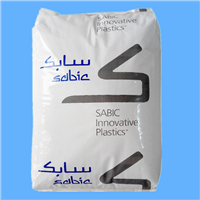
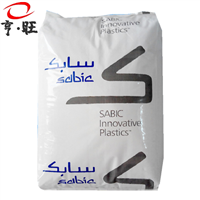


Environmentally friendly PPO SABO base GFN2-701 halogen-free hydrolysis resistant fiberglass reinforcement
Category:
Rubber and plastic/engineering plastic/PPO
Model:
Brand:
Saudi Arabia Foundation
Retail Price
28.00USD
重量
kg
- Product Description
-
Description :
Environmentally friendly PPO SABO base GFN2-701 halogen-free hydrolysis resistant fiberglass reinforcement
A large discount on PPO black raw materials, you can directly contact Ms. He!

PPO plastic (MPPO) (polyphenylene oxide) English name: poly (phenyl oxide)
Specific gravity: 1.07 grams per cubic centimeter Shrinkage rate: 0.3-0.8% Molding temperature: 260-290 ℃ Drying conditions: 130 ℃ for 4 hours
1. It is a white particle. Good overall performance, suitable for use in steam at 120 degrees Celsius, good electrical insulation, low water absorption, but prone to stress cracking. Modified polyphenylene ether can eliminate stress cracking. (Suitable for making heat-resistant parts, insulation parts, wear-resistant parts, transmission parts, medical and electronic components).
2. It has outstanding electrical insulation and excellent water resistance, as well as good dimensional stability. Its dielectric properties rank first among plastics.
3. MPPO is a modified material made by blending PPO and HIPS, and currently all materials on the market are of this type. (Can be used as gear, fan blade, valve and other parts at higher temperatures, can replace stainless steel).
4. It has high heat resistance, with a glass transition temperature of 211 degrees and a melting point of 268 degrees. When heated to 330 degrees, it tends to decompose. The higher the content of PPO, the better its heat resistance, and the hot deformation temperature can reach 190 degrees.
5. Good flame retardancy, spontaneous combustion, and moderate flammability when mixed with HIPS. Lightweight and non-toxic, it can be used in the food and pharmaceutical industries. Poor light resistance, discoloration may occur after prolonged use in sunlight. (Can make screws, fasteners, and connectors).
6. It can be modified by blending with ABS, HDPE, PPS, PA, HIPS, glass fiber, etc. (Electrical components of motors, rotors, casings, and transformers.)
Molding performance
1. Non crystalline material with low moisture absorption.
2. Poor fluidity, similar to Newtonian fluids, viscosity is sensitive to temperature, and the thickness of the product is generally above 0.8 millimeters. Extremely easy to decompose, producing corrosive gases during decomposition. It is advisable to strictly control the molding temperature, heat the mold, and reduce the flow resistance of the pouring system.
3. The water absorption rate of polyphenylene ether is very low at around 0.06%, but trace amounts of moisture can cause uneven surfaces such as silver threads on the product. When drying, the temperature should not be higher than 150 degrees Celsius, otherwise the color will change.
4. The molding temperature of polyphenylene ether is 280-330 degrees, and the molding temperature of modified polyphenylene ether is 260-285 degrees.
Attention: The temperature requirements for measuring intrinsic viscosity of PA polyamide (nylon), viscosity (specific viscosity) of PC polycarbonate, viscosity (specific viscosity) and K value of PVC polyvinyl chloride are all 25 ℃. The IVS300 series intelligent viscosity measurement system or IVS600 series fully automatic viscosity measurement system can be used;
AfterSalesService :
Key words:- Environmental PPO