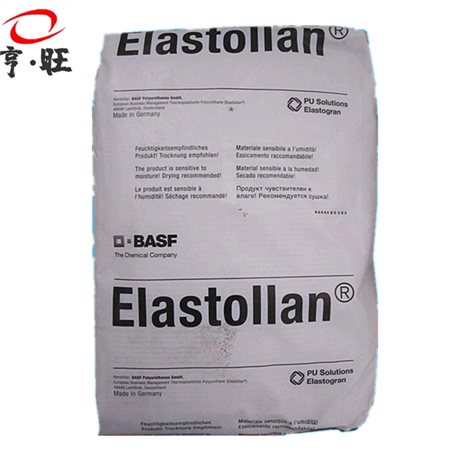

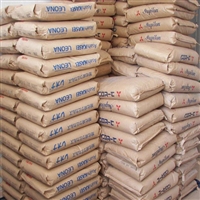
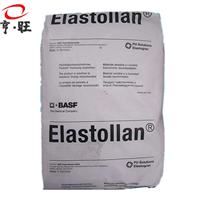


High mechanical strength PSU S6010 BASF chemical resistant bathroom product film from Germany
Category:
Rubber and plastic/engineering plastic/PSU
Model:
Brand:
BASF Germany
Retail Price
178.00USD
重量
kg
- Product Description
-
Description :
PSU S6010 BASF injection molding applications in Germany: film, bathroom products, coating applications
Performance characteristics: good mechanical strength, tear resistance, chemical resistance, high molecular weight
Polysulfone is an engineering plastic that emerged in the 1960s, also known as polyphenylene ether sulfone. It belongs to amorphous plastics, with some appearing transparent and slightly amber colored, while others are opaque in color. Polysulfone has good chemical stability, high mechanical properties, good rigidity, and excellent dielectric properties. Polysulfone has good dimensional stability and can be used for general mechanical processing and electroplating. The typical temperature range for use is -100 ℃ to 150 ℃, with a hot deformation temperature of 174 ℃. Its creep resistance is better than polycarbonate, but its weather resistance is poor. The microstructure of polysulfone determines its relatively small shrinkage rate, but the raw materials must be thoroughly dried before molding, otherwise the plastic parts will produce silver threads, mica spots, bubbles, and even crack. The formability of polysulfone is similar to polycarbonate, but its thermal stability is not as good as polycarbonate. Its melt not only has poor fluidity, but also is very sensitive to temperature and has a fast cooling rate. Therefore, when designing the mold, it is necessary to consider reducing the resistance of the gate as much as possible, and attention should be paid to heating the mold during molding.
Polysulfone can be used to manufacture electrical and electronic components, such as circuit breakers, thermostatic containers, switches, insulated brushes, television components, rectifier sockets, coil frames, instrument parts, etc; It can also be used to manufacture parts that require good thermal performance, chemical resistance, and rigidity, such as steering column collars, motor covers, aircraft ducts, battery boxes, automotive parts, gears, camshafts, etc.

S 6010 PSU Physical Properties Table
Physical performance rating (metric) rating (imperial) testing method
Density 1.24 g/cc 0.0448 lb/in3 ISO 1183
Water absorption rate 0.80% 0.80% ISO 62
Balanced moisture absorption 0.30% 0.30% 23 ° C/50% R.H; ISO 62
Viscosity test 81 cm3/g 81 cm3/g Viscosity number
Linear molding shrinkage rate, Flow 0.0072 cm/cm 0.0072 in/in ISO 294
Linear molding shrinkage rate, transverse 0.0077 cm/cm 0.0077 in/in ISO 294
Melt flow rate 30 g/10 min@Load 10.0 kg, Temperature 360 °C 30 g/10 min@Load 22.0 lb, Temperature 680 °F ISO 1133
Mechanical performance rating (metric) rating (imperial) testing method
Ball pressure hardness 135 MPa 19600 psi ISO 2039-1
Tensile strength (fracture) 75.0 MPa 10900 psi 5mm/min; ISO 527
Tensile strength (yield) 75.0 MPa 10900 psi 50mm/min; ISO 527
Elongation (fracture) 5.7% 5.7% 5mm/min; ISO 527
Yield elongation rate 5.7% 5.7% 50mm/min; ISO 527
Tensile modulus 2.60 GPa 377 ksi ISO 527
Secant modulus 0.0250 GPa@Temperature 200 °C 3.63 ksi@Temperature three
zero point eight zero zero GPa@Temperature 175 °C 116 ksi@Temperature 347 °F ISO 6721
zero point nine zero zero GPa@Temperature 100 °C 131 ksi@Temperature 212 °F ISO 6721
zero point nine five zero GPa@Temperature 50.0 °C 138 ksi@Temperature 122 °F ISO 6721
Suspended wall beam notch impact strength 6.00 kJ/m2 2.86 ft lb/in2 ISO 180/A
6.00 kJ/ m2@Temperature -30.0 °C 2.86 ft-lb/ in2@Temperature -22.0 °F ISO 180/A
Simply supported beam without notch impact strength NB NB ISO 179/1eU
NB@Temperature -30.0 °C NB@Temperature -22.0 °F ISO 179/1eU
Simply supported beam notch impact strength 0.600 J/cm2 2.86 ft lb/in2 ISO 179/1eA
0.600 J/ cm2@Temperature -30.0 °C 2.86 ft-lb/ in2@Temperature -22.0 °F ISO 179/1eA
Tensile creep modulus (1000 hr) 2500 MPa 363000 psi Elongation<; 0.5%, 23°C; ISO 899-1
Electrical performance rating (metric) rating (imperial) testing method
Volume resistivity>=1.00e+13 ohm cm>; = 1.00e+13 ohm-cm IEC 60093
Surface resistance>=1.00e+14 ohm>; = 1.00e+14 ohm IEC 60093
Dielectric strength 37.0 kV/mm 940 kV/in IEC 60243-1 3
Compared to the Leakage Traceability Index (CTI) 125 V 125 V Test Liquid A; IEC 60112
Thermal performance rating (metric) rating (imperial) testing method
Linear thermal expansion coefficient - flow 53.0 μ m/m - ° C @ Temperature 23.0-80.0 ° C 29.4 μ in/in - ° F @ Temperature 73.4-176 ° F
60.0 μm/m-°C@Temperature 140 - 180 °C 33.3 μin/in-°F@Temperature 284 - 356 °F
Working temperature, Air 180 ° C 356 ° F short cycle operations
Hot deformation temperature under load (1.8 MPa) 175 ° C 347 ° F ISO 75-2
Glass transition temperature, Tg 187 ° C 369 ° F 10 K/min; ISO 11357-1/-3
Optical performance rating (metric) rating (imperial) testing method
Transmission, Visible 87 %@Thickness 2.00 mm 87 %@Thickness 0.0787 in ASTM 1003
Processing performance rating (metric) rating (imperial) testing method
Processing (melting)
AfterSalesService :
Key words:- High mechanical strength PSU