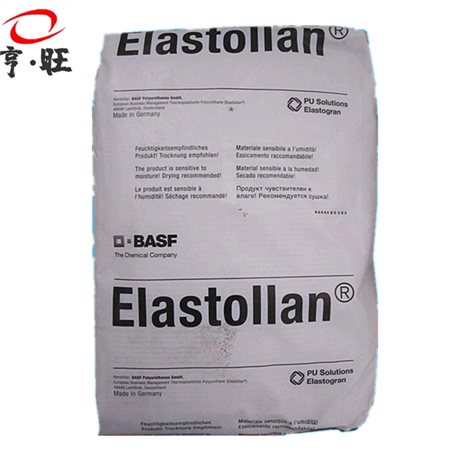

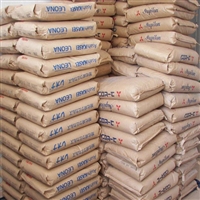
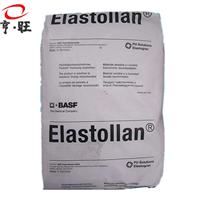


Wear resistant transparent PSU S2010 German BASF Easy Flow Food Container Medical Equipment
Category:
Rubber and plastic/engineering plastic/PSU
Model:
Brand:
BASF Germany
Retail Price
260.00USD
重量
kg
- Product Description
-
Description :
PSU S2010 BASF Food Container from Germany; Wear resistant medical equipment; Transparent; High temperature resistance; Compliance extrusion level for food contact
The molecular structure of PSU is a polymer composed of linear macromolecules formed by connecting phenethyl groups with isopropylidene, ether, and sulfone groups. The substituent structure of isopropylidene is symmetrical and non-polar, which can reduce intermolecular forces. In addition, the presence of ether bonds endows the polymer with certain initial and melt processing properties; Sulfone and phenyl groups make the main chain of the polymer exhibit greater rigidity, making it difficult for PSU to crystallize; The oxygen atom on the sulfone group of the diphenyl group is symmetrical, and the sulfur atom on the main chain is in an oxidized state, giving the polymer excellent antioxidant capacity. The sulfone group forms a highly conjugated benzene sulfone structure with adjacent benzene rings, giving the polymer rigidity, high thermal stability (Td>426 ° C), and radiation resistance. Overall, PSU is an amorphous polymer with high mechanical properties and heat resistance The mechanical properties of PSU, including tensile strength and bending strength, are superior to general engineering plastics such as POM, PA, and PC. Even at 150 ° C, the tensile strength can still reach 60MPa. At this point, most general engineering plastics have lost their practical value, and the property of maintaining their mechanical properties at room temperature at high temperatures is unmatched by general engineering plastics.
Thermal performance: The Tg of PSU is 190 ° C, with a thermal deformation temperature of 175 ° C. It can be used for a long time at -100~150 ° C, and PSU has excellent heat and oxygen aging resistance. After 2 years of thermal oxygen aging at 150 ° C, the tensile yield strength and thermal deformation temperature do not decrease but increase, and the impact strength can still maintain the original value of 55%.
Electrical performance: PSU has good electrical insulation, especially after being placed in high temperature environments, water, and humid air, it can still maintain good electrical insulation.
Chemical properties: PSU is relatively stable against general inorganic acids, bases, salts, as well as fatty hydrocarbons, alcohols, and oils. However, it is susceptible to strong solvents such as concentrated sulfuric acid and nitric acid, as well as certain polar solvents such as ketones

S 2010 PSU Physical Property Table
Physical performance rating (metric) rating (imperial) testing method
Density 1.24 g/cc 0.0448 lb/in3 ISO 1183
Water absorption rate 0.80% 0.80% ISO 62
Balanced moisture absorption 0.30% 0.30% 23 ° C/50% R.H; ISO 62
Viscosity test 63 cm3/g 63 cm3/g Viscosity number
Linear molding shrinkage rate, Flow 0.0068 cm/cm 0.0068 in/in ISO 294
Linear molding shrinkage rate, transverse 0.0072 cm/cm 0.0072 in/in ISO 294
Melt flow rate 90 g/10 min@Load 10.0 kg, Temperature 360 °C 90 g/10 min@Load 22.0 lb, Temperature 680 °F ISO 1133
Mechanical performance rating (metric) rating (imperial) testing method
Ball pressure hardness 135 MPa 19600 psi ISO 11359-1/-2
Tensile strength (fracture) 75.0 MPa 10900 psi 5mm/min; ISO 527-2
Tensile strength (yield) 75.0 MPa 10900 psi 50mm/min; ISO 527-2
Elongation (fracture) 5.7% 5.7% 5mm/min; ISO 527-2
Yield elongation rate 5.7% 5.7% 50mm/min; ISO 527-2
Tensile modulus 2.60 GPa 377 ksi ISO 527-2
Shear modulus 0.0250 GPa@Temperature 200 °C 3.63 ksi@Temperature
zero point eight zero zero GPa@Temperature 175 °C 116 ksi@Temperature 347 °F ISO 6721
zero point nine zero zero GPa@Temperature 100 °C 131 ksi@Temperature 212 °F ISO 6721
zero point nine five zero GPa@Temperature 50.0 °C 138 ksi@Temperature 122 °F ISO 6721
Suspended wall beam notch impact strength 5.00 kJ/m2 2.38 ft lb/in2 ISO 180/A
6.00 kJ/ m2@Temperature -30.0 °C 2.86 ft-lb/ in2@Temperature -22.0 °F ISO 180/A
Simply supported beam without notch impact strength NB NB ISO 179/1eU
NB@Temperature -30.0 °C NB@Temperature -22.0 °F ISO 179/1eU
Simply supported beam notch impact strength 0.550 J/cm2 2.62 ft lb/in2 ISO 179/1eA
0.0600 J/ cm2@Temperature -30.0 °C 0.286 ft-lb/ in2@Temperature -22.0 °F ISO 179/1eA
Tensile creep modulus (1000 hr) 2500 MPa 363000 psi elongation< 0.5%, 23°C; ISO 899
Electrical performance rating (metric) rating (imperial) testing method
Volume resistivity>=1.00e+13 ohm cm>; = 1.00e+13 ohm-cm IEC 60093
Surface resistance>=1.00e+14 ohm>; = 1.00e+14 ohm IEC 60093
dielectric constant 3.1@Frequency 100 Hz 3.1@Frequency 100 Hz IEC 60250
3.1@Frequency 1.00e+6 Hz 3.1@Frequency 1.00e+6 Hz IEC 60250
Dielectric strength 40.0 kV/mm 1020 kV/in IEC 60243-1 3
Dissipation factor 0.00080@Frequency 100 Hz 0.00080@Frequency 100 Hz IEC 60250
0.0064@Frequency 1.00e+6 Hz 0.0064@Frequency 1.00e+6 Hz IEC 60250
Compared to the Leakage Traceability Index (CTI) 125 V 125 V Test Liquid A& B; IEC 60112
Thermal performance rating (metric) rating (imperial) testing method
Linear thermal expansion coefficient 53.0 μ m/m - ° C @ Temperature 26.0 ° C 29.4 μ in/in - ° F @ Temperature 78.8 ° F DIN 53752
60.0 μm/m-°C@Temperature 125 °C 33.3 μin/in-°F@Temperature 257 °F DIN 53752
65.0 μm/m-°C@Temp
AfterSalesService :
Key words:- Wear resistant transparent PSU