
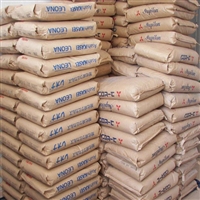


Wire and cable PEEK 770G Jilin Zhongyan High Plastic Medical Equipment Raw Materials
Category:
Rubber and plastic/engineering plastic/PEEK
Model:
Brand:
Jilin Zhongyan High Plastic
Retail Price
450.00USD
重量
kg
- Product Description
-
Description :
PEEK 770G Jilin Zhongyan High Plastic
Material status: circulating, normal
Usage: Wires and cables; medical device
Processing method: Injection molding
The commonly used fiber materials for fiber-reinforced modified PEEK are carbon fiber (CF) and glass fiber (GF), but with the development of material technology, a large number of other fiber materials have emerged, such as PTFE fiber, steel fiber, etc.
Adding fiber-reinforced materials to polymers can effectively improve the wear resistance of PEEK composites and reduce production costs. However, there are certain limitations in the production process of fiber-reinforced PEEK composite materials. For example, in the hot pressing process, the fiber and PEEK mixing process is prone to fiber solidarity, resulting in poor uniformity of the mixture.
The main problems with PEEK in practical applications are:
(1) Poor surface adhesion, weak interface bonding with fillers, poor thermal conductivity, and susceptibility to thermal expansion, deformation, and fatigue;
(2) The wear resistance still cannot meet the needs of engineering, such as support materials, sealing rings, valves, etc;
(3) Forming and processing are relatively difficult. PEEK has a melting temperature of 334 ℃, high melting viscosity, high processing temperature, and unstable processing technology.
With the development of technology in various fields, there is an increasing demand for the performance of materials. Therefore, research on modifying PEEK and expanding its application scope has become a hot topic in the industry.

770G Physical Property Table:
Mechanical performance rating unit testing method
Shore hardness
23 ℃ 85 D grade ISO 868
compressive strength
23℃ 125 MPa ISO 604
tensile strain
Fracture, 23 ℃ 45% ISO 527
flexural modulus
23℃ 4100 MPa ISO 178
bending strength
Fracture, 23 ℃ 165 MPa ISO 178
tensile strength
Fracture, 23 ℃ 100 MPa ISO 527
Physical performance rating unit testing method
water absorption rate
23 ℃, 24hr, 3.2 mm thick stretching rod 0.07% ISO 62-1
Balance, 23 ℃ 0.4% ISO 62-1
shrinkage rate
MD 1.3 % ISO 294-4
TD 1 % ISO 294-4
Melt mass flow rate
380℃,5.0kg 10 g/10min ISO 1133
density
Non crystalline 1.26 g/cm3 ISO 1183
Crystallization 1.3 g/cm3 ISO 1183
Unit testing method for rated impact performance
Cantilever beam notch impact strength 7.5 kJ/m2 ISO 180/A
Cantilever beam without notch impact strength - kJ/m2 ISO 180/U
Simply supported beam without notch impact strength - kJ/m2 ISO 179/1U
Impact strength of simply supported beam gap 7 kJ/m2 ISO 179-1eA
Unit testing method for thermal performance rating
Thermal conductivity ISO 22007-4
23℃ 0.29 W/m/K ISO 22007-4
Melting point 343 ℃ ISO 11357
Tg (starting point) 143 ℃ ISO 11357
specific heat capacity
23℃ 2.2 kJ/kg /℃ DSC
Linear coefficient of thermal expansion
Below Tg along the flow direction 45 ppm/K ISO 11359
120 ppm/K ISO 11359 along the flow direction above Tg
Heat Deflection Temperature
1.8 Mpa 152 ℃ ISO 75-f
Unit testing method for rated electrical performance values
Dissipation factor
23℃,1 MHz 0.004 IEC 60250
dielectric constant
23 ℃, 1 kHz 3.1 IEC 60250
Compared to the leakage trace index of 150 V IEC 60112
dielectric strength
2 mm 23 kV/mm IEC 60243-1
volume resistivity
275 ℃ 10^9 ohms·cm IEC 60093
23 ℃,1V 10^16 ohms·cm IEC 60093
AfterSalesService :
Key words:- Wire and cable PEEK