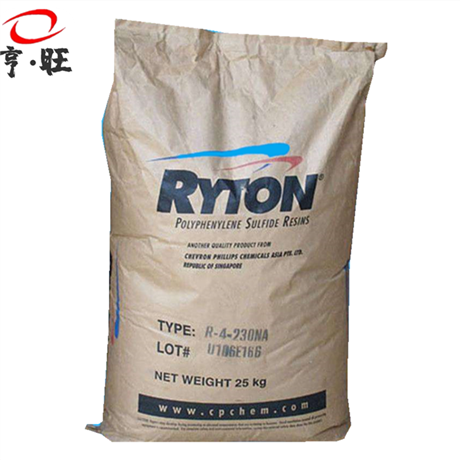

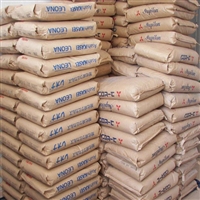
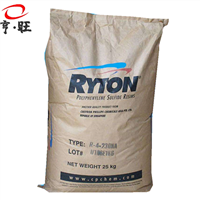


Natural PPS Singapore Chevron Phillips BR42B-NC
Category:
Rubber and plastic/engineering plastic/PPS
Model:
Brand:
Chevron Phillips, USA
Retail Price
60.00USD
重量
kg
- Product Description
-
Description :
Natural PPS Singapore Chevron Phillips BR42B-NC
1、 Product Introduction
PPS plastic has the advantages of high mechanical strength, high temperature resistance, high flame retardancy, and strong chemical resistance; It has the advantages of being hard and brittle, high crystallinity, flame retardant, good thermal stability, high mechanical strength, and excellent electrical performance. PPS is one of the heat-resistant varieties in engineering plastics, with a heat deformation temperature generally greater than 260 degrees, chemical resistance second only to polytetrafluoroethylene, and flowability second only to nylon. In addition, it also has the advantages of low molding shrinkage rate (about 0.8%), low water absorption rate (about 0.02%), good fire resistance, and good resistance to vibration and fatigue.
2、 Product Usage
The main application fields of polyphenylene sulfide in China include electronics and electrical appliances, automotive industry, mechanical and chemical industry, aerospace, textile industry, and new products, with market shares of 11.54%, 16.15%, 4.62%, 8.46%, 35.38%, and 23.85%, respectively
3、 Product shooting

The production process of bisphenol A epoxy resin is generally divided into one-step and two-step methods. The one-step method is to directly react bisphenol A with epichlorohydrin to produce epoxy resin, which is commonly used in the synthesis of low and medium molecular weight epoxy resins; The two-step method involves the continued reaction of low molecular weight resin with bisphenol A. High molecular weight epoxy resin can be synthesized using either one-step or two-step methods. The process flow is shown in Figure 2.
1) Production process of liquid bisphenol A epoxy resin
The one-step process involves the condensation of bisphenol A and epichlorohydrin in the presence of NaOH, where the ring opening and closing reactions are carried out under the same reaction conditions. At present, the E-44 epoxy resin in China is synthesized using a one-step process.
The two-step process involves the addition reaction of bisphenol A and epichlorohydrin in the presence of a catalyst (such as a quaternary ammonium salt) to produce the intermediate diphenolpropane chlorohydrin ether. The second step involves a closed-loop reaction in the presence of NaOH to produce epoxy resin. The advantages of the two-step method are: short reaction time; Stable operation, minimal temperature fluctuations, and easy control; Short alkaline addition time can avoid a large amount of hydrolysis of epichlorohydrin; The product quality is good and stable, with high yield. The domestically produced E-51 and E-54 epoxy resins are synthesized using a two-step process.
AfterSalesService :
Key words:- Natural PPS