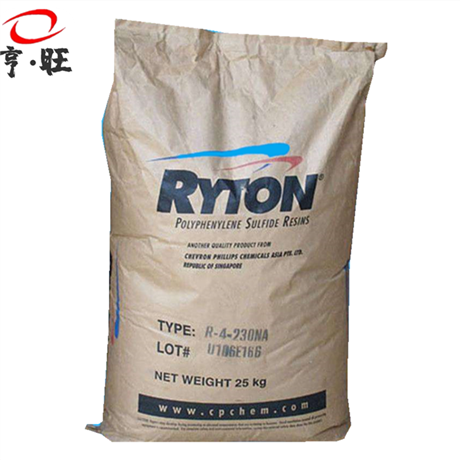

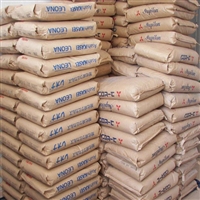
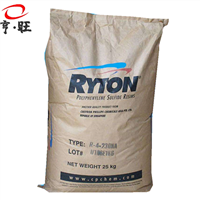


Polyphenylene sulfide PPS Chevron Phillips BR111 glass mineral
Category:
Rubber and plastic/engineering plastic/PPS
Model:
Brand:
Chevron Phillips, USA
Retail Price
25.00USD
重量
kg
- Product Description
-
Description :
Polyphenylene sulfide PPS Chevron Phillips BR111 glass mineral
Color code: natural color, black
PPS Chevron Philip BR111 Polyphenylene Sulfide Glass Mineral
Filler/Reinforcement Material Glass/Mineral
Good electrical performance, excellent strength, and good chemical resistance
Application in the automotive field RoHS compliance
Natural color appearance
Formal particle
Processing method: Injection molding
The average growth rate of PPS polyphenylene sulfide in China is over 20%, and the industry is in a period of rapid growth.
Although China has made great progress in the utilization of polyphenylene sulfide, there are still many problems. Firstly, the technical level is relatively low. Secondly, there is still a gap in product types and high-end products compared to foreign countries. Due to technical reasons, there are high research bottlenecks in the modification of polyphenylene sulfide in China, which also limits the wider application of the product. Currently, PPS manufacturers should optimize their production processes, improve product quality and device stability, narrow the gap with foreign PPS manufacturers, and focus on exploring international markets.

Compared with other engineering plastic materials, PPS is more prone to flash, and the size of the flash is affected by the following molding conditions.
Injection (holding) pressure: It is a factor that affects flash. Lower injection pressure and fewer flying edges.
Mold temperature: To ensure the heat resistance of PPS, the mold temperature is usually 120-150 degrees Celsius. This temperature has a relatively small impact on the flash edge, and as the mold temperature increases, the flash edge will also increase. At mold temperatures below Tg (about 90 degrees), there is basically no flash, but the original characteristics and appearance quality of PPS cannot be obtained,
·Barrel temperature: has a slight impact on flash edges. But there is no need to increase the injection pressure by lowering the temperature of the barrel.? Injection speed: has a slight impact on the flying edge.
In short, products with small flash edges are obtained by reducing the holding pressure as much as possible within the usual range of mold temperature, material temperature, and injection speed. In terms of materials, the suppression of PPS flash generally has the following two points:
The crystallization speed of polymers is fast, and the resin filled into the mold will solidify quickly, which can prevent molten resin from entering the gaps of the mold parting surface.
The dependence of melt viscosity on speed is high, that is, during high-speed injection molding, the viscosity of the resin in the molten state is very low, making it easy to enter the gaps of the mold and form burrs. During low-speed injection molding, the melt viscosity increases, and PPS products with small burrs can be obtained through this method.

Physical performance rating unit testing method
Specific gravity 1.94 g/cm3
shrinkage rate
Flow: 3.20 mm 0.20%
Lateral flow: 3.20 mm 0.40%
Water absorption rate (23 ° C, 24 hr) 0.020%
Test method for hardness rating unit system
Rockwell hardness
M-grade 101
R-grade 119
Mechanical performance rating unit testing method
tensile strength
-- 159 MPa
-- 165 MPa ISO 527-2
Elongation (fracture) 1.1%
flexural modulus
-- 19300 MPa
-- 19000 MPa ISO 178
bending strength
-- 241 MPa
-- 255 MPa ISO 178
Compressive strength 295 MPa
Poisson's ratio 0.34 ISO 527
Test method for impact performance rating unit system
Impact strength of cantilever beam gap
3.18 mm 75 J/m
-- 8.0 kJ/m2 ISO 180/A
Non notched cantilever beam impact
3.18 mm 320 J/m
-- 24 kJ/m2 ISO 180
Test method for thermal performance rating unit system
Hot deformation temperature under load (1.8 MPa, unannealed) 265 ° C
Linear coefficient of thermal expansion
Flow: -50 to 50 ° C 1.5E-5 cm/cm/° C
Flow: 100 to 200 ° C 1.0E-5 cm/cm/° C
Horizontal: -50 to 50 ° C 3.0E-5 cm/cm/° C
Horizontal: 100 to 200 ° C 7.0E-5 cm/cm/° C
Thermal conductivity coefficient 0.51 W/m/K
UL temperature rating 220 to 240 ° C UL 746B
Test method for unit system of rated electrical performance values
Surface resistivity 1.0E+16 ohms
Volume resistivity 1.0E+15 ohms · cm
Dielectric strength 18 kV/mm
dielectric constant
25°C, 1 kHz 4.70
25°C, 1 MHz 4.60
Dissipation factor
25°C, 1 kHz 2.0E-3
25°C, 1 MHz 3.0E-3
Arc resistance 180 seconds
Compared to the Leakage Traceability Index (CTI) 225 V UL 746
Insulation Resistance 1(90°C) 1.0E+10 ohms
Test method for flammability rating unit system
UL flame retardant rating (1.60 mm) V-0 5VA UL 94
Extreme Oxygen Index 65%
Remarks
1 . 95%RH, 48 hr
AfterSalesService :
Key words:- Polyphenylene sulfide PPS