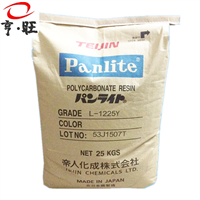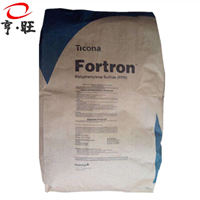
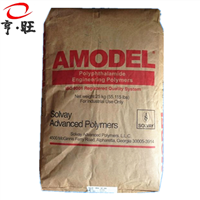


Mobile phone car electronic shell PPA A-1133HS, American Amoco size stable and high temperature resistant
Category:
Rubber and plastic/engineering plastic/PPA
Model:
Brand:
Amoco, USA
Retail Price
80.00USD
重量
kg
- Product Description
-
Description :
1、 Product Introduction
PPA (Polyphthalamide) has a tensile strength that is 20% higher than nylon 6 and higher than nylon 66 under high temperature and high humidity conditions; The bending modulus of PPA material is 20% higher than that of nylon, with greater hardness and the ability to resist long-term tensile creep; Moreover, PPA has stronger resistance to gasoline, grease, and coolant than PA; A high-temperature resistant nylon material that can withstand sustained high temperatures up to 200 ℃ and maintain good dimensional stability.
Filler/reinforcement material glass fiber reinforcement material, 33% filler by weight
Additive heat stabilizer
Features: Good dimensional stability, low moisture absorption, rigidity, high rigidity, good strength, high temperature strength, good creep resistance, good chemical resistance, heat resistance, high
Usage: Power/other tools, industrial components, industrial applications, machine/mechanical components, metal substitutes, connectors, parts under the hood of automobiles, automotive electronics, applications in the automotive field, internal parts of automobiles, fuel pipelines, mobile phones, casings
Polyphenylenediamide (PPA) resin is a semi aromatic polyamide made from terephthalic acid or phthalic acid as raw materials. There are both semi crystalline and amorphous materials, with a glass transition temperature of around 255 ° F. Amorphous PPA is mainly used in situations where barrier properties are required; The semi crystalline PPA resin is mainly used for injection molding and other melting processing techniques. The following mainly introduces the latter - semi crystalline PPA resin, unless otherwise specified. The melting point of semi crystalline PPAS is about 590 ° F, supplied in the form of opaque rectangular slices.
PPA resin is stronger and harder than fatty polyamides such as nylon 6, 6, etc; Lower sensitivity to moisture; Better thermal performance; And the creep, fatigue, and chemical resistance properties are much better. For example, PPA resin containing 45% glass short fibers has a tensile strength of approximately 276 MPa, a bending modulus exceeding 13786 MPa, and a heat distortion temperature (HDT) of 549 ° F. Even mineral filler grade PPA can achieve a tensile strength of 117 MPa. The ductility of PPA resin is not as good as nylon 6,6. However, unreinforced impact modified PPA resin has been developed, with a notched cantilever beam impact strength of up to 20 feet pounds per inch.

2、 Physical property table
A-1133 HS Physical Property Table
Unit testing method for physical properties after drying and conditioning
Density 1.48- g/cm3 ISO 1183/A
Shrinkage rate ASTM 955
Flow 0.40-% ASTM 955
Lateral flow 0.80-% ASTM 955
Water absorption rate (24 hours) 0.23-% ASTM 570
Unit testing method for hardness after drying adjustment
Rockwell hardness (R grade) 125- ASTM 785
Unit testing method for mechanical properties after drying adjustment
tensile modulus
-- MPa ASTM 638
23°C 13400 -- MPa ISO 527-2
100°C 10800 -- MPa ISO 527-2
150°C 6700 -- MPa ISO 527-2
175°C 4300 -- MPa ISO 527-2
tensile stress
Fracture, 23 ° C 233-- MPa ISO 527-2
Fracture, 100 ° C 148-- MPa ISO 527-2
Fracture, 150 ° C 80.0-- MPa ISO 527-2
Fracture, 175 ° C 72.0-- MPa ISO 527-2
-- 221 193 MPa ASTM 638

Due to the outstanding physical, thermal, and electrical properties of PPA resin, especially its moderate cost, it has a wide range of applications. These properties, along with excellent chemical resistance, make PPA a candidate for many applications in the automotive industry. The trend towards better aerodynamic body design, combined with higher performance motors, will increase the temperature of the engine compartment, making traditional thermoplastic materials less suitable. These new requirements make PPA one of the candidate materials for producing the following components: automotive headlight reflectors, bearing seats, pulleys, sensor housings, fuel line components, and electrical components.
AfterSalesService :
Key words:- Mobile phone car electronic shell PPA