


High tensile strength PES 3300 PREM from Suwei in the food industry, with dimensional stability and creep resistance
Category:
Rubber and plastic/engineering plastic/PES
Model:
Brand:
Suwei, USA
Retail Price
168.00USD
重量
kg
- Product Description
-
Description :
1、 Product Introduction
Polyether sulfone resin, a chemical raw material, is a transparent amber colored amorphous resin with excellent heat resistance, dimensional stability, and good chemical resistance. In addition, PES exhibits excellent reliability against rapid temperature changes and has good reliability for long-term use at high temperatures. The excellent formability and properties of PES make it widely used.
Characteristics: Good dimensional stability, high tensile strength, good creep resistance, good adhesion, moderate fluidity, good chemical resistance, heat resistance, high hydrolysis resistance, acid resistance, thermal stability, good toughness, universal, medium molecular weight, moderate hardness, flame retardancy
Usage: Food service field, general
RoHS compliance RoHS compliance; Appearance transparent - slightly yellow; Formal particles; Processing method: Injection molding
2、 Physical property table
3300 PREM Physical Property Table
Physical performance rating unit testing method
Specific gravity 1.37 g/cm3 ASTM 792
Melt flow rate (380 ° C/2.16 kg) 30 g/10 min ASTM 1238
Shrinkage rate - Flow 0.60% ASTM 955
Water absorption rate (24 hours) 0.50% ASTM 570
Water absorption rate -30 days 1.9% ASTM 570
Mechanical performance rating unit testing method
Tensile modulus 2690 MPa ASTM 638
Tensile strength 88.9 MPa ASTM 638
Elongation (yield) 6.5% ASTM 638
Bending modulus 2620 MPa ASTM 790
Bending strength 125 MPa ASTM 790
Test method for impact performance rating unit system
Suspended wall beam notch impact strength 53 J/m ASTM 256
Test method for thermal performance rating unit system
Hot deformation temperature under load (1.8 MPa, annealed) 200 ° C ASTM 648
Linear coefficient of thermal expansion - flow 5.2E-5 cm/cm/° C ASTM 696
Test method for unit system of rated electrical performance values
Volume resistivity 1.7E+15 ohms · cm ASTM 257
Dielectric strength 15 kV/mm ASTM 149
Dielectric constant ASTM 150
60 Hz 3.51 ASTM 150
1 kHz 3.50 ASTM 150
1 MHz 3.54 ASTM 150
Dissipation factor ASTM 150
60 Hz 1.7E-3 ASTM 150
1 kHz 2.2E-3 ASTM 150
1 MHz 5.6E-3 ASTM 150
Test method for flammability rating unit system
UL flame retardant rating 1 (1.50 mm) V-0 UL 94
Injection rated value unit system
Drying temperature 177 ° C
Drying time 2.5 hours
Processing (melt) temperature 343 to 385 ° C
Mold temperature 149 to 163 ° C
Fast injection speed
Screw compression ratio 2.0:1.0
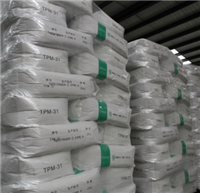
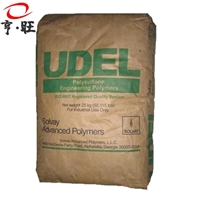
3、 Product shooting

4、 Buyer Notice
1. Guarantee. Our products are all original factory packaged, sourced from first tier sources, and priced affordably.
2. Safety. Public accounts are safe and reliable. (Our company's Alibaba 12 Year Integrity Certification)
3. Fast delivery. If the goods are available, they can be shipped on the same day. The bulk order will be shipped within 3 days, and specific details can be agreed upon.
4. Formal invoice. 13% value-added tax invoice can be issued.
5. Material certification. Provide original factory property tables, SGS certification, yellow card UL, ROHS reports, MSDS, and more.
6. Sample testing. We can provide sample testing for customers to improve the success rate of trial production.
The advantages of glass milk bottles are: smooth inner walls, easy to clean, less likely to adhere to dirt, prevent bacterial growth, less likely to scratch the vase wall during cleaning, and less likely to stain; The disadvantages are: the bottle is heavy, fragile, and relatively expensive The advantages of plastic baby bottles are: they are lightweight and not easily broken, suitable for babies to grip on their own, easy to carry when going out, and relatively cheap in price The disadvantages are: difficult to clean thoroughly, and the bottle is prone to scratching and coloring
AfterSalesService :
Key words:- High tensile strength PES