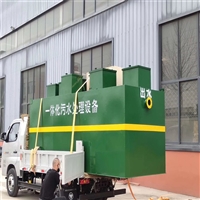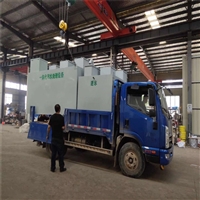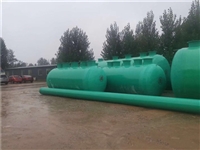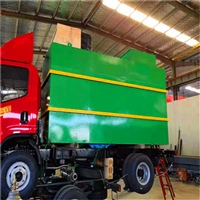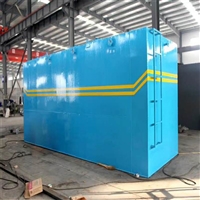
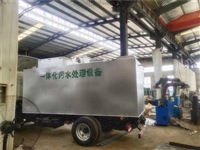
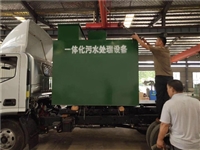


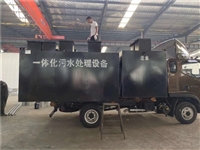

40m3/d integrated sewage treatment equipment device
Category:
Environmental Protection/Sewage treatment equipment/Integrated sewage treatment equipment
Model:
WSZ-2
Brand:
Weifang Lusheng Water Treatment
Retail Price
33,000.00USD
重量
kg
- Product Description
-
Description :
40m3/d integrated sewage treatment equipment device

40m3/d integrated sewage treatment equipment deviceBasic characteristics of biofilm method
A carrier for microbial growth and aggregation (generally referred to as a filler) is installed inside the sewage treatment structure. Under oxygenation conditions, microorganisms gather and attach to the surface of the filler to form a biofilm. When the sewage flows through the filler at a certain flow rate after oxygenation (the oxygenation device consists of a water treatment aeration fan and aerator), the microorganisms in the biofilm absorb and decompose the organic matter in the water, purifying the sewage, and at the same time, the microorganisms also proliferate, and the biofilm thickens accordingly. When the biofilm grows to a certain thickness, the diffusion of oxygen into the interior of the biofilm is limited, and its surface remains in an aerobic state, while the inner layer becomes anoxic or even anaerobic, ultimately leading to the detachment of the biofilm. Subsequently, new biofilms will continue to grow on the surface of the packing material, repeating this process to purify the wastewater produced by the biofilm method.
After microorganisms gather and attach to the surface of the packing material to form a biofilm, a thin layer of water layer exists on the surface due to the adsorption effect of the biofilm. The organic matter in the water layer has been oxidized and decomposed by the biofilm, so the concentration of organic matter in the water layer is much lower than that in the influent. When wastewater flows over the biofilm surface, the organic matter will be transferred from the moving wastewater to the water layer attached to the biofilm surface, and further adsorbed by the biofilm. At the same time, oxygen in the air also enters the biofilm water layer through the wastewater and transfers internally.
Microorganisms on biofilms decompose organic matter and metabolize the body itself under dissolved oxygen conditions, resulting in the production of inorganic substances such as carbon dioxide that transfer in the opposite direction from the biofilm through the attached water layer to flowing wastewater or air. In this way, the organic content in the effluent is reduced, and the wastewater is purified.
The extensive use of biofilm sewage treatment technology in small-scale decentralized sewage treatment has more advantages than using activated sludge technology, specifically reflected in: ① In terms of microbial phase, the microorganisms involved in purification reactions in various biofilm processes are diverse, with a longer food chain and easier survival of microorganisms with longer generations. In segmented operation, each segment can form dominant bacterial species; ② In terms of processing technology, various biofilm processes have strong adaptability to changes in water quality and quantity. The sludge has good settling performance, is easy to separate solid and liquid, can treat low concentration sewage, is easy to maintain, and energy-saving.
Cultivation of bacterial strains
Selection of bacterial culture structures: Convenient to operate, equipped with aeration devices and agitation, suitable for adding bacterial strains, raw water or nutrient solution.
When adding bacterial strains, the plan setting should be comprehensively considered based on the conditions available on site. Factors such as site, construction, transportation vehicles, temporary power sources, temporary pumps and pipelines, water guns, elevation differences, filtration, etc.
The pulverization of bacterial strains should consider the pulverization of compressed sludge, and the pulverization method should be determined according to the on-site conditions. The order of selecting crushing methods is water gun - pump circulation+filter impact - aeration, stirring.
AfterSalesService :
Key words:- Integrated sewage treatment equipment