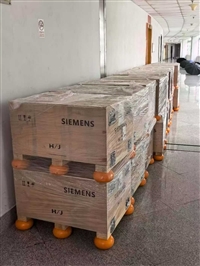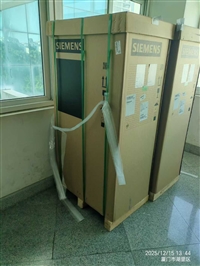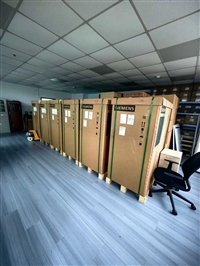

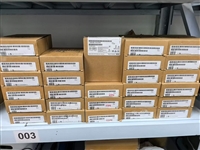
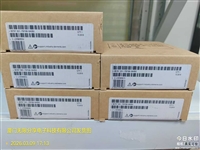
Siemens S7-1500 CPU 1518-4 PN/DP processor module 6ES7518-4UP00-0AB0
Category:
mechanical equipment/Industrial control system and equipment/PLC
Model:
6ES7518-4UP00-0AB0
Brand:
Siemens
Product Series:
SIMATIC S7-1500
CPU type:
CPU 1518-4 PN/DP
Working memory:
10 MB
Maximum expansion of digital I/O:
eight thousand one hundred and ninety-two
Maximum expansion of analog I/O:
two thousand and forty-eight
PROFINET interface:
3 x RJ45
PROFIBUS interface:
2 x DB9
power supply voltage:
24 V DC
power consumption:
Approximately 18 W
Protection rating:
IP20
Retail Price
10,000,000.00USD
重量
kg
- Product Description
-
Product Series SIMATIC S7-1500
CPU type CPU 1518-4 PN/DP
Working memory 10 MB
Maximum expansion of digital I/O eight thousand one hundred and ninety-two
Maximum expansion of analog I/O two thousand and forty-eight
PROFINET interface 3 x RJ45
PROFIBUS interface 2 x DB9
power supply voltage 24 V DC
power consumption Approximately 18 W
Protection rating IP20
Description :
6ES7518-4UP00-0AB0 is a high-end central processing unit (CPU) in the Siemens SIMATIC S7-1500 series, designed specifically for large and complex automation tasks. The central processing unit of this PLC integrates powerful logic operations, motion control, and process functions, making it suitable for production lines with extremely high requirements for response speed and data processing capabilities. It solves the performance bottleneck of traditional controllers in multi axis synchronization, high-speed counting, and large-scale data exchange. Typical operating conditions include automotive manufacturing, packaging machinery, printing industry, and large-scale process control systems. As one of the flagship models of the S7-1500 family, 6ES7518-4UP00-0AB0 is capable of managing thousands of I/O points, ensuring efficient and stable production processes.
The central processing unit model of this PLC is 6ES7518-4UP00-0AB0, which has significant performance advantages. Its working memory is usually up to 10MB or more, with large program and data storage capacity, and supports high-speed backplane bus communication. In terms of interfaces, multiple PROFINET interfaces are standard, supporting IRT (real-time communication), and some versions integrate PROFIBUS DP interfaces for easy connection to existing devices. The execution standard complies with the IEC 61131 specification and has passed international certifications such as CE and UL. The execution time of bit operations is usually in nanoseconds, and floating-point operations are extremely fast. 6ES7518-4UP00-0AB0 adopts modular design, supports hot swappable expansion, with a power supply voltage range of 24V DC and a working environment temperature usually between 0 and 60 degrees Celsius, suitable for harsh industrial environments.
In the selection stage, it is necessary to clarify that 6ES7518-4UP00-0AB0 is suitable for scenarios that require high-performance computing and large-scale data processing. If the project scale is small or only requires simple logic control, it is recommended to choose S7-1200 or S7-1500 low-level models such as CPU 1511 to reduce costs. Compared with CPU 1517, 6ES7518-4UP00-0AB0 has more advantages in storage capacity and interface quantity, making it suitable for large-scale projects with expansion needs in the future. If there is a large amount of motion control axis synchronization involved, the built-in motion control function of this model can replace an independent motion controller. Pay attention to distinguishing models with PN/DP identification to ensure network topology compatibility with existing systems. For redundant system requirements, it is necessary to confirm whether redundant power supplies or specific firmware versions are required.
When installing 6ES7518-4UP00-0AB0, it is necessary to ensure that the guide rail is well grounded and there is sufficient heat dissipation space between modules. The typical usage cycle can reach more than 10 years, but it is necessary to regularly clean the dust to prevent overheating. Daily maintenance recommendations include monitoring CPU load rate, memory usage, and diagnosing buffers through TIA Portal software to promptly identify potential faults. Common faults include communication interruption, low battery level causing clock loss, or firmware version mismatch. When replacing modules, attention should be paid to data backup of the memory card (SMC) to ensure complete program migration. Avoid plugging and unplugging non hot swappable components while they are live, strictly adhere to electrostatic protection regulations to extend the service life of the PLC central processing unit and ensure system stability.
AfterSalesService :
Key words:
More Products