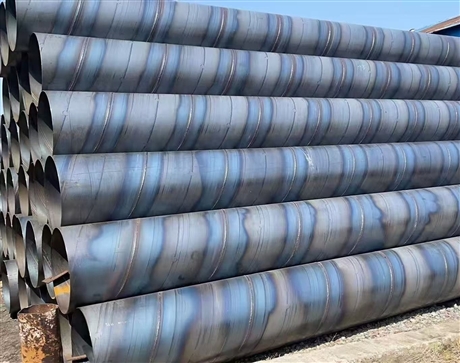

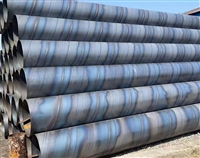
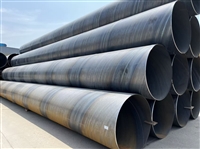
Double sided submerged arc welding process for large-diameter spiral steel pipes is suitable for water and gas pipeline engineering
Category:
metallurgy/Building pipes/Spiral tube
Model:
four hundred and twenty-six
Brand:
Baosheng Steel
Material:
Q235B/Q345B
Execution Standard:
SY/T5037/GB/T9711
production process:
Double sided submerged arc welding
Outer diameter range:
219mm-3000mm
Wall thickness range:
6mm-30mm
length:
6m-12m or customized
Anti corrosion type:
3PE/epoxy coal tar/cement mortar
Testing method:
Ultrasonic/X-ray
Retail Price
10,000,000.00USD
重量
kg
- Product Description
-
Material Q235B/Q345B
Execution Standard SY/T5037/GB/T9711
production process Double sided submerged arc welding
Outer diameter range 219mm-3000mm
Wall thickness range 6mm-30mm
length 6m-12m or customized
Anti corrosion type 3PE/epoxy coal tar/cement mortar
Testing method Ultrasonic/X-ray
Description :
Spiral steel pipe is a large-diameter steel pipe made by coiling steel strips into billets and welding them using double-sided submerged arc welding technology. It mainly solves the comprehensive requirements for pipeline strength, sealing, and economy in long-distance fluid transportation, and is widely used in municipal water supply, oil and gas transportation, steel structure pillars, and pile driving projects. This category has become the core pipe material in large-scale infrastructure construction due to its characteristics of uniform welds, strong pressure bearing capacity, and flexible production specifications. In practical working conditions, spiral steel pipes can adapt to complex geological environments and high-pressure transportation requirements, effectively ensuring the safe and stable operation of pipeline systems.
In terms of specifications and processes, spiral steel pipes usually comply with the SY/T5037-2018 "Submerged Arc Welded Steel Pipes for Ordinary Fluid Transport Pipelines" or GB/T9711-2017 "Steel Pipes for Pipeline Transport Systems in the Petroleum and Natural Gas Industry" standards. Common materials include carbon structural steel such as Q235B and Q345B, with an outer diameter range typically between 219mm and 3000mm. The wall thickness can be customized according to the design pressure within the range of 6mm to 30mm. During the production process, multiple inspection procedures such as ultrasonic testing, X-ray testing, and hydrostatic testing are required to ensure that the weld quality meets the first or second level standards. Anti corrosion treatment often uses 3PE anti-corrosion, epoxy coal tar or cement mortar lining to extend the service life of pipelines in corrosive environments.
When selecting, it is necessary to clarify the conveying medium, working pressure, and burial environment. For low-pressure fluids such as tap water and sewage, ordinary spiral steel pipes according to SY/T5037 standard can be used; For high-pressure oil and gas transportation, high-strength pipeline steel spiral steel pipes according to GB/T9711 standard must be selected. Compared with straight seam welded pipes, spiral steel pipes have significant cost advantages and production flexibility in the field of large diameters (DN600 and above), but in small diameter high-pressure scenarios, straight seam pipes have better geometric accuracy and pressure uniformity. The purchaser should pay attention to distinguishing the mechanical performance indicators corresponding to different execution standards, avoid using ordinary fluid pipes for high-pressure and high-risk scenarios, and ensure that the selection complies with engineering design specifications.
During installation and maintenance, spiral steel pipes are often connected by welding. During construction, it is necessary to strictly control the gap between the joints and the welding process to prevent weld cracking caused by stress concentration. When stacking outdoors, the bottom should be raised and covered with waterproof cloth to avoid water accumulation and corrosion of the pipe body. The focus of daily maintenance is on checking the integrity of the anti-corrosion layer, especially in areas where the backfill soil contains stones or has abnormal acidity or alkalinity. Regular monitoring of pipeline potential changes is necessary to prevent electrochemical corrosion. Common faults are often caused by external mechanical damage or damage to the anti-corrosion layer, resulting in localized corrosion. Upon discovery, the anti-corrosion layer should be repaired promptly and non-destructive testing should be conducted to ensure the safety and reliability of the pipeline throughout its entire lifecycle.
AfterSalesService :
Key words:
More Products