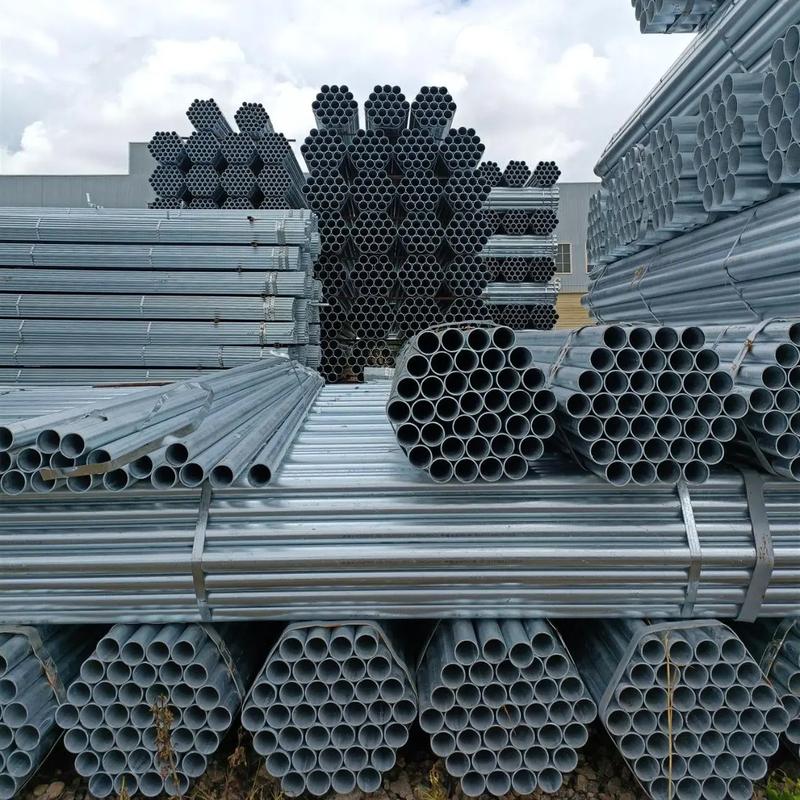

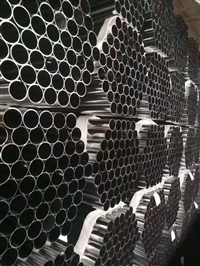
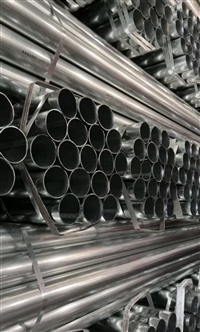
Hot dip galvanized round pipe with national standard Q235 material for anti-corrosion and anti rust construction scaffolding
Category:
metallurgy/tubing/Galvanized pipe
Model:
4 inches
Brand:
Baosheng Steel
Material:
Q235B
Execution Standard:
GB/T3091-2015
Galvanizing process:
hot-dip galvanizing
Outer diameter range:
DN15-DN200
Wall thickness range:
1.5-6.0mm
Zinc Coating Weight:
≥300g/m²
Surface Treatment:
Galvanized passivation
Operating temperature:
-20℃~200℃
Retail Price
10,000,000.00USD
重量
kg
- Product Description
-
Material Q235B
Execution Standard GB/T3091-2015
Galvanizing process hot-dip galvanizing
Outer diameter range DN15-DN200
Wall thickness range 1.5-6.0mm
Zinc Coating Weight ≥300g/m²
Surface Treatment Galvanized passivation
Operating temperature -20℃~200℃
Description :
Galvanized round pipe is a circular section steel pipe with a surface that has been hot-dip galvanized or electroplated with zinc. It mainly solves the problem of ordinary carbon steel pipes being prone to rusting and having a short service life in humid, outdoor, or corrosive environments. It is widely used in fields such as building structures, mechanical manufacturing, fluid transportation, and power engineering. As a basic building material, galvanized round pipes have become the preferred material for scaffolding construction, guardrail production, and water pipe laying due to their excellent corrosion resistance and high strength to weight ratio. Its core advantage lies in the metallurgical bonding between the zinc layer and the base metal, which can effectively isolate air and water molecules, significantly extend the service life, and adapt to long-term stable operation requirements under various harsh working conditions.
The specification parameters of this product usually cover various sizes from DN15 to DN200 in outer diameter, and the wall thickness range is generally between 1.5mm and 6.0mm, depending on the implementation standard such as GB/T3091-2015 "Welded Steel Pipes for Low Pressure Fluid Transport". The material is mostly Q235B carbon structural steel, which has good plasticity and welding performance. The weight of the galvanized layer is usually required to be no less than 300g/m ² (hot-dip coating) or customized according to customer needs to ensure anti-corrosion effect. The production process includes steps such as high-frequency welded pipe forming, acid pickling and rust removal, hot-dip galvanizing, and cooling passivation. The surface should be smooth, without missing plating or dripping, with a uniform color of silver white or slightly dark gray, in compliance with strict national standards for surface quality and dimensional deviations.
When selecting, it is necessary to clarify whether the usage scenario is for fluid transportation or structural support. If used for low-pressure fluid transportation such as water and gas, galvanized round pipes that comply with GB/T3091 standards should be selected, and their pressure resistance level should be considered; If used for building scaffolding or steel structure support, more emphasis is placed on wall thickness tolerance and straightness, and GB/T13793 standard products are often selected. Attention should be paid to distinguishing between hot-dip galvanizing and cold dip galvanizing (electroplating). The former has a thick zinc layer, strong adhesion, and long service life, making it suitable for outdoor and heavily corrosive environments; The latter has a thin zinc layer, a bright surface, but weak anti-corrosion ability, and is only suitable for indoor dry environments. When purchasing, it is important to avoid confusion between the two to prevent increased maintenance costs or safety hazards due to insufficient anti-corrosion performance.
When installing galvanized round pipes, it is recommended to use groove connections, flange connections, or welding methods. However, welding may damage the local zinc layer and requires timely repair with zinc rich paint to prevent rust. In daily maintenance, the surface of the pipeline should be regularly inspected for scratches, peeling, or white rust, especially in coastal or high humidity areas. If slight white rust is found, it can be cleaned with a wire brush and coated with anti rust oil; If the zinc layer is severely damaged, the pipe section should be replaced in a timely manner. The typical usage cycle can reach 15-20 years in normal outdoor environments, and can be even longer in dry indoor environments. Common faults are often caused by leakage or local corrosion perforation at the connection point, which is often due to excessive installation stress or failure to timely handle the damage of the anti-corrosion layer. It is necessary to strengthen construction quality control and regular inspections.
AfterSalesService :
Key words:
More Products