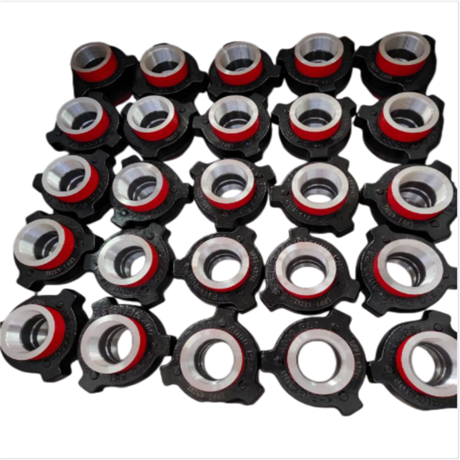

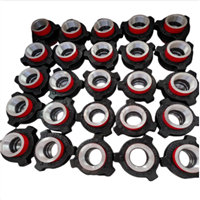
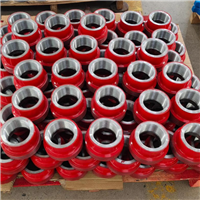
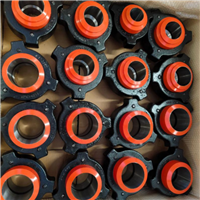
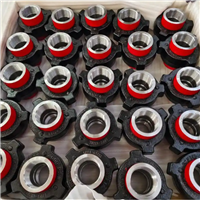
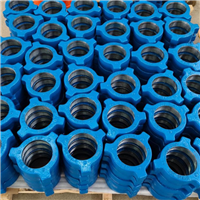
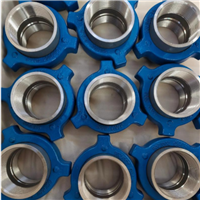
FIG1003 high-pressure hammer striking union 4-inch DN100 cast steel hard seal oilfield drilling mud pipeline joint
Category:
hardware/Pneumatic tools/Pneumatic hammer
Model:
FIG1003
Brand:
Hengshui Xinghai
Nominal Diameter:
4 inches (DN100)
work pressure:
15000 psi
Material:
cast steel
sealing form:
Metal hard seal
connection method:
Hammering style
Applicable Medium:
drilling mud
Execution Standard:
API Spec 6A
Product Type:
FIG1003
Retail Price
10,000,000.00USD
重量
kg
- Product Description
-
Nominal Diameter 4 inches (DN100)
work pressure 15000 psi
Material cast steel
sealing form Metal hard seal
connection method Hammering style
Applicable Medium drilling mud
Execution Standard API Spec 6A
Product Type FIG1003
Description :
FIG1003 high-pressure hammer joint is a fast connecting pipe designed specifically for high-pressure fluid transmission, mainly solving the problem of frequent disassembly and high-pressure sealing of mud pipelines in oilfield drilling, fracturing, and cementing operations. This category is typically used in extreme working conditions with working pressures up to 15000psi (approximately 103MPa), and can withstand severe vibration and impact loads. As a key joint of drilling mud pipeline, it achieves rapid locking and disassembly through hammering wedge structure, significantly improving on-site operation efficiency while ensuring zero medium leakage in high-pressure environment. It is an indispensable basic connecting component in petroleum drilling and production equipment. The high-pressure hammer is forged from high-quality cast steel material, which has extremely high mechanical strength and impact resistance. The specification is 4 inches (DN100), which complies with API Spec 6A and relevant petroleum industry standards. The sealing form adopts a metal hard sealing design, relying on precision machined conical surfaces and sealing rings to maintain excellent sealing effect in high temperature, high pressure, and sand containing mud media. The surface of the product is usually treated with rust prevention or sprayed with wear-resistant coating to adapt to harsh outdoor environments. Strictly follow the API specifications to ensure thread accuracy, dimensional tolerances, and material mechanical properties meet the requirements of the international oil and gas industry, ensuring the safety and reliability of connections. When selecting, it is necessary to clearly distinguish between the FIG002 (low pressure) and FIG003 (high pressure) series. FIG003 is suitable for connecting the outlet, riser, and high-pressure manifold of higher pressure mud pumps. If the operating pressure is below 3000psi and lower costs are pursued, low-pressure series can be considered; But in the drilling main mud circuit, FIG1003 must be selected to ensure safety. Pay attention to checking the compatibility between the nominal diameter DN100 and the actual outer diameter to ensure compatibility with existing pipeline flanges or welded ends. For working conditions containing corrosive media such as hydrogen sulfide, it is necessary to confirm whether the material has sulfur resistance. Ordinary cast steel materials are only suitable for conventional non corrosive mud environments to avoid early failure caused by improper material selection. When installing the high-pressure hammer joint, it is necessary to ensure that the male and female joints are clean and free of debris, the sealing ring is intact, and a special hammer is used to evenly strike the wedge block until it is locked. It is strictly prohibited to use gas cutting or electric welding for fixing. In daily maintenance, the wear of the sealing surface and the looseness of the wedge block should be checked regularly. If cracks or severe deformation are found, they should be replaced immediately. It is recommended to conduct a pressure test to verify the sealing performance before reusing after a long period of disuse. Common faults include sealing surface leakage and wedge block jamming, which are often caused by sediment intrusion or insufficient lubrication. Regular application of waterproof grease can effectively extend the service life and ensure the continuity and safety of drilling operations.
AfterSalesService :
Key words:
More Products