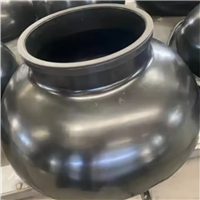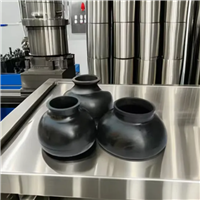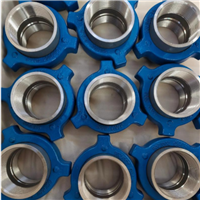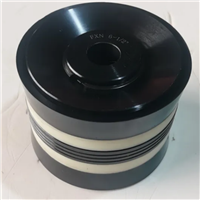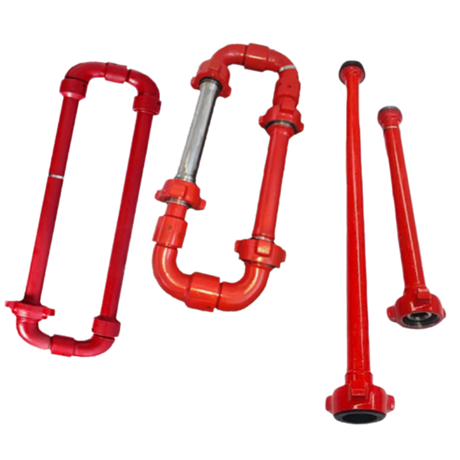

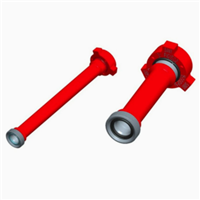
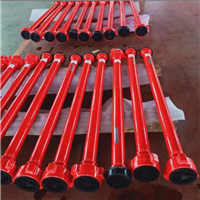
High pressure straight pipe and hard pipeline are welded together by union pipe and mud, forming an integrated pipeline
Category:
mechanical equipment/Chemical pipelines and accessories/Chemical pipelines and accessories
Model:
1 inch/2 inches
Brand:
Hengshui Xinghai
Nominal Diameter:
1 inch/2 inches
connection method:
Connected by Ren
manufacturing process:
Welding integrated molding
Applicable Medium:
Mud/water/oil and gas
Material:
Alloy steel/carbon steel
Product Type:
High pressure straight pipe hard pipeline
Application Fields:
Oil drilling/solid control system
job characteristics:
High pressure resistance/quick disassembly and assembly
Retail Price
10,000,000.00USD
重量
kg
- Product Description
-
Nominal Diameter 1 inch/2 inches
connection method Connected by Ren
manufacturing process Welding integrated molding
Applicable Medium Mud/water/oil and gas
Material Alloy steel/carbon steel
Product Type High pressure straight pipe hard pipeline
Application Fields Oil drilling/solid control system
job characteristics High pressure resistance/quick disassembly and assembly
Description :
High pressure straight pipe hard pipeline union is a key connecting component used in petroleum drilling and solid control systems to transport high-pressure mud, clean water, or oil and gas media. This type of product mainly solves the problems of rapid disassembly and sealing reliability of pipelines under high pressure conditions, and is typically used in drilling platforms, fracturing truck sets, and mud purification systems. Integrating the straight pipe and union joint through welding technology ensures no leakage or detachment under high-pressure impact, meeting the continuous operation requirements under harsh working conditions. It is an indispensable basic pipeline component in drilling and production equipment. The high-pressure union is usually made of high-quality alloy steel or carbon steel material, and the pipe body undergoes precision welding and heat treatment processes, possessing high compressive strength and toughness. Common specifications include various calibers such as 1 inch and 2 inches, and comply with API Spec 6A or relevant petroleum industry standards. The working pressure rating can reach thousands of psi or even higher depending on the wall thickness. The connecting part of the union is processed with high-precision machinery and matched with a special sealing ring to ensure the sealing performance of the connection. Before leaving the factory, the product needs to undergo strict hydrostatic testing and non-destructive testing to meet the quality certification requirements of petroleum equipment accessories and adapt to high and low temperature and corrosive environments in the field. When selecting high-pressure straight and hard pipelines, it is important to confirm the type of medium, working pressure, and flow requirements. 1-inch pipelines are suitable for instrument air circuits or small flow additive injection, while 2-inch pipelines are commonly used for main mud circulation or high-pressure cleaning circuits. If the working conditions involve extremely high pressure or strong corrosive media, it is recommended to choose customized models with thickened walls or stainless steel materials. Compared with ordinary flange connections, the advantage of union connections lies in their quick disassembly and assembly, no need for bolt tools, and suitability for frequently moving equipment; However, compared to flexible pipelines, rigid pipelines have higher rigidity, and attention should be paid to the alignment accuracy during installation to avoid stress concentration that may cause weld cracking. When installing the high-pressure union manifold, it should be ensured that the union heads at both ends are clean and free of impurities, the sealing ring is intact, and an appropriate amount of lubricating grease is applied. When knocking and locking, uniform force should be applied. In daily maintenance, it is necessary to regularly check whether there are cracks in the welds, whether the joint claw block is worn or deformed, and whether there are scratches on the sealing surface. It is recommended to conduct a low voltage leak test before reusing after a long period of disuse. Common faults include leakage at the seal, often caused by aging or improper installation of the seal ring. Timely replacement of the seal and standardized installation can restore it. Proper maintenance can significantly extend the service life of high-pressure straight and hard pipelines, ensuring the safety of drilling operations.
AfterSalesService :
Key words:
More Products